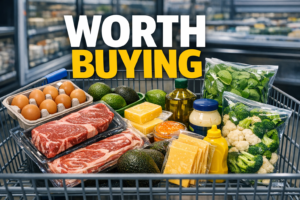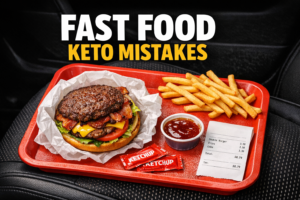
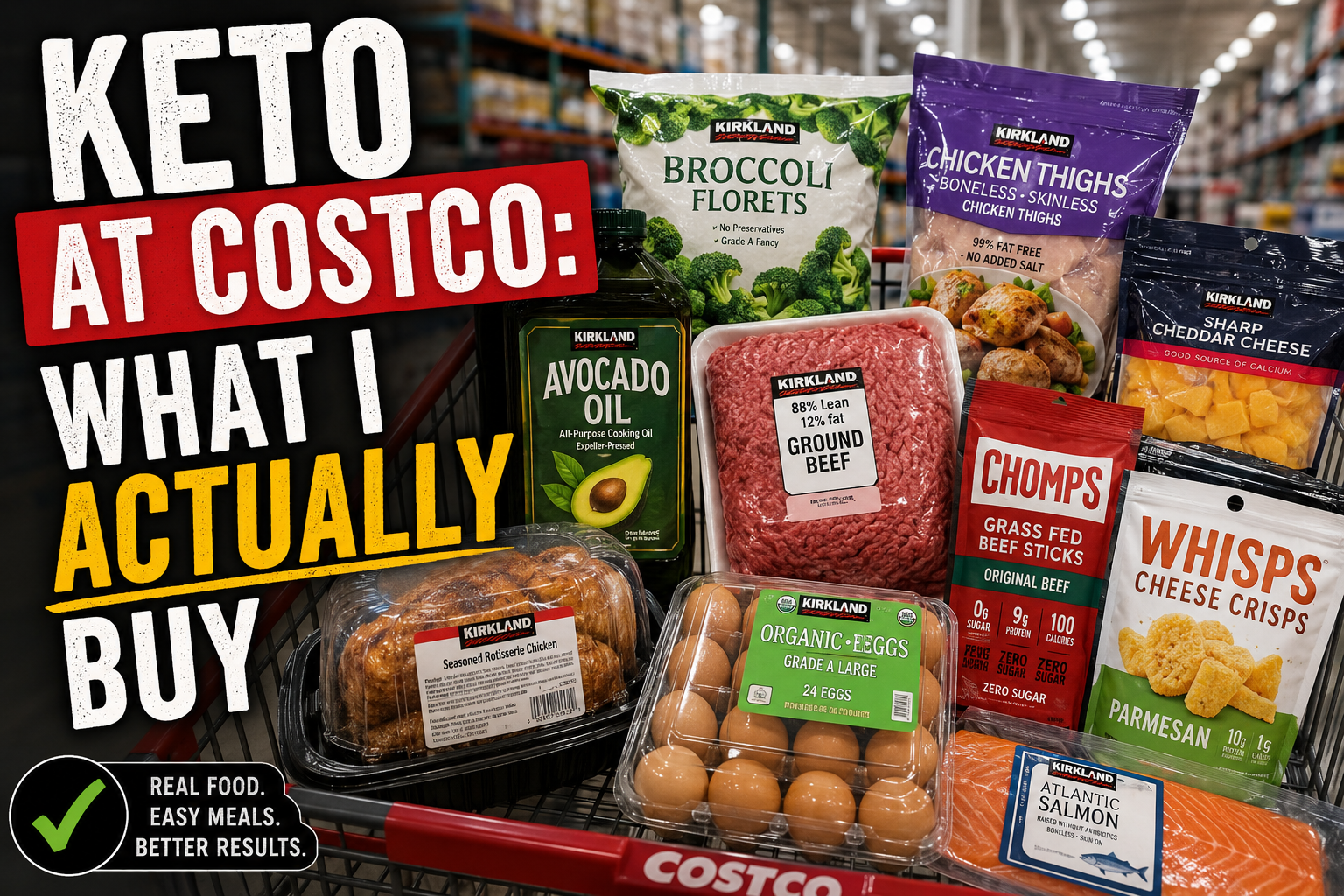
Keto at Costco can save you money and make dinner easier, or it can leave you with a giant cart full of low-carb junk that still does not solve your week.
That is the real difference.
A lot of people shop Costco like the goal is to find the most keto products. It is not. The goal is to leave with food that turns into easy meals, reliable backups, and fewer bad decisions on tired nights.
If your Costco run ends with bars, trail mix, cheese crisps, keto tortillas, and a few random proteins, you did not really buy groceries. You bought warehouse-sized temptation.
The better Costco strategy is simple: buy protein first, add meal-support foods second, and be ruthless about bulk items that quietly turn into all-day snacking.
Keto at Costco works when you shop by decisions, not by deals
Costco is full of products that look useful because they are cheap per unit, convenient, or labeled low carb.
That is where people get fooled.
The best Costco cart is not built around clever products. It is built around repeat decisions:
- What will make dinner easy on a busy night?
- What will help you build lunch fast?
- What belongs in bulk because you actually use it?
- What looks keto on paper but usually becomes portion creep or fake progress?
If you already know your grocery trips keep drifting toward packaged foods, read Best Keto Foods at Walmart too. Costco and Walmart are different stores, but the same shopping mistake shows up in both places: buying products instead of buying solutions.
The short version:
- Buy proteins in bulk when they make repeat meals easier.
- Use vegetables, fats, and freezer staples to support those meals.
- Treat snack foods and specialty keto products like side items, not the main event.
Cause #1: You buy what looks keto instead of what actually becomes meals
This is the biggest Costco mistake.
You walk in planning to stay keto, so you reach for low-carb tortillas, beef sticks, keto bars, nuts, cheese snacks, and whatever has the right buzzwords on the box. None of those items automatically break keto. The problem is what they replace.
Real life looks like this: by Wednesday, you have plenty of “something to nibble on” but not much that turns into lunch or dinner in ten minutes. So you graze all afternoon, then order takeout because nothing feels ready.
The mistake is confusing low carb with high usefulness.
What usually works better at Costco is boring on purpose:
- rotisserie chicken
- eggs
- ground beef
- chicken thighs
- salmon
- frozen burger patties
Those foods are not exciting, but they fix the real problem. They make your next few meals easier. That matters more than whether you found a trendy keto snack aisle.
If your cart keeps filling with packaged low-carb stuff, it is worth reading Keto Convenience Food Traps. Costco can magnify that problem fast because the packages are bigger and the “I already bought it” logic gets stronger.
Cause #2: You buy bulk foods without any buy, watch, or skip filter
Bulk is only helpful when the food is simple to use, hard to misuse, and likely to disappear because it became real meals.
That means some Costco foods are easy buys, some are careful buys, and some are “probably not worth the drama” buys.
Easy Costco buys for keto
- Proteins: eggs, rotisserie chicken, ground beef, chicken thighs, frozen fish, burger patties
- Frozen vegetables: broccoli, cauliflower rice, green beans, stir-fry vegetables without sugary sauce packets
- Meal-support basics: cheese, butter, olive oil, avocado oil, avocados, salad greens
These help because they shorten the gap between “I am hungry” and “I have a real meal.”
Watch carefully
- nuts and nut mixes
- jerky and meat sticks with added sugar
- pre-marinated meats
- salad kits with sweet dressings or crunchy toppings
- keto wraps, bread substitutes, and snack products
These are not automatic no’s. They just need a reason to be there.
For example, nuts can fit keto. Costco-sized bags become a problem when they turn into handfuls all day. Jerky can help on travel days, but only if it stays backup protein and not your default meal pattern.
Usually skip
- trail mix
- dessert-style keto products
- bars that read like candy with better marketing
- bulk “healthy snacks” that you keep eating because they seem harmless
If you have to talk yourself into why a warehouse-size box is technically fine, that is usually the answer already.
Cause #3: You ignore Costco label traps that look fine until portions add up
Costco is not just a meat-and-eggs store. It is full of sauces, flavored products, snack packs, and “better for you” items that can quietly create carb creep.
This is where people get lazy with labels because the store feels more practical than a regular grocery store. Big mistake.
Real life example: you buy a salad kit, a pre-cooked protein, a sauce, and a low-carb wrap. Each item looks manageable by itself. But the dressing has sugar, the protein has a sweet marinade, the wrap is another chunk of carbs, and now your quick lunch is a lot less clean than you thought.
The mistake is checking only the front of the package.
The fix is to look at three things every time:
- serving size
- net carbs per serving
- whether the product is easy to overeat or easy to use as intended
This matters even more with vegetables, sauces, dressings, and frozen shortcuts. If you want a clearer idea of where “healthy” carbs catch people, read Keto Vegetable Carb Traps and Net Carb Trap Map.
Those two pages help with the exact kind of products that look safe because they are technically low carb or sitting in the “healthy” section.
Cause #4: You do not build a Costco system for rough nights and big packages
Costco works best when you respect two facts:
- the packages are big
- your energy is not always big
People buy like their future self is organized, motivated, and ready to prep everything. Then the week happens.
Some meat never gets portioned. Some produce gets ignored. Some snacks stay on the counter where they are too easy to keep grabbing.
The mistake is thinking the shopping trip itself solved the problem.
The fix is to give bulk food a job as soon as it enters the house.
- portion proteins for two or three fast meal nights
- freeze what you will not use soon
- keep one backup dinner lane ready at all times
- store easy-to-overeat snack foods out of sight, not on the counter
A vacuum sealer can make sense here if you regularly buy meat in bulk and end up wasting part of it. It fixes a real Costco problem instead of adding another random kitchen gadget.
And if your main issue is leftovers turning into chaos, sturdy glass food storage containers make portioned lunches and backup dinners easier to keep visible and usable.
That is the kind of affiliate mention that actually belongs in a Costco article: a tool that helps you use bulk food correctly.
What I would actually put in a keto Costco cart
Keep this simple.
Protein first
- eggs
- rotisserie chicken
- ground beef
- chicken thighs
- burger patties
- frozen salmon or other plain fish
Then meal support
- frozen broccoli or cauliflower rice
- salad greens
- avocados
- cheese you will actually use in meals
- olive oil or avocado oil
Then only a few extras
- a measured jerky backup
- one convenience item that solves a specific problem
- one freezer shortcut if your evenings are messy
That order matters. By the time you look at the specialty stuff, most of your useful cart should already be full.
What most people get wrong about keto at Costco
They think the best deal is the cheapest keto item per ounce.
It is not.
The best deal is the food that reduces takeout, stops random snacking, and still feels useful five days later.
This is why Costco and weight loss can clash. Big packages make mediocre habits look efficient. A large bag of nuts, a giant box of bars, or a multipack of low-carb wraps can all look smart at checkout. They are not smart if they quietly increase how often you eat.
Run every “maybe” item through this filter:
- Does this help me make a real meal faster?
- Would I still buy this if the word keto was missing?
- Will this stay controlled in my house, or will it become all-day hand-to-mouth food?
- Is this fixing a real problem or just making me feel prepared?
If the answers are weak, skip it.
Frequently Asked Questions
Is Costco good for keto shopping?
Yes, if you treat Costco like a protein and meal-support store first. It gets worse when you treat it like a snack warehouse with a keto label.
What is the best keto food to buy at Costco?
The best Costco keto buys are the foods that make repeat meals easy: eggs, rotisserie chicken, beef, chicken thighs, burger patties, fish, frozen vegetables, and simple fats.
What should you skip at Costco on keto?
Usually skip trail mix, dessert-style keto products, big boxes of bars, and anything that keeps your snack habit alive without making meals easier.
Are Costco keto snacks worth it?
Sometimes, but only as side items. If your cart is snack-heavy and meal-light, Costco will make keto harder, not easier.
Fix this first:
- Plan three easy dinners before you enter Costco.
- Fill the cart with proteins first, then vegetables and meal-support foods.
- Add only one or two convenience items after the meal pieces are covered.
- Check labels on sauces, wraps, salad kits, jerky, and anything marketed as healthy or keto.
- Portion or freeze bulk purchases the same day so they become meals instead of clutter.
If this helped, read these next:
Explore more shopping guides here: