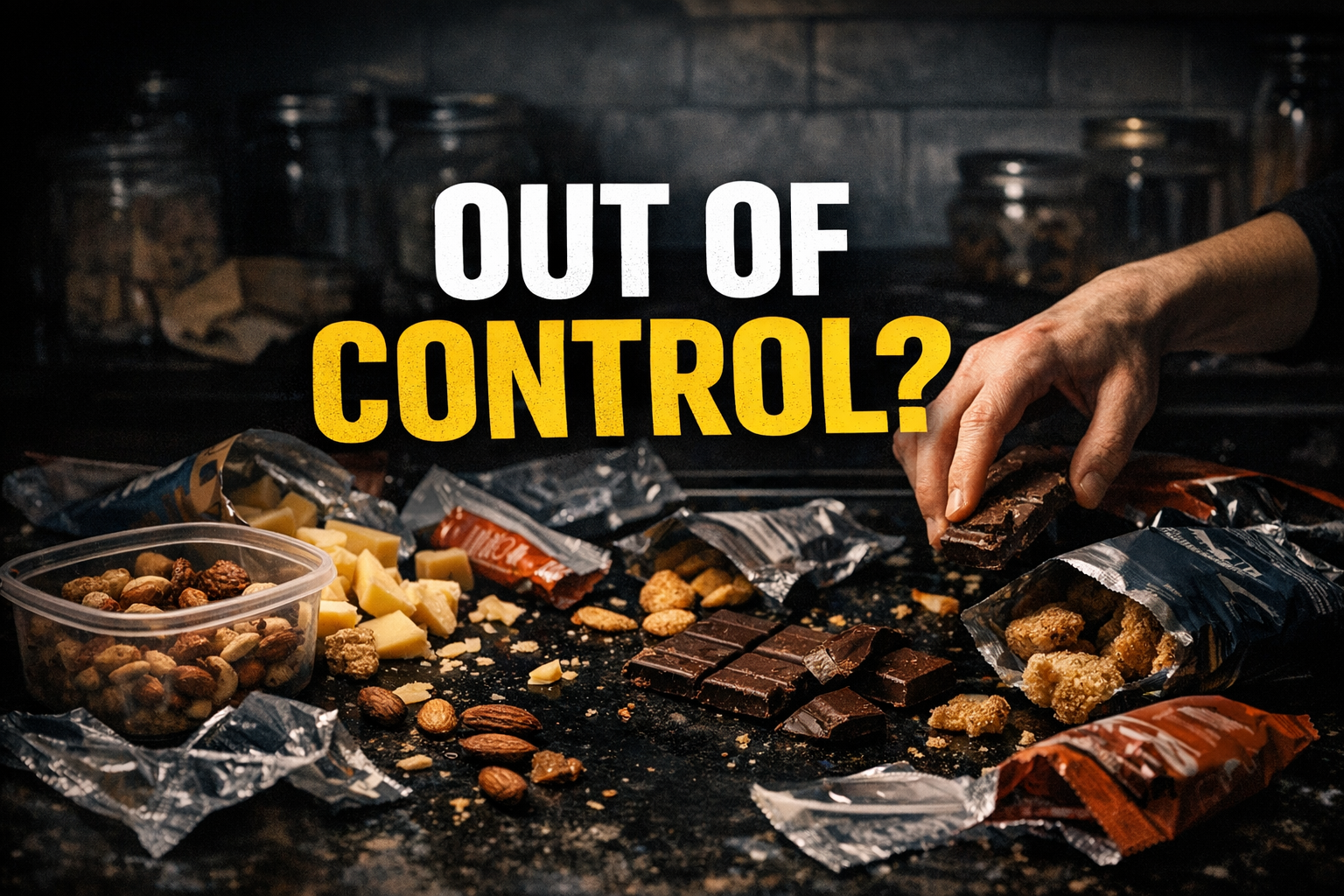
You can stay low carb all week and still feel like food is running your life. That happens more than people admit. If out of control around food keto feels like your real problem, carbs are not always the main issue.
Here’s the truth: being technically low carb does not automatically make you calm around food. You can still spend all day thinking about your next snack, picking at “safe” foods, and white-knuckling your way to dinner.
I’ve seen this pattern a lot. Someone cuts bread and sugar, feels proud for a few days, then realizes they’re still pacing the kitchen and negotiating with themselves over cheese, nuts, and keto snacks.
That does not mean keto failed. It usually means your food setup is creating more food noise than control.
Why you feel out of control around food on keto even when carbs stay low
Many people think the only goal is keeping carbs low enough. That matters, but it is not the whole story. If your meals are weak, your snacks are constant, and you keep using food as relief, you can stay “on plan” and still feel mentally stuck.
This is also why some people do better after reading guides like Why You’re Always Hungry on Keto (And What to Fix First) or Sugar Cravings on Keto: What They Usually Mean. The real problem is often not just carbs. It is appetite, routine, and the way your day is built.
1. Your meals are too small, so your “low-carb week” is really an underfed week
This is one of the biggest reasons people stay low carb but still feel out of control around food. They remove obvious carbs, but they never build meals that actually satisfy them.
Breakfast is coffee with cream. Lunch is a salad with a little chicken. Afternoon is a cheese stick, a few nuts, maybe another coffee. On paper, it looks keto. In real life, it feels like a long slow grind toward a nighttime rebound.
The mistake is thinking low carb automatically means full. It doesn’t. If your meals are weak on protein and too light overall, your body keeps pushing for more food later. That is when “I’m being good all day” turns into random grabbing, extra bites, and feeling like your appetite has a mind of its own.
The fix is boring but powerful: make your first two meals stronger. Build them around real protein first. Eggs alone may not be enough. Add meat, Greek yogurt if it fits your plan, tuna, chicken, burger patties, or another solid protein source that actually holds you. This is the same reason posts like Why Keto Feels Harder When You’re Not Eating Enough Protein Early in the Day matter so much.
2. You keep grazing on “safe” foods, so your brain never settles down
Low-carb grazing still counts as grazing. A handful of nuts here, deli meat there, one bite while cooking, a keto bar in the car, spoonfuls of peanut butter at night – none of that feels dramatic. But it keeps your appetite switched on all day.
This is what it looks like in real life: you are not having one clear meal and moving on. You are staying in food mode for ten hours straight. Even if each choice is “allowed,” your brain never gets a clean break.
A common mistake is assuming that because the snack is keto-friendly, it cannot be part of the problem. That logic keeps people stuck. Constant low-carb snacking can make hunger feel louder, not quieter, because you stay mentally focused on eating.
The fix is to stop treating every craving or dip in energy like a snack emergency. Eat a real meal, then close the loop. If you need a planned snack because your schedule is messy, make it deliberate and protein-based, not random grazing. If this pattern sounds familiar, it overlaps with Why Lazy Keto Stops Working When You Start Snacking Too Much.
3. You are using low-carb foods as a reward all day
This one sneaks up fast. You get through a stressful meeting, so you grab a keto treat. You make it through the afternoon without fast food, so you “deserve” something crunchy. You stay low carb at dinner, so you reward yourself with dessert made from keto ingredients.
The problem is not only the food itself. It is the reward loop. When food becomes the thing that helps you cope, celebrate, relax, or stay interested, you can stay low carb and still feel emotionally pulled around by eating.
A lot of people miss this because the reward food looks compliant. It might be a keto cookie, cheese crisps, dark chocolate, or a low-carb wrap loaded with extras. But if you are constantly reaching for food to change your mood, you are teaching your brain to keep asking for it.
The fix is to notice the moment before you eat. Ask one blunt question: am I solving hunger, or am I trying to change how I feel? If it is about stress, boredom, or relief, food is usually the wrong tool. Take a short walk, make tea, shower, text someone, or end the workday properly instead of opening the snack drawer. That is also why Why Stress Eating Wrecks Keto Even When Your Carbs Still Look Low on Paper hits a real nerve for so many people.
4. Your day is full of convenience foods that keep you thinking about food
Bars, shakes, packaged snacks, low-carb wraps, and keto desserts can all look useful. Sometimes they are. But when they become your whole system, keto starts to feel more chaotic, not easier.
Convenience foods are often easy to overuse because they feel small, harmless, and always available. You eat one quickly, it does not satisfy you for long, and you start thinking about the next thing almost immediately. Now your whole day becomes a low-carb scavenger hunt.
The mistake here is confusing easy access with actual support. Just because something is portable does not mean it helps you feel stable. In many cases, it keeps you in a constant snack-and-search cycle.
The fix is to use convenience foods as backup, not as your foundation. Your default should still be simple full meals that you recognize as meals. If your workday or commute is hectic, pack one real backup option on purpose instead of five little things that invite picking all day.
5. You are ending the day exhausted, so your control is weakest when the pressure is highest
A lot of people say they are “good” all week, but what they really mean is they spend the whole day holding it together until night. Then dinner ends, the house gets quiet, and suddenly every urge gets louder.
This is where low-carb compliance and feeling in control split apart. You may not order pizza. You may not eat cake. But you still circle the kitchen, hunt for something salty, then something sweet, then one more bite because you never really felt done.
The mistake is acting like this is a discipline problem. Most of the time it is a setup problem. By evening you are tired, overstimulated, underfed, and ready for relief. Of course food gets loud then.
The fix is to make evenings easier before they become a fight. Eat a more solid dinner with enough protein. Stop saving calories or carbs for a “treat” later. Have a clear kitchen cutoff when possible. And if nights are your danger zone, read Why Keto Feels Impossible at Night When You’ve Been “Good” All Day because that pattern is usually predictable and fixable.
Common mistakes that keep this problem going
The first mistake is focusing only on carbs while ignoring how chaotic your eating feels. Low carb is a tool. It is not proof that your routine works.
The second mistake is eating too many small “safe” foods instead of fewer real meals. That keeps hunger, reward-seeking, and food thoughts active all day.
The third mistake is blaming yourself without changing the structure. If you feel out of control every night, every workday, or every stressful afternoon, that is a pattern. Patterns need systems, not guilt.
Related:
What better control actually looks like
Feeling in control on keto does not mean you never want food. It means meals satisfy you, snacks are intentional, cravings are quieter, and you are not bargaining with yourself every few hours.
It also means your day is simple enough that you are not forced into constant food decisions. That is where keto starts feeling easier instead of mentally exhausting.
If your low-carb week still feels noisy, fix the structure before you assume you need more willpower. Usually you do not.
Fix this first:
- Build your first two meals around real protein so you stop entering the evening half-fed.
- Cut random grazing for a week and switch to clear meals with only planned snacks if truly needed.
- Notice which foods you use as rewards, then replace at least one reward-eating moment with a non-food reset.
- Use convenience foods as backup only, not as your main eating system.
- Make evenings easier with a stronger dinner and a clear stopping point after you eat.
🔎 If this helped, here are more no-BS keto guides worth reading next:
- Why You’re Always Hungry on Keto (And What to Fix First)
- Sugar Cravings on Keto: What They Usually Mean
- Why Keto Feels Impossible at Night When You’ve Been “Good” All Day
Explore more Keto That Actually Works stories here: