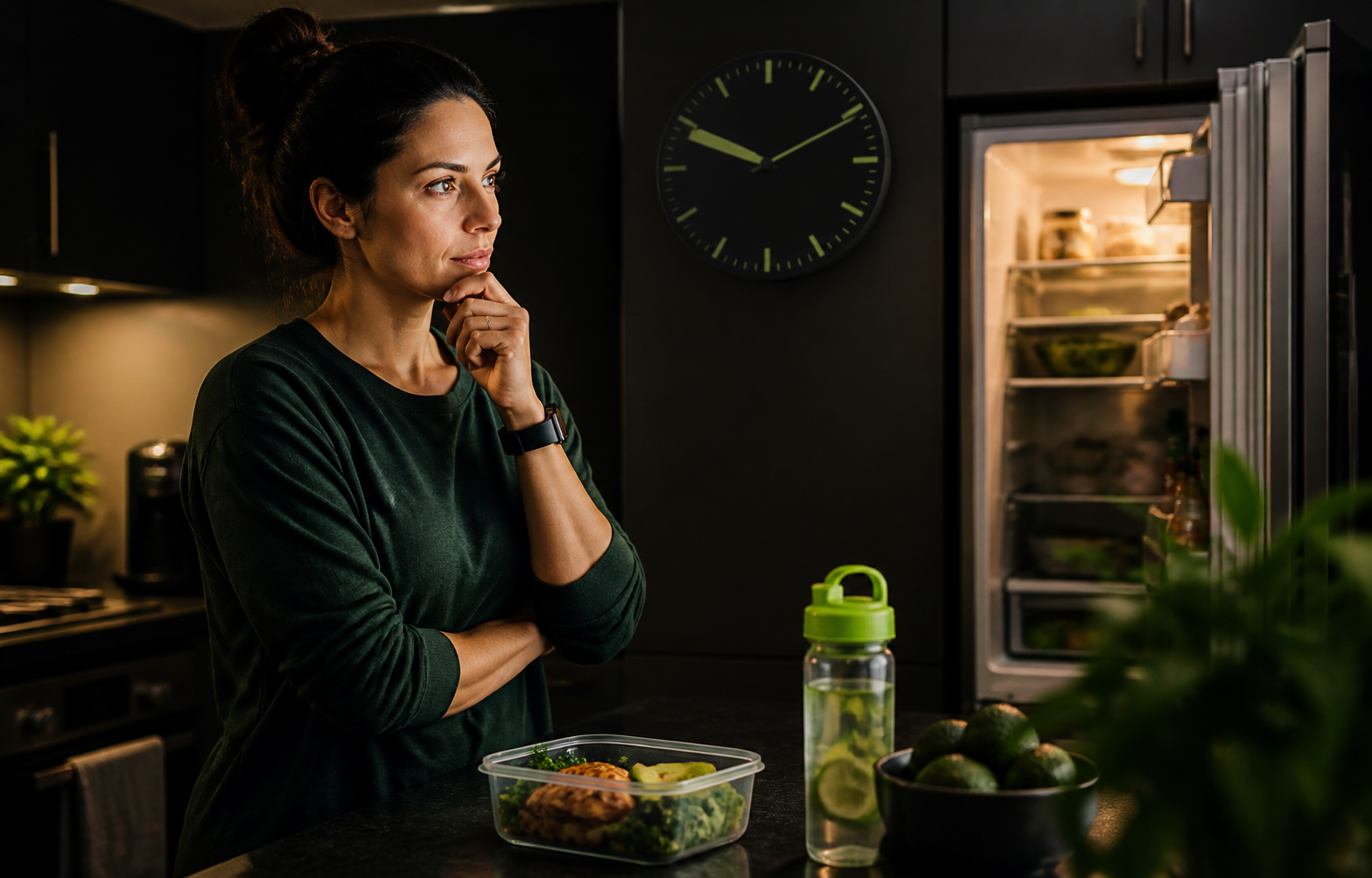
Keto stress eating usually does not start with chocolate, cookies, or some dramatic cheat meal.
It usually starts earlier, when the day gets thin, stressful, and badly built.
That is why this keto stress eating fix map matters. If you wait until 9 PM to figure out what went wrong, you are already trying to solve the last step of the problem instead of the first one.
Here is the reality check: not every bad keto night is emotional eating. Sometimes it is real hunger from weak protein. Sometimes it is an electrolyte crash that makes you feel off, tired, restless, and snacky. Sometimes it is a long meal gap that turns dinner into a rebound event. And sometimes it really is stress relief eating layered on top of all of that.
If you do not separate those problems, you keep using the wrong fix.
Keto stress eating is usually a chain, not one weak moment
Most people describe the night as the failure. That is usually wrong.
The real chain often looks like this: coffee first, weak lunch, long afternoon gap, stress building in the background, then a tired brain looking for fast relief. At that point even low-carb foods can turn into random eating, second dinners, handfuls of cheese, keto bars, nuts, or constant kitchen laps.
That is why this page is not just going to tell you to “have more willpower.” That advice is useless when the day already set you up to lose.
If your pattern is broader than stress alone, also read stress eating on keto. If the bigger issue is that your appetite keeps blowing up late, this guide to why keto hunger explodes later will help you separate stress from plain under-eating.
Start with this question before you blame emotional eating
Ask yourself what was true before the cravings hit:
- Did you eat enough protein earlier?
- Did you go too long without a real meal?
- Were you running on coffee and adrenaline?
- Did you feel headachy, flat, tired, or weird before the snack spiral started?
- Was the day structured, or was it one long drift?
If the answer to those questions is ugly, the night is not some mystery. It is a delayed consequence.
If deadline days trigger the crash, fix the workday before you fix the craving
This is one of the most common versions of keto stress eating.
You are busy, behind, irritated, and trying to power through. Lunch gets pushed. You tell yourself you will eat later. Later becomes a coffee, a few bites, maybe some cheese or a bar, and then the workday ends with your brain completely smoked.
In real life, this looks like being “good” all day and then suddenly wanting everything at night. But most of the time, you were not actually good. You were underfed, overcaffeinated, and stressed.
The common mistake is treating the evening like a cravings problem only. Then you try to fix it with stricter rules after dinner, when the real problem started at noon.
The fix is earlier and more boring: build a real protein meal into the middle of the day, even on ugly workdays. If lunch is unreliable, have an emergency backup ready. A simple ready-to-drink protein shake is not magic, but it is a lot better than pretending coffee counts as lunch.
If this is your main pattern, go to keto deadline days. That page breaks down the work-through-lunch to reward-eating loop in more detail.
If the blow-up happens after work, stop acting like 7 PM is the first problem
After-work crash days are a little different from deadline days.
Sometimes the day was not chaotic. It was just draining. Maybe meetings stacked up. Maybe people were annoying. Maybe the commute home burned the last bit of patience you had. You hold it together all day, then the second the pressure comes off, the kitchen starts looking like relief.
This is why people say things like, “I was fine until I got home.” Usually that means you were distracted until you got home.
The mistake here is trying to solve the whole problem with a stronger dinner rule or by banning snacks. That can help a little, but it misses the real issue: the transition from stress to home is too abrupt, and hunger often joins the stress at the exact same time.
A better fix is to create a handoff. That might mean a planned protein-forward dinner, a small bridge meal before the commute, or a fast recovery routine when you walk in the door: water, salt, protein, then decide if you are still actually hungry. If you are running low and feel flat or headachey, a simple electrolyte mix can help stop the “I need something now” feeling from getting louder than it should.
If one rough workday keeps turning into all-night grazing, read keto stress eating after work. That is the closest match for the pressure-drop version of this problem.
If no-schedule days keep falling apart, the real problem is drift
This version fools people because it does not look intense enough to count as stress.
You are home. You are half working, half worrying, half avoiding something, and food keeps becoming the easiest break in the day. There is no clean lunch time. No commute boundary. No structure forcing the day to move.
That is exactly why this pattern gets people. Nothing feels dramatic, but the whole day is loose. Coffee replaces breakfast. Random bites replace lunch. Boredom and uncertainty keep pushing you toward the kitchen. Then dinner comes late, and the night still does not feel settled.
The common mistake is assuming that if you are home, things should be easier. Not always. Easy access to food plus low structure is a bad combo.
The fix is to add anchors before the day gets slippery. Pick two non-negotiable meal points and make them real meals, not “something small.” Build a default lunch. Decide what happens if the day goes weird. The less you improvise, the less you wander.
If this sounds like your pattern, read keto job-search days for the no-real-schedule version, and keto workday survival system for a more practical structure-first setup.
If the night feels emotional, make sure it is not just protein, electrolytes, and meal gaps in disguise
This is where people get sloppy.
Yes, stress can absolutely make you eat for relief. But stress eating gets much worse when your body is already irritated from weak intake earlier in the day.
Low protein makes dinner less satisfying. Long food gaps make cravings louder and faster. Low electrolytes can make you feel wiped out, restless, or strangely unsatisfied. Stack all three on top of a frustrating day, and now “I need a treat” can feel emotionally true even when the first problem was physical.
In real life, this is the person who says they are stress eating, but dinner was tiny, lunch was delayed, and the whole day ran on caffeine. Of course the night feels hard.
The mistake is jumping straight to keto desserts, cheese snacks, or low-carb bars as damage control. Those often keep the eating loop going because they solve neither the stress nor the weak setup.
The fix is to troubleshoot in order. First ask whether you are actually underfed. Then ask whether the day had long gaps. Then ask whether you may be low on sodium and fluids. Only after that should you focus on the emotional part. If you skip those checks, you keep calling a mechanical problem emotional.
If you want the broader stress lane, read stress eating on keto. It helps separate true emotional eating from the kind that grows out of a badly built day.
What most people get wrong about keto stress eating
They wait until the night to intervene.
They call every craving emotional even when the day clearly included skipped meals, weak protein, or a big food gap.
They use keto snacks as emergency control tools instead of fixing the earlier breakdown.
They assume low carb means the damage is small. It is not. You can stay technically low carb and still keep the eat-relief-eat loop running.
And they keep trying to win with discipline at the exact hour when discipline is most depleted.
A simple night-of fix sequence when you are already spiraling
If the bad night is already happening, do this in order:
- Pause and name the day. Was this a deadline day, an after-work crash day, or a no-schedule drift day?
- Check the basics fast. Did you actually eat enough protein? Did you go too long without food? Do you feel flat, shaky, headachy, or weird?
- Do one recovery move first. Water, electrolytes, or a protein-forward meal beats random keto grazing.
- Stop negotiating with snack foods. If you need food, eat real food. Do not turn the kitchen into a two-hour low-carb scavenger hunt.
- Fix tomorrow at the source. Put the repair where the day broke, not where the cravings got loud.
This is not perfect psychology. It is practical damage control. That is what usually works.
Fix this first:
- If the pattern starts on heavy workdays, read keto deadline days and protect lunch before you protect dessert.
- If the crash starts when work ends, use keto stress eating after work and build a better handoff into dinner.
- If the whole day drifts at home, use keto job-search days or keto workday survival system and add real meal anchors.
- If the night keeps feeling emotional, check protein, meal gaps, and electrolytes before you call it pure cravings.
Read these next: