
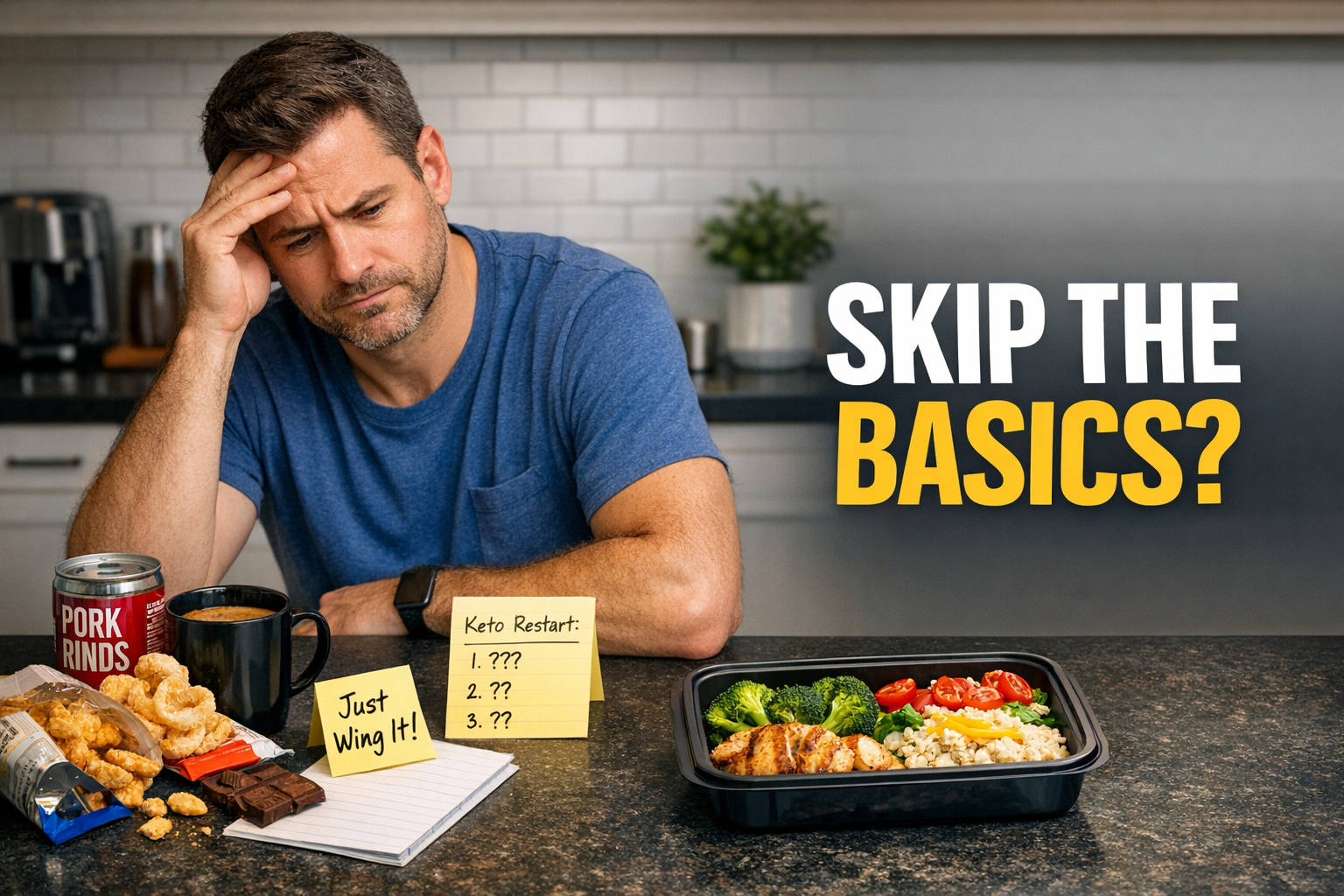
You try to restart keto basics from memory, not from a real plan.
That is usually the problem.
When people have done keto before, they often assume they can skip the boring stuff and jump straight back to results. They cut carbs, feel confident for a day or two, then end up hungry, wiped out, snacky, and annoyed that keto suddenly feels harder than it used to.
If that sounds familiar, you are not broken. You are probably trying to restart on confidence instead of systems.
I see this pattern all the time: someone says, “I already know what to do,” then by day three they are standing in the kitchen eating cheese, nuts, or random low-carb snacks and wondering why the restart already feels messy.
Why restarting keto feels harder the second, third, or tenth time
Here’s the truth. Doing keto before can help you, but it can also make you sloppy.
The first time, you usually read labels, plan meals, think about electrolytes, and pay attention to protein. On a restart, people tend to skip that work because they feel familiar with the rules.
That false familiarity is what gets them.
They remember the big idea, but they forget the support structure that made keto work in the first place. So they cut carbs, but they do not rebuild meals. They try fasting too early. They assume cravings will settle on their own. They expect old results without rebuilding old habits.
If you want keto to work again, you need to restart keto basics, not just restart carb restriction.
The first big mistake: you cut carbs but do not rebuild real meals
This is where most people mess up first.
They remember that keto means low carb, so they remove bread, pasta, rice, and sweets. But they do not replace those foods with meals that are actually structured to keep them full.
In real life, that looks like coffee for breakfast, deli meat for lunch, and “I’ll figure dinner out later.” Or it looks like eggs in the morning, then a handful of nuts, then a protein bar, then random bites while cooking dinner.
The common mistake is thinking low carb automatically means good enough. It does not. A low-carb day can still be a weak day.
When meals are weak, hunger shows up later. Then cravings feel worse. Then people start thinking keto is not working, when the real problem is that they restarted without meal structure.
The fix is simple, but not glamorous. Build three repeatable fallback meals before you restart.
- One easy breakfast with real protein
- One lunch you can make fast or pack fast
- One dinner you can repeat when your brain is tired
If you need help with that part, read Beginner Keto Fix Map and Why Keto Stops Feeling Easy. Those two posts make it easier to see where your restart is already drifting.
The second big mistake: you act like electrolytes are optional because you “already know keto”
This one is sneaky because people remember the word electrolytes, but they stop treating it like something practical.
They think, “Yeah, yeah, I know about electrolytes,” then they drink plain water, eat lightly, cut carbs fast, and wonder why they feel headachy, weak, irritable, or weirdly drained by the afternoon.
That is not a mystery. That is the same old keto restart problem showing up again.
When insulin drops, your body sheds more water and sodium. If you restart quickly but do not replace what you are losing, you can feel rough fast. That rough feeling then makes the whole restart feel harder than it should.
In real life, this often shows up as a “good” first day followed by a bad second or third day. You feel motivated at first, then suddenly your mood tanks, your patience disappears, and every easy carb starts looking smarter than your plan.
The common mistake is waiting until you feel awful to think about salt and fluids.
The fix is to handle it early. Salt your food on purpose. Do not coast on tiny meals. If you know you do better with a simple electrolyte mix, use one during the restart instead of pretending you will tough it out. A straightforward option like LMNT Zero Sugar Electrolytes can be useful if you need something easy and repeatable, but the bigger point is consistency, not buying magic powder.
If side effects keep hitting fast, read Keto Side Effects Guide: What to Fix First. It helps you troubleshoot the basics before the restart turns into another quit-and-retry loop.
The third big mistake: you try to fast-forward by fasting
A lot of repeat restarters make this worse by overcorrecting.
They think, “I know keto works, so I’m going hard this time.” That usually means cutting carbs hard, eating less than they should, and adding fasting way too early because they want fast results.
This sounds disciplined. Most of the time, it is just impatient.
If your meals are not solid yet, fasting does not fix the restart. It just puts more pressure on a shaky setup.
In real life, this looks like skipping breakfast to “get back into fat burning,” then having a weak lunch, then white-knuckling the afternoon, then eating too much at night and feeling like you ruined the whole day.
The common mistake is treating restriction like proof that you are serious. But serious is not the same as sustainable.
The fix is to earn your way back to fasting. First get through a few steady days with real meals, stable energy, and less chaos. Once hunger is calmer and your routine is back, then you can decide whether fasting actually helps you. Do not use fasting as a shortcut around the basics.
The fourth big mistake: you trust memory instead of your current reality
This is the mindset problem behind almost every messy restart.
You remember your old keto self. You remember the foods that worked, the progress you made, maybe even the version of you who felt more in control. So you assume you can just plug back into that version immediately.
But your current life may not match your old routine at all.
Maybe you now work different hours. Maybe your stress is higher. Maybe your grocery habits got sloppier. Maybe you have kids, travel, poor sleep, or a house full of convenience food. Maybe your old keto setup worked because your life was calmer then.
The common mistake is trying to restart your old results without checking whether your current environment can support them.
The fix is to ask better questions:
- What meals can I actually repeat this week?
- Where does my day usually fall apart?
- What food decisions happen when I am tired?
- What do I need ready before the first rough day hits?
That is why Keto Restarting Every Monday matters for this topic. The real issue usually is not lack of keto knowledge. It is lack of a current system.
The fifth big mistake: you expect old speed, then panic when the restart feels slower
This one messes with people fast.
They remember the excitement of early progress from a past keto run. So when the restart does not instantly feel easy or dramatic, they assume something is wrong.
Then they start changing too much.
They cut more calories. They start tracking every gram in a panic. They add products they do not need. They bounce between “strict” and “whatever” in the same week. That creates even more noise.
In real life, this can look like weighing yourself too often, reacting to every little fluctuation, and deciding by day four that keto “isn’t like it used to be.”
The common mistake is expecting your body to reward familiarity. Bodies do not care how many keto podcasts you listened to two years ago.
The fix is to judge the restart by behaviors first, not by instant results. Are your meals stronger? Are cravings calmer? Are evenings less chaotic? Are you stopping the daily rebound cycle?
If not, fix that before you obsess over the scale. And if fat loss is the main problem, save this for after your structure is back: Keto Weight Loss Troubleshooting Map.
What people usually get wrong about keto restarts
Most failed restarts are not caused by carbs alone.
They are caused by a chain reaction:
- overconfidence
- weak meals
- low electrolytes
- trying to fast too soon
- expecting fast results before the routine is stable
That is why restarting can feel more frustrating than starting from scratch. The problem is not ignorance. It is partial knowledge mixed with sloppy execution.
You know just enough to skip the fundamentals, and that is exactly what makes the restart unstable.
Related:
How to restart keto basics without making it harder than it needs to be
If you have “done keto before,” good. Use that experience the right way.
Do not use it to skip planning. Use it to avoid old mistakes.
Pick a few easy meals. Get your protein handled. Stay ahead on salt and fluids. Stop acting like fasting is required on day one. And build around the version of life you have now, not the version you had during your best keto streak three years ago.
The goal is not to prove you still know keto.
The goal is to make keto work again in your actual life.
Fix this first:
- Write down three repeat meals you can actually use this week so you are not winging breakfast, lunch, and dinner.
- Handle electrolytes early instead of waiting until you feel lousy, irritable, or wiped out.
- Skip the fast-forward mindset and give yourself several steady days before adding fasting or extra restriction.
- Match the plan to your current life, not the routine you had the last time keto worked.
If this helped, read these next: If this helped, here are more no-BS keto guides worth reading next:
- Why Keto Keeps Restarting Every Monday Even When You Swear You’ll “Be Good” This Week
- Why Keto Stops Feeling Easy: What Usually Breaks First
- Beginner Keto Fix Map: What to Fix First When Keto Feels Wrong
Explore more Keto Lies & Myths guides here: