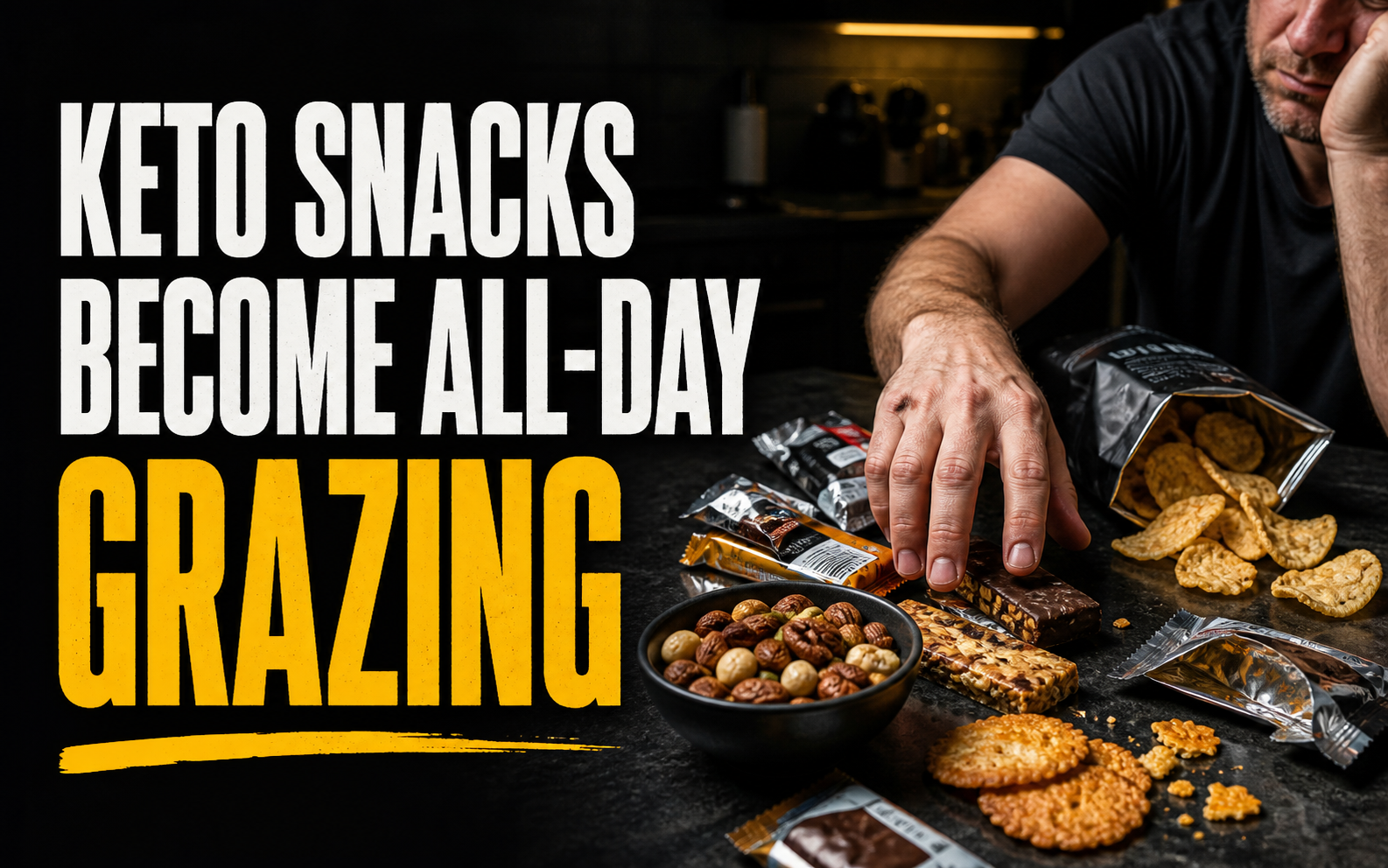
You can stay low carb and still spend the whole day eating like a raccoon with a pantry key.
That is the real snack problem on keto. The food looks allowed. The portions look small. The carbs still fit. But the day turns into bites, handfuls, packets, and clean-up snacks that never really end.
Here is the reality check: most keto snack problems are not about one bad food. They are about what snack food does to the structure of your day.
Real meals slow things down. Snack food speeds everything up. It keeps you deciding, opening, grabbing, tasting, and wanting one more thing.
That is why someone can be “doing keto” and still feel weirdly hungry, mentally noisy, and stalled.
This hub is here to help you figure out which version of the snack problem you actually have, and which post should be your next stop.
1. The day starts with a snack stash instead of a real plan
A lot of people do not set out to snack all day. They just make it easy. A few bars in the car. A bag of trail mix at the desk. Some nuts in the kitchen. A couple of crunchy protein snacks for emergencies.
By noon, the emergency became the whole food system.
This is what happens in desk-drawer snack stash keto days. You think you are being prepared, but what you really built was constant access to easy bites.
The same thing happens with keto granola, trail mix, and snack bag habits. They feel controlled because they are small. In real life, they are easy to reopen, easy to underestimate, and terrible at ending appetite for long.
The common mistake is thinking snack access equals food security. It does not. It often means your day has no real anchor meal, so your brain keeps looking for the next small hit.
The fix is boring, which is why it works. Keep one real meal option ready before you keep five snack options ready. If lunch is shaky, fix lunch first. If afternoons fall apart, build a stronger default meal for that part of the day instead of adding more pocket food.
2. The snack looks high protein, so you assume it acts like a meal
This is where a lot of keto people get fooled. The label says high protein. The front of the bag says low carb. The macros do not look disastrous. So it feels reasonable to build half your day around products that still eat like snack food.
That is exactly why high-protein keto snack food still backfires. You can hit decent numbers and still stay mentally hungry because the eating pattern never settles down.
The same thing shows up with high-protein keto chips. People buy them because they feel safer than regular chips. Fair enough. But they still train you to eat from a bag, chase crunch, and keep going when a real plate would have ended the meal.
In real life, it looks like this: you eat a protein snack at 11, another at 2, then something salty at 4, and by dinner you are somehow both “not that hungry” and ready to inhale everything in sight.
The mistake is treating protein grams like they erase snack behavior. They do not. A meal and a snack are not just different macros. They create different momentum.
The fix is to ask one blunt question: did this food replace a meal, or did it just keep me busy until the next food decision? If it is the second one, it belongs in the problem pile, not the solution pile.
3. Cheese packs, bites, and little convenience foods quietly turn into grazing
Some snack foods are not sweet. They are not even fake health foods. They are meat, cheese, nuts, eggs, and other foods people trust on keto. That is exactly why they slip past your guard.
If this is your pattern, read why meat-and-cheese snack packs still turn into all-day grazing. The food itself is not the whole problem. The format is.
Snack packs are built for repeat eating. Open one while driving. Grab one after errands. Eat one before dinner because dinner is late. Then stand in the kitchen finishing bites while deciding what the real meal should be.
That is how people end up saying, “I barely ate today,” even though they ate all day.
The common mistake is thinking small equals harmless. But small foods are easy to stack. A little cheese here, a few nuts there, a few slices of deli meat, half a dessert later, and suddenly the day is one long blur.
The fix is not banning every snack forever. It is ending accidental grazing. If a food is going to be eaten, make it happen on purpose, on a plate, at a defined time, and preferably next to enough protein to stop the hunt for more.
4. The real problem is that snacks replaced meals completely
This is the version that makes keto feel the most confusing. You are eating keto foods. You are not going wild on carbs. But your meals got so weak, delayed, or disorganized that snacks took over the whole job.
That is why lazy keto breaks down when easy foods are snacks instead of meals. Once the fridge is full of pieces instead of actual meal options, the day starts running on convenience logic.
Breakfast turns into coffee and a quick bite. Lunch turns into random bites between tasks. Dinner gets pushed late, so you snack while cooking. Then you still want dessert because nothing ever felt finished.
This matters because snack-based days rarely solve the problem they promise to solve. They do not reduce stress. They spread it out. They do not improve control. They create more food decisions.
The fix here is bigger than swapping one product. Build a short list of default meals that beat snack logic fast. Think eggs and meat, a rotisserie chicken plate, burger patties with something salty on the side, or leftovers you can eat cold without drama. You do not need gourmet meal prep. You need stronger defaults than a drawer full of wrappers.
Common mistakes that keep this loop running
The first mistake is giving snack foods a health halo just because they say keto, low net carb, or high protein.
The second is ignoring eating behavior and staring only at macros. If the food keeps you opening, nibbling, and thinking about the next snack, that matters.
The third is calling every hunger problem a willpower problem. A lot of snack chaos starts earlier, when meals are too weak, too delayed, or too easy to skip.
The fourth is keeping too many “just in case” foods around. If every room, bag, and drawer has snack backups, you will eat like someone expecting food trouble all day.
What to fix first if snack foods keep running your keto day
Start by removing the need for constant rescue eating. That usually means one stronger meal earlier in the day, one clear backup meal for late afternoons, and fewer open-ended snack choices floating around.
If you want practical help, portion-control containers can help people who turn every bag into a free-for-all.
Protein-forward convenience foods can help when a real meal is impossible, but only if they support a meal instead of replacing your whole structure. Electrolyte packets can also help when what feels like snack hunger is really a sloppy day with too little water and salt.
But do not overcomplicate it. If your day is built on bites, the first fix is not a better bite. It is a better plan.
Fix this first:
- Pick the one time of day when snacking gets dumb, and build a real default meal there.
- Remove the snack stash that keeps the loop easy to restart.
- Stop treating high-protein packaged food like an automatic meal replacement.
- Put any snack you do eat on a plate and make it a deliberate eating event.
- Use the links below to match your exact pattern instead of blaming yourself in general.
If this helped, read these next:
- Why low-net-carb labels keep turning snack foods into loopholes
- How sweet keto extras keep the snack-and-craving loop alive
- Why low-carb drinks quietly act like snacks between meals
Explore more Keto Lies & Myths stories here: