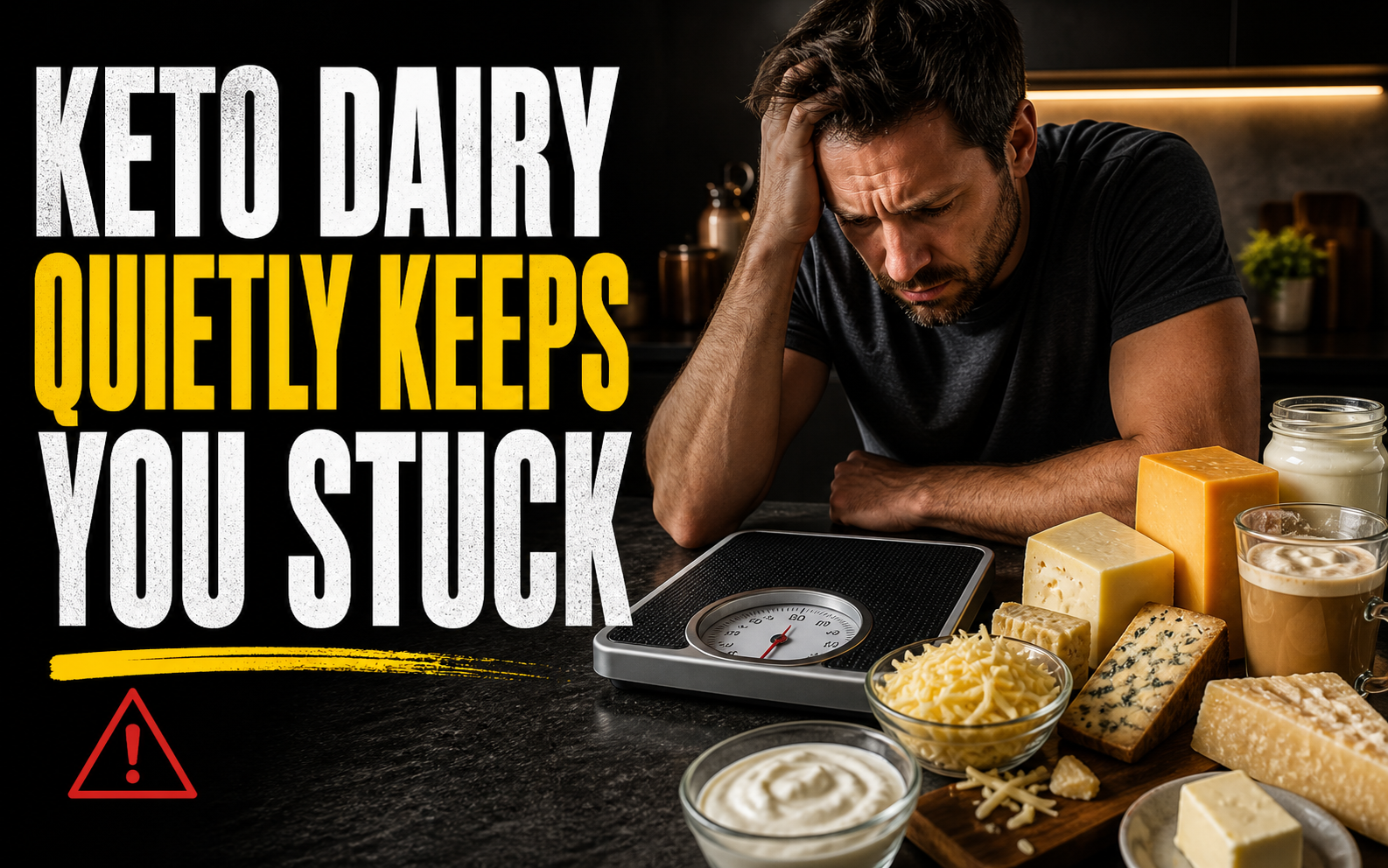
Cheese, cream, and yogurt can look like the safest foods on keto.
That is exactly why dairy causes so many quiet problems.
You are staying low carb. You are eating foods that seem allowed. And you still end up hungry, bloated, snacky, or stuck on the scale.
That is not bad luck. It usually means dairy stopped acting like support food and started acting like filler, comfort food, or calorie fog.
This page is here to help you spot the kind of dairy problem you actually have so you can fix the right thing instead of blaming keto as a whole.
Keto dairy problems usually are not about carbs first
A lot of people only ask one question: is this dairy food low carb?
That is too simple.
Dairy changes the shape of your meals. It can make a weak lunch look complete. It can turn coffee into fake breakfast. It can turn snack food into dinner. It can also make you feel full for twenty minutes without actually keeping you full.
If your keto routine already leans hard on creamy sauces, coffee add-ins, and dressings, start with these keto dairy traps that quietly pile up all day. And if you are not even sure whether dairy is helping or hurting your body, read what dairy on keto actually does in real life.
That is the real issue. Dairy is often not the whole meal. It is the thing quietly making a weak meal harder to read.
Problem one: cheese keeps replacing real meals
This is one of the biggest keto dairy traps. Cheese is easy, fast, salty, and comforting. It also makes people feel like they ate something real when they mostly just patched hunger for an hour.
In real life, this looks like a few slices while cooking, some shredded cheese on eggs, a couple more bites in the afternoon, then a snack plate at night because dinner still never landed. You stayed low carb, but the day still felt messy.
The common mistake is thinking cheese counts as real meal structure by itself. Sometimes it helps a solid meal. Too often it becomes the meal.
This is also where portion control gets blurry. A little cheese does not usually look like much. But when it shows up six different times, it can quietly turn into constant low-level eating.
The fix is to make the protein center obvious again. Use cheese to support a meal, not to stand in for one. If you need a clearer template, read the keto meal structure that actually keeps you full. If your routine keeps turning into handful eating, go straight to why just a handful of nuts and cheese can stall keto weight loss.
Problem two: cream, creamer, and dairy extras create fake fullness
This is the quieter version of the problem. You are not sitting down with a huge bowl of cheese. You are just adding a little bit of dairy to everything.
Cream in coffee. Cheese on eggs. Sour cream on lunch. Ranch on snacks. A creamy sauce at dinner. Yogurt later because it sounds light. None of those choices look dramatic alone. Together, they can turn the whole day into a string of small, fuzzy calories without much real satisfaction.
That is why some people feel weirdly full but still want more food. Their stomach is not exactly empty, but their meals were never solid enough to fully land.
The mistake is assuming creamy equals satisfying. Richness is not the same thing as structure.
The fix is simple: strip the meal back to basics and ask whether it still works without the dairy extras. If the answer is no, the base meal is weak. Build around protein first, then add dairy on purpose instead of pouring it over every gap.
Problem three: yogurt and dessert-style dairy look high protein but still act like snack food
This is where dairy gets sneaky. A lot of people move from obvious junk food to low-carb yogurt bowls, protein ice cream, and sweet dairy treats that look smarter on paper. Sometimes the label says high protein. Sometimes the carbs even look decent. The result can still be the same: you want more food soon after.
A common morning version is the yogurt bowl that seems clean, controlled, and healthy, then leaves you wandering back into the kitchen by 10 AM. A common night version is the high-protein keto ice cream that turns into second dessert, second dinner, or a bloated stomach before bed.
The common mistake is acting like dairy dessert foods count the same as a real plate of food just because the macros look better than regular dessert.
The fix is to judge the food by what happens next. If your breakfast keeps failing, read why high-protein keto yogurt bowls still leave you hungry by 10 AM. If your night keeps ending with fake healthy sweets and a heavy stomach, read why high-protein keto ice cream still ends in hunger, bloating, and second-dinner snacking.
If you need a cleaner backup than another sweet dairy bowl, a simple ready-to-drink protein shake or a basic zero carb protein powder can work better because it helps you build an actual protein-first meal instead of another dessert-disguised-as-a-fix. Keep that kind of product as backup, not as your whole routine.
Problem four: dairy makes healthy-looking meals seem stronger than they are
A lot of keto meals look more complete because dairy is doing visual work. Cheese on top. Creamy dressing. Sour cream. A yogurt-based sauce. The plate suddenly looks satisfying.
But looks are not the same as structure.
A salad with weak protein and a lot of creamy extras still acts like a weak meal. The dressing does not fix missing protein. The cheese does not magically make lunch hold you through the afternoon.
In real life, this person eats what seems like a very keto lunch, then starts getting snacky at 3 PM, picks at more cheese later, and ends up wondering why dinner feels urgent.
The mistake is over-crediting creamy toppings because they make the meal feel richer.
The fix is to inspect the base meal first. If the plate falls apart without the dairy extras, that is your clue. For the lunch version of this problem, read why healthy keto salads still blow up hunger when the protein is weak and the toppings get sneaky.
Problem five: dairy can quietly drive grazing and hidden calorie creep
This is where dairy becomes a snack habit instead of a food choice.
You open the fridge for one cube of cheese. Then another. Then a spoonful of yogurt while deciding what to eat. Then a little whipped cream in coffee because the afternoon feels flat. By dinner, nothing sounds clear because you have been half-eating all day.
This matters because grazing is hard to read. People think the problem is cravings, motivation, or a slow metabolism. Sometimes the problem is just that dairy made low-effort snacking too easy.
The common mistake is treating every little dairy bite like it does not count because it was small, low carb, or not part of an official meal.
The fix is to force separation. If you are going to eat dairy, put it inside a defined meal or a defined planned snack. Do not let it turn into open-fridge behavior. This is especially important if your site of failure is evenings, TV time, or while making dinner.
What most people get wrong about dairy on keto
They ask whether dairy is allowed.
That is the wrong first question.
A better question is this: what is dairy doing inside your routine?
If it is helping a solid meal, fine. If it is turning coffee into breakfast, turning snack food into lunch, turning dessert into protein, or turning portion control into guesswork, that is where the trouble starts.
Another mistake is trying to fix dairy problems with more keto products. People swap one bowl, one creamer, one bar, one frozen dessert, one low-carb yogurt, and still never address the pattern underneath. The pattern is usually fake fullness, weak meal structure, or comfort eating dressed up as clean keto.
And no, this does not automatically mean you need to quit dairy forever. It usually means you need to stop letting dairy run the whole plan.
Simple fixes if dairy keeps keeping you stuck
Start by looking at where dairy shows up the most.
- If cheese keeps becoming the meal, strengthen the protein base first.
- If yogurt keeps acting like dessert with better branding, stop calling it breakfast just because the label says high protein.
- If creamy extras are everywhere, cut them back for three days and see whether your hunger gets easier to read.
- If the problem is grazing, stop eating dairy straight from the package or fridge.
- If bloating or heaviness is the clue, check the total dairy pileup across the whole day instead of blaming one food.
The goal is not to make keto joyless. The goal is to make your meals honest again.
FAQ
Is dairy bad on keto?
No. The problem is not that dairy exists. The problem is when dairy keeps replacing real meals, weakens portion awareness, or turns into all-day comfort eating.
Why does cheese make me hungrier later?
Usually because cheese patched hunger without fully solving it. It is easy to eat, easy to repeat, and easy to mistake for a full meal when it was really just a salty stopgap.
Can yogurt work on keto?
Sometimes. But a yogurt bowl still has to act like a real meal in your actual life. If it leaves you hunting for more food two hours later, it is not doing the job.
Do I need to cut dairy completely to lose weight on keto?
Not always. A lot of people do better just by moving dairy into smaller support roles instead of letting it become breakfast, snacks, sauces, dessert, and emotional backup all in the same day.
Fix this first:
1. Stop asking whether dairy is keto-friendly and start asking what it is replacing in your day.
2. Make sure cheese supports a real meal instead of becoming the meal.
3. Treat yogurt bowls, ice cream, and sweet dairy foods like tests, not automatic wins.
4. Check whether creamy extras are hiding weak protein and weak meal structure.
5. If you feel bloated, heavy, snacky, or stuck, look at the full-day dairy pileup before blaming keto itself.
If this helped, read these next:
- Start with what dairy on keto is actually doing to your hunger, digestion, and routine
- See the everyday dairy habits that quietly keep piling up
- Use this meal-structure guide if dairy keeps covering for weak meals
Explore more Keto Lies and Myths stories here: