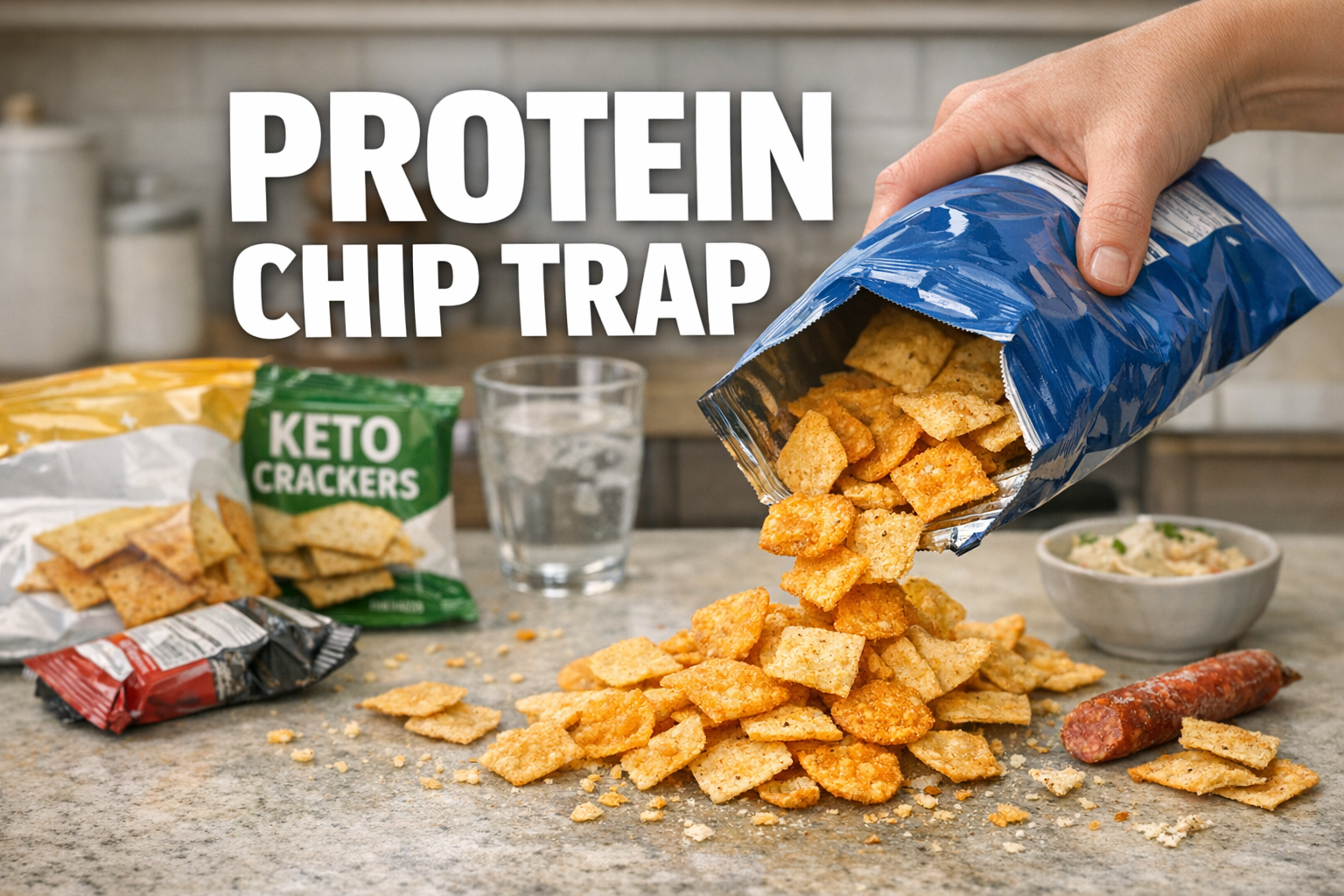
High-protein keto chips and crackers look safer than regular snack food, but that does not mean they solve the real problem.
They may be lower carb. They may even have decent protein on the label. But they still act like snack bait for a lot of people.
You open the bag thinking it will hold you over. Then you are still hungry, still picking, and still looking for something else 40 minutes later.
That is not a discipline issue. It is a structure issue.
Why high-protein keto chips still backfire
The problem is not just carbs. The problem is the whole setup.
Most high-protein keto chips and crackers are easy to eat fast, weak at shutting down hunger, and way too easy to treat like a reward food. They borrow the language of protein, but they often act like crunchy convenience food with better marketing.
That matters because keto usually works best when your meals feel finished. If a food keeps you chewing, picking, and circling back for more, it can quietly wreck appetite control even if the label looks cleaner than potato chips.
Cause 1: They feel like a snack, not a real meal
This is where most people mess up. They see “high protein” on the front and mentally upgrade the food into something stronger than it really is.
But a small bag of crunchy chips does not usually create the same fullness as a plate with real protein, some fat, and an actual stopping point. The texture invites grazing. The portion is usually small. And the meal-ending signal never really shows up.
Real life example: you eat a bag of keto chips at 3 PM because lunch was weak or late. It tastes savory enough to feel smart. But by 4:30, you want jerky, cheese, nuts, or dinner early because the snack never truly landed.
The common mistake is counting the protein grams and stopping there. Protein on a label is not the same as a filling structure.
The fix is to treat these foods like an add-on at most, not your main answer. If you need something fast, build around actual protein first. That might mean leftover chicken, burger patties, eggs, deli meat, tuna, or a simple backup option. If you want a portable fallback, Chomps Grass-Fed Beef Sticks make more sense than pretending chips are lunch.
For a bigger protein reset, read Keto Protein Fix Map: How to Stop Weak Meals, Snack Dinners, Fake Fullness, and All-Day Hunger.
Cause 2: Crunchy foods are easy to overeat before your brain catches up
Crunch changes behavior. Foods that crack, snap, and feel light can disappear fast.
That is a problem on keto because it creates a fake sense of control. You tell yourself you are eating a better version of chips, so you stay relaxed. Then you keep reaching into the bag because it does not feel heavy or serious.
In real life, this shows up at work, in the passenger seat, or while making dinner. You open the bag for “a few bites,” then the bag is gone before you even feel like you properly ate.
Another mistake is pairing these foods with distracted eating. Laptop open. TV on. Driving home. Standing at the counter. The snack disappears into the background, but the intake still counts.
The direct fix is boring, but it works: do not eat these foods straight from the bag as a default habit. If you buy them, portion them on purpose and only eat them alongside a real protein anchor. Better yet, replace the crunchy-fix habit with a cleaner protein backup like Tillamook Zero Sugar Beef Jerky, hard-boiled eggs, or leftover meat you actually have to finish.
If you keep getting fooled by “safe” servings, this breakdown will help: Keto Macro Blind Spots: Why Portions, Sauces, Bites, and Drinks Stall Progress.
Cause 3: They quietly replace better food
High-protein keto chips are not just a problem because of what they are. They are a problem because of what they push out.
When packaged snack food becomes your backup plan, you stop solving the real issue. You stop asking why lunch is weak, why dinner keeps getting delayed, or why you never have a simple protein option ready.
That is how an office drawer, pantry shelf, or glove box starts running your whole food system. The snack becomes the bridge, then the meal, then the second snack after the snack fails.
A common version looks like this: you skip breakfast, grab coffee, get busy, eat keto crackers at noon, have another “healthy” snack at 3, arrive home starving, and overeat at dinner. On paper, every choice looked low carb. In real life, the whole day was underfed and snack-built.
The mistake is thinking convenient means effective. It does not. Plenty of keto-friendly packaged foods are technically low carb but still terrible at keeping you steady.
The fix is to build two or three repeatable rescue options that beat snack logic. Think leftover taco meat, rotisserie chicken, burger patties, eggs, canned salmon, cottage cheese if it works for you, or deli roll-ups. Fast matters. But real food still matters more.
If your entire day keeps turning into portable low-carb products, read Why High Protein Keto Still Fails When Every Meal Is Basically Snack Food.
Cause 4: The protein label makes portion creep feel harmless
Once a food gets a health halo, people stop watching it closely. Protein is one of the biggest halos in keto right now.
That means bigger handfuls, extra bags, or stacking chips with dips, cheese, nuts, and drinks because the whole thing still feels better than eating regular junk food. But better than regular junk food is a very low bar.
Real-life version: you buy keto crackers for a late-night snack. Then you add cheese, a few slices of meat, maybe some nuts, maybe one more handful because they are “high protein.” Suddenly you did not have one planned snack. You had a loose buffet with no clean endpoint.
The mistake here is not evil ingredients. It is permission creep.
The fix is to stop asking whether a product is better than chips and start asking whether it solves hunger cleanly. If it makes you want more food instead of ending the food conversation, it is not helping as much as you think.
This is also why so many people do better after cutting back on packaged keto treats entirely. For a related trap, see Why “Keto” Protein Treats Keep Turning Into a Second Craving Instead of a Real Meal.
Cause 5: They keep you in a snack mindset all day
Keto gets easier when meals are clear and boring enough to work. It gets harder when every food choice feels like a packaged workaround.
High-protein keto chips and crackers keep a lot of people mentally locked into convenience mode. You are still hunting for edge-case products, still trying to outsmart hunger with labels, and still eating foods that feel more like a treat than a fix.
That snack mindset is dangerous because it spreads. One crunchy “safe” snack at noon becomes another at 3 PM, then dessert-like keto food at night, then confusion about why progress slowed.
You can see the same pattern in other packaged keto foods that look disciplined but act like processed snack food. That is why the bigger issue is not just chips. It is the whole convenience-food trap.
If you want the bigger map, read Net Carb Trap Map: The No-BS Hub for Bars, Wraps, Drinks, and Desserts.
Common mistakes that make this worse
- Using keto chips as lunch instead of as a side
- Eating them in the car, at your desk, or while cooking dinner
- Buying them because the front label says protein without checking how they affect your hunger
- Stacking them with other snack foods and calling the whole thing fine
- Keeping too many packaged backups and too few real protein options
Here is the truth: if a food leaves you hunting for another bite, it is not doing the main job.
That does not mean high-protein keto chips are forbidden forever. It means you should stop expecting them to fix a problem they do not fix well.
Related:
What works better instead
If you want less hunger, fewer random portions, and fewer sneaky stalls, make your default options more obvious.
- Build meals around real protein first
- Keep one or two portable backups that actually shut down hunger
- Use packaged crunchy keto foods as occasional extras, not routine meal replacements
- Pay attention to what happens 60 to 90 minutes later, not just what the label promised
If one bag turns into a second snack every time, believe the pattern. You do not need better willpower. You need a better default.
Fix this first:
- Stop using high-protein keto chips or crackers as a fake lunch. Pair any packaged snack with real protein or skip it.
- Remove your biggest snack-danger situations: desk drawer, car console, and standing-at-the-counter eating.
- Set up two fast backup foods this week that beat snack logic, like jerky, eggs, leftover meat, or deli roll-ups.
- Notice whether the product actually ends hunger. If it starts a second round of eating, it is a trap for you.
If this helped, here are more no-BS keto guides worth reading next:
- Why “Keto” Protein Treats Keep Turning Into a Second Craving Instead of a Real Meal
- Net Carb Trap Map: The No-BS Hub for Bars, Wraps, Drinks, and Desserts
- Why “High-Protein Keto Ice Cream” Still Ends in Hunger, Bloating, and Second-Dinner Snacking
Explore more Keto Lies & Myths guides here: