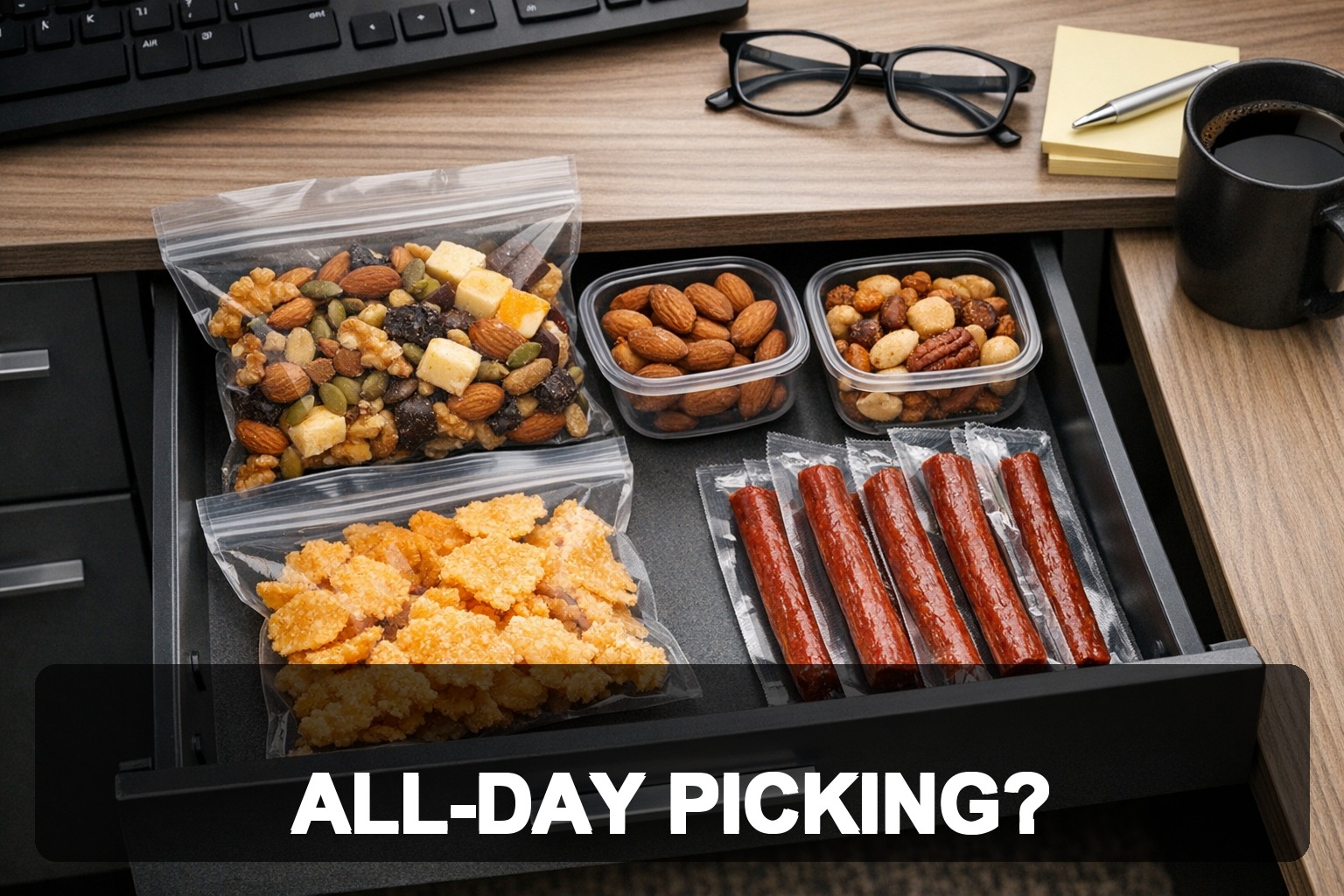
You buy keto desk drawer snacks thinking they will save you from vending-machine disasters. Then the bag sits in your desk, you grab a handful every hour, lunch never really happens, and by 4 PM you feel hungry, foggy, and weirdly unsatisfied.
That is not a discipline problem. It is usually a structure problem. A stash that was supposed to be backup food quietly turns into background eating.
Most people do not plan to eat trail mix, cheese crisps, meat sticks, and random “low-carb” bites all day. It just happens when work gets busy and the easiest food is always within reach. I have seen this exact pattern: someone swears they barely ate, then starts listing ten little desk bites that quietly added up to a full extra meal.
Why keto desk drawer snacks backfire so easily
Desk snacks feel smart because they look prepared. The problem is that most stash foods are built for convenience, not fullness. They are easy to nibble, easy to justify, and easy to keep eating while you answer emails.
That means you never get the clean stop that comes from a real meal. No plate. No reset. No clear “I ate, and now I am done.” If you are already struggling with portions, this is the same kind of blind spot that shows up in everyday keto macro blind spots.
Cause #1: your emergency snack stash became your main eating system
Here is where most people mess up. They call the desk drawer an emergency backup, but they use it like breakfast, lunch, and stress relief all in one.
Maybe your day starts with coffee. Then you get busy. At 10:30, you grab a few nuts. At noon, you eat some cheese crisps. At 2 PM, you open a meat stick. At 3:30, you finish the trail mix because you are “still kind of hungry.” Technically, all of that looked low carb. Practically, you never ate a real meal.
The mistake is thinking lots of little keto bites equal meal structure. They usually do not. Small snack foods often leave you half-fed, which means hunger keeps humming in the background all day.
The fix is simple but not always fun: keep your stash in the backup lane. Backup means it saves you between real meals. It does not replace the meal itself. If you keep losing lunch to meetings, the real solution is to build a stronger workday food system, not a bigger snack drawer. That is exactly why the keto workday survival system matters.
Cause #2: trail mix and snack blends make portion drift almost automatic
Trail mix is one of the easiest foods to underestimate. A small handful turns into three. A few bites while reading something stressful turns into the bottom of the bag. And because it feels like “just nuts and little stuff,” your brain often does not count it as much food.
This gets worse when the mix includes sweet bits, chocolate-style pieces, dried fruit, coated nuts, or anything crunchy enough to keep you reaching back in. Even keto-labeled versions can create the same problem. They may be lower carb than regular trail mix, but they still encourage all-day picking. A lot of readers who think they are dealing with a willpower issue are really dealing with the same label confusion covered in the net carb trap map.
That is why this is different from sitting down and eating a planned meal with protein and a clear stopping point. A bag in a drawer creates friction-free eating. You do not need a plate, a break, or a decision. You just keep going.
The common mistake is buying family-size or resealable bags and telling yourself you will use moderation. Most people do better with hard edges than with vague promises. If nuts are part of your plan, portion them before the workweek starts. If you will not portion them, do not make them your default desk food.
If you need a cleaner backup, a single meat-stick serving is usually easier to stop than a loose bag of snack mix. Something simple like Chomps grass-fed beef sticks works better as an actual stopgap because it comes with a clear ending. You eat one, then you are done.
Cause #3: desk-drawer snacks keep hunger alive instead of finishing it
A lot of keto snack foods are crunchy, salty, and easy to eat fast, but they are not always satisfying enough to close the loop. You get a quick hit of flavor, maybe a little energy, then you are right back to thinking about food an hour later.
This is where people start saying, “I never had a real meal, but I ate all day.” The body usually responds better to a real meal than to five tiny snack events.
Real life example: you skip lunch because you are trying to be productive. You eat nuts, cheese crisps, and maybe a “protein” treat at your desk. By dinner, you are starving enough to overeat, snack while cooking, or talk yourself into dessert because the whole day already feels sloppy.
The mistake is treating hunger like something to silence instead of solve. If your food never really fills you up, hunger stays on the table. That is one reason so many packaged low-carb foods show up in keto convenience food traps and in articles like why keto protein treats backfire.
The fix is to ask one blunt question: “Did I actually eat a meal?” If the answer is no, stop pretending the snack pile handled it. Eat a real meal with enough protein and a defined beginning and end. If you are not sure what that looks like, start with the keto protein fix map and compare that to a desk day built on little bites.
Cause #4: visibility turns snacking into a background habit
If the food is in your top drawer, beside your keyboard, or in plain sight every time you stand up, it will call your name all day. This is not weakness. This is environment doing what environment does.
Visible food creates more food decisions. More food decisions usually means more random eating, especially on office days.
The mistake is leaving snack food loose, visible, and easy to grab. The fix is friction. Put backup food out of sight. Keep one serving available, not the whole week’s supply. If you want nuts around, use a small pre-portioned amount instead of a giant bag. Plain options like Blue Diamond almonds make more sense when you portion them first instead of free-pouring from the bag all week.
Cause #5: you are using snacks to solve a meal-planning problem
This is the deeper issue. A lot of desk-drawer snacking is not really about trail mix. It is about weak planning earlier in the day.
If breakfast was just coffee, lunch was an afterthought, and dinner is still hours away, of course the snack stash starts looking like a solution. But the stash is usually a patch, not a fix.
This is also why the problem can quietly stall progress. You may not be eating obvious junk. You may just be eating too many small “safe” foods with no structure, no satiety, and no clear endpoint. Then you wonder why fat loss feels slower and hunger feels louder.
The common mistake is obsessing over whether the snack is technically keto while ignoring what the overall day looks like. The same pattern shows up in high-protein keto snack foods: the label sounds safe, but the day still falls apart because snack logic replaced meal structure.
The fix is to solve the earlier breakpoints. Pack a real lunch. Decide on a real first meal. Build a repeatable office-day default. A snack drawer should support that system, not become the system.
What most people get wrong about keto desk drawer snacks
The real win is not just having keto-friendly food nearby. It is having food nearby that does not turn into constant grazing.
If your office food is making you think about food more often, it is not helping as much as you think. The best backup foods reduce damage. They do not create a second eating routine.
Common mistakes that keep this pattern going
- Calling all-day nibbling “being prepared”
- Keeping giant resealable bags at your desk
- Using snack foods instead of a real lunch break
- Buying sweet or hyper-palatable keto snacks that keep you reaching back in
- Thinking low carb automatically means low impact
- Leaving food visible and within arm’s reach all day
Those mistakes just make your food environment too easy to drift through.
What works better than a random desk drawer stash
If you need office backup food, keep it boring, simple, and easy to stop. That means single servings, clear endings, and foods that do not feel like entertainment.
Better examples:
- one beef stick instead of an open bag of trail mix
- a planned lunch instead of “I’ll piece something together”
- a pre-portioned snack used once, not a drawer full of open packages
- food stored out of sight instead of next to your keyboard
- a stronger protein-first meal earlier in the day so the stash stays backup only
You just need to stop using snacks as a fake meal system.
Related:
FAQ: keto desk drawer snacks
Are keto desk drawer snacks always bad?
No. They are useful when they stay in the backup role. The problem starts when they replace lunch, become boredom food, or keep you half-fed all day.
Can keto trail mix stall weight loss?
It can if it turns into background eating. The issue is not just carbs. It is the combination of easy portions, constant access, and no clear meal boundary.
Fix this first:
- Remove the all-day grazing foods. If a snack makes it easy to keep reaching back in, it does not belong in your desk as an everyday default.
- Replace one snack event with one real meal. The fastest improvement usually comes from eating an actual lunch instead of five low-carb bites.
- Use backup foods with a clear ending. Think one serving, one wrapper, one stopping point.
- Hide the stash. Out of sight beats constant food decisions.
- Review the full day, not just the snack label. If keto keeps feeling hard, the real issue is often weak structure earlier in the day.
→ If this helped, here are more no-BS keto guides worth reading next:
- Keto Protein Fix Map: What to Check When You Keep Eating but Never Feel Settled
- Keto Convenience Food Traps: The No-BS Guide to Bars, Wraps, Shakes, Desserts, and Low-Net-Carb Labels
- Why High-Protein Keto Snack Foods Still Act Like Snacks, Not Real Meals
Explore more Keto Lies & Myths guides here: