
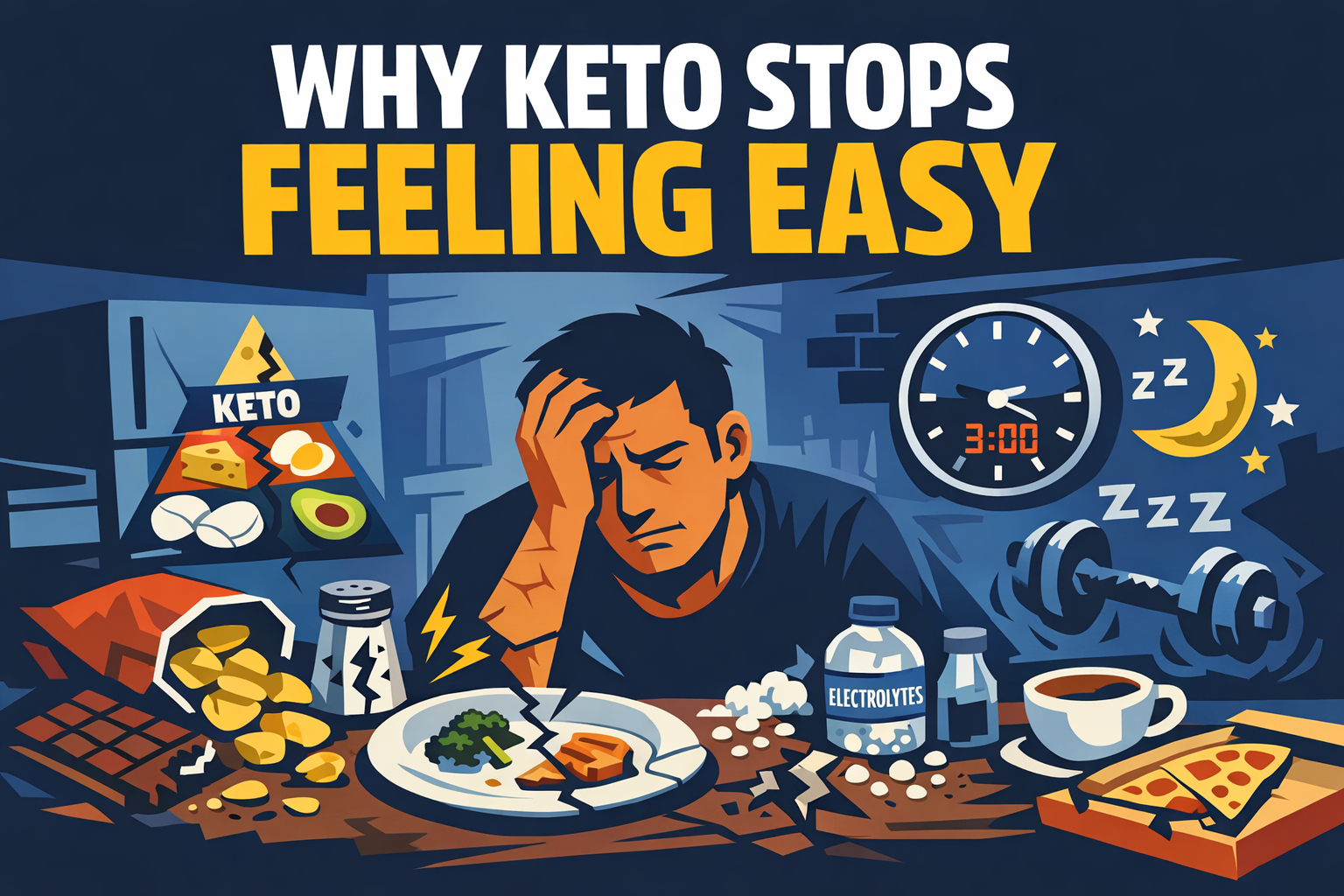
Keto can feel simple at first. You cut carbs, the scale moves, your appetite calms down, and you think, “Okay. I get this now.”
Then it stops feeling easy.
You start getting hungrier. Nights get messier. Cravings come back. Sleep gets weird. Meals look keto on paper, but the day still ends in damage control.
That does not always mean keto stopped working.
Most of the time, it means the easy part was never the whole story. Early momentum can cover a lot of weak habits for a while. Once that honeymoon fades, the real leaks show up: weak protein, sloppy meal structure, low electrolytes, fake keto foods, bad sleep, and routines that keep changing.
This is where a lot of people get stuck. They keep trying random fixes one at a time. More fat. Less food. More willpower. Another sweetener swap. Another snack labeled high protein.
That usually makes the whole thing more confusing.
A better way is to stop treating each symptom like a separate mystery. Hunger, cravings, tiredness, weak dinners, and routine drift usually come from the same small group of problems. If you can sort those in the right order, keto starts feeling simpler again.
Start with the real question: what changed after the easy phase wore off?
When people say keto used to feel easier, they usually mean one of three things.
First, early success covered sloppy structure. Maybe you were still losing water weight and feeling motivated, so weak meals did not seem like a big deal yet.
Second, your routine changed. Work got busier. Sleep got worse. Dinner got later. You started eating out more. Suddenly the old “just keep carbs low” approach stopped holding together.
Third, you started relying on keto-looking foods that do not actually solve the problem. This is where keto appetite breakdown becomes useful, because it helps you tell the difference between a protein problem, an electrolyte problem, a sleep problem, and a fake-food problem.
If your main symptom is that you are constantly hungry, snacky, and thinking about sugar, the fastest overview is keto hunger and cravings fix map.
Problem 1: your meals are technically keto, but they are not doing enough work
This is one of the biggest reasons keto stops feeling easy.
The meals still look low carb, but they are weak. Breakfast is coffee and something tiny. Lunch is a yogurt, a bar, or a snack plate. Dinner is late, rushed, or built around whatever is left. On paper, carbs are still low. In real life, your appetite never really settles.
A lot of people confuse low carb with filling. Those are not the same thing. You can eat very low carb and still spend the whole day half-fed.
It shows up like this: you keep opening the fridge, you want something after every meal, and by night you feel like keto only works for people who are somehow less hungry than you are.
The common mistake is trying to fix that with more snacks instead of better meals. That is why pages like keto protein problems and keto meal structure that actually keeps you full matter so much. They get you back to real meals instead of endless patches.
Problem 2: protein looks fine in your head, but not in your actual day
A lot of people say they eat enough protein because they had eggs, yogurt, chicken, or a shake somewhere in the day. That is not the same as building meals around protein in a way that actually holds your appetite down.
This is where keto gets sneaky. A meal can look healthy and still fail.
You have a salad, but the protein is weak and the toppings do all the heavy lifting. You buy high-protein convenience foods, but they act more like snacks than meals. You tell yourself the yogurt bowl is a solid breakfast, then you are looking for more food by 10 AM.
If that is your pattern, look at why keto feels harder when you are not eating enough protein early in the day and why high protein keto still fails when every meal is basically snack food.
The fix is not chasing the highest protein label. It is making sure your first real meal and your main meals are built to actually finish the job.
Problem 3: electrolytes are quietly turning a normal day into a messy one
Sometimes keto does not feel harder because of willpower. It feels harder because you feel off.
You are flat, headachy, cranky, tired, weirdly hungry, or both hungry and nauseous. By the time dinner shows up, you are making bad food decisions because your body is already behind.
This gets misread all the time. People think they need a treat, a cheat meal, or more caffeine. Sometimes what they really need is to stop running the whole plan half-dehydrated and under-salted.
Electrolyte problems rarely stay in one lane. They can make hunger worse, sleep worse, workouts worse, and next-day cravings worse. That is why keto electrolyte problems and keto dehydration in real life are such useful troubleshooting pages.
The common mistake here is waiting until you feel terrible to take the problem seriously. The better move is to notice the pattern earlier: heat, stress, coffee, light meals, activity, and long gaps between food all make the easy version of keto disappear fast.
Problem 4: nights get harder because the whole day set them up to fail
People love blaming the night by itself. They say they just lose discipline after dinner. Usually that is not the whole truth.
Night hunger is often the bill for everything that happened earlier.
If breakfast was weak, lunch was late, protein was light, and you spent the afternoon tired and running on caffeine, of course night feels harder. The evening is not a separate personality problem. It is where the day collects its debt.
This is also why sweet cravings feel so personal and so dramatic at night. The cravings are real, but the setup often started much earlier. If that loop keeps repeating, use why keto gets harder at night and why you are still hungry on keto as your main next steps.
One of the most common mistakes is trying to save the day with a tiny dinner because you feel guilty. That usually turns one messy evening into a second round of random eating an hour later.
Problem 5: sleep problems make every other keto problem louder
Bad sleep changes how keto feels. Fast.
You wake up more snacky, more caffeinated, more emotional around food, and less interested in making a real breakfast. Then the whole day gets built on a weaker foundation.
A lot of people miss this because the food still looks mostly on plan. But if sleep is off, appetite signals get louder and patience gets shorter. Suddenly the foods you can normally handle start calling your name all day.
It can also work the other way around. Weak food choices, electrolyte issues, and late-night overeating can make sleep worse, which then makes tomorrow feel even harder. That is why keto sleep problems and why poor sleep makes keto cravings hit harder the next day belong in the same conversation as hunger and cravings.
If keto suddenly feels harder for no obvious reason, do not skip the sleep question. It is often the missing piece.
The practical framework: fix the biggest leak first, not everything at once
This is also where routine drift matters. Keto often stops feeling easy because the structure got looser long before carbs got worse. Coffee replaces breakfast. Dinners get winged. “Safe” snack foods hang around. You start chasing a new trick when what you really need is a better default day.
If keto no longer feels easy, use this order.
First: ask whether your meals are actually filling. If not, fix protein and meal structure before you do anything else.
Second: ask whether your day is running too hard on caffeine, too light on electrolytes, or too light on real food. If yes, fix that before you assume cravings are just emotional.
Third: ask whether the problem is mostly an evening problem, a sleep problem, or a routine problem. Do not lump them together if one is clearly driving the rest.
Fourth: look for fake fixes. Sweet keto extras, snack meals, and convenience foods often keep the problem alive while making you feel like you are still trying.
This is why random keto advice feels so frustrating. It tells you everything matters, which is true, but not helpful. What helps is knowing which thing matters first in your version of the mess.
Reality check: keto feeling harder does not mean you failed
Here is the blunt version.
If keto stops feeling easy, it does not automatically mean your body is broken, your willpower is gone, or keto is fake. It usually means the simple early phase gave way to real life.
That is normal.
What matters now is whether you keep making the problem more complicated. If you keep layering snacks on top of weak meals, caffeine on top of bad sleep, and sweet keto foods on top of real cravings, the plan will keep feeling harder than it needs to.
But if you start reading the pattern correctly, keto can feel practical again. Not perfect. Not effortless. Just simpler, steadier, and less dramatic.
Fix this first:
- Pick the loudest symptom right now: hunger, cravings, night eating, low energy, or bad sleep.
- Check whether your meals are real meals or just keto-looking food with weak protein and weak structure.
- Fix electrolytes, fluids, and coffee-over-food patterns before assuming you need more discipline.
- Use one strong next-step article, not five random ones, so you actually solve the main leak.
- Rebuild one repeatable default day before you worry about being perfect all week.
If this helped, start with these next:
- What to change first when hunger and cravings keep running the day
- Figure out whether the real problem is protein, electrolytes, sleep, or fake keto foods
- Why nights keep getting harder even when the day looked mostly fine
Explore more Keto That Actually Works stories here: