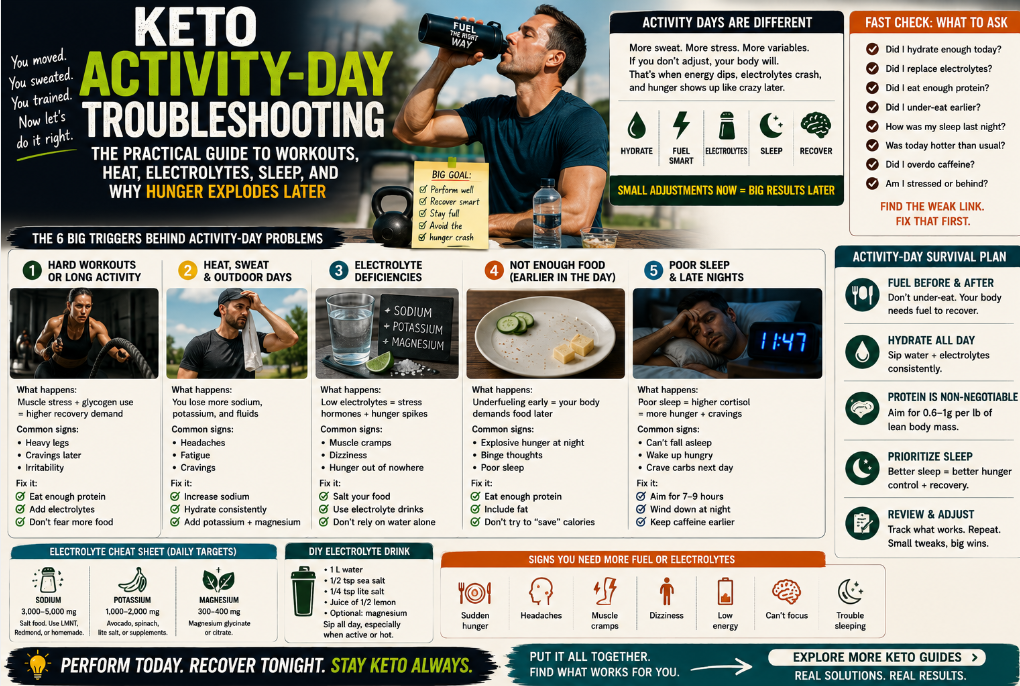
Here’s the truth. This is usually not a fitness problem. It is an activity-day troubleshooting problem. Active days expose weak electrolytes, weak meal timing, weak recovery, and weak sleep fast. The ugly part is that the bill usually comes due later. So people blame keto, blame hunger, or blame willpower when the real problem started hours earlier. This page is the practical guide for that chain: sweat or heat, then low intake, then bad sleep, then next-day hunger. If keto only works on calm home days, your routine is not stable yet. That is fixable.
Keto activity-day troubleshooting starts with one question: where did the day first go wrong?
Most people do not crash in the middle of the workout, walk, yard work, or outdoor day. They crash later. You push through the activity. Then dinner turns weird. Sleep gets bad. The next morning you wake up hungry, puffy, flat, and annoyed. That delay is why this gets misread. In real life, the chain usually looks like this:- You start the day a little low on sodium, fluids, or food.
- Heat, sweat, walking, errands, or workouts make the gap bigger.
- You stay busy and tell yourself you are fine.
- Later, hunger, side effects, and bad recovery all hit at once.
Start here:
Problem 1: Sweat and heat quietly create the mess before hunger even starts
This is where a lot of people miss the real cause. You think the issue is dinner or cravings later. Sometimes the real problem started at noon when you sweated more than usual, ran around outside, drank plain water, and never replaced what you lost. In real life, this looks like a gym session after coffee, a hot Costco run, yard work, a long walk, a beach afternoon, or a pool day where you keep saying, “I’m fine.” Then by evening you have a headache, your legs feel flat, and your appetite goes from normal to aggressive. The common mistake is only treating “hard workouts” like real activity. But your body does not care what label you use. Heat, walking, chores, sun, standing, carrying stuff, and sweat all count. The fix is to stop pretending the day is normal. If the day includes heat or sweat, expect a higher electrolyte demand and start earlier than you think you need to. For a simple backup, some people do better when they keep a sugar-free electrolyte mix ready instead of relying on guesswork, like LMNT Zero Sugar Electrolytes or Ultima Replenisher electrolyte powder. If your crashes happen after sun, skipped meals, and “I’m fine” hydration, read Why Keto Side Effects Hit After a Pool Day When Sun, Skipped Meals, and “I’m Fine” Hydration Catch Up at Night. If it is more of a chores, yard work, or walking pattern, use Why Keto Side Effects Hit After Long Walks, Yard Work, and “Not Really a Workout” Days.Problem 2: You under-eat earlier because the day is busy, then hunger explodes later
This is the clean-eating trap. The food looks “good,” but the structure is weak. Coffee. A light breakfast. Maybe a tiny lunch because you were busy. Maybe a meat stick, a cheese snack, or nothing at all because dinner is “later.” Then later shows up. Now you are showering after the gym, driving kids around, unloading groceries, finishing yard work, or trying to cool off after being outside all day. Dinner gets delayed. Appetite spikes. Suddenly you want everything salty, crunchy, sweet, or convenient. This is why a keto activity day can turn into nuts, cheese, bars, jerky, leftovers, dessert, and then a second dinner an hour later. The common mistake is thinking low carb automatically means stable appetite. It does not. Activity exposes weak meal structure fast. The fix is boring, which is why it works: put a real protein-forward meal earlier in the day and stop trying to “save calories” before the danger window. If you know you have a workout, long outdoor block, or active evening, do not let protein show up at 9 PM. If your main issue is delayed hunger after training, especially later in the day, go straight to Why Keto Gets Harder After Evening Workouts (And What to Fix First). That is usually where the “I was fine and then I wanted to eat the whole kitchen” pattern gets clearer.Problem 3: The evening handoff is sloppy, so the active day turns into a sleep problem
This is the part a lot of people never connect. The workout or active day itself is not always the main problem. The handoff into evening is. You finish late. You are hungry but not organized. You eat too little because you are tired. Or you eat random snack food because cooking feels impossible. Or you throw caffeine at the slump too late in the day and stay wired all night. Now your body is under-fed, under-salted, overstimulated, or some ugly mix of all three. That is how one active day becomes a night-hunger problem, a restless-sleep problem, or a “why am I awake at 2 AM and still thinking about food?” problem. The common mistake is acting like sleep is a separate topic. On keto, bad recovery often shows up as bad sleep first and bad hunger second. The fix is to treat evening like part of the workout plan, not the afterthought. Know what dinner is before the day starts. Know how you are rehydrating. Know what you are not doing too late, especially caffeine and fake “recovery treats.” If this is your repeat pattern, read Keto Sleep Problems: The No-BS Hub for Poor Sleep, Night Hunger, Caffeine Dependence, and the Next-Day Keto Fallout. That page covers the sleep side of this loop better than generic workout advice ever will.Problem 4: Bad sleep turns one active day into next-day hunger and fake “keto stopped working” panic
This is where people really start blaming the wrong thing. You sleep badly after the active day. The next morning you wake up flat, snacky, thirsty, and less patient. Then you lean harder on coffee, eat later than you should, or start chasing quick keto foods because a real meal feels like too much work. Now the second day gets messy too. In real life, this can look like doing everything “right” on a Saturday, sleeping badly that night, and then spending Sunday hungry and weirdly emotional around food. Or you do an evening workout, sleep like trash, and then Monday feels like keto just stopped working for no reason. The common mistake is focusing only on carbs. People think, “I stayed low carb, so why am I so hungry?” Because low carb does not erase poor recovery. The fix is to read the next-day hunger as a clue, not a character flaw. If appetite explodes after an active day, look backward first: Was sodium too low? Were meals too light? Did dinner happen too late? Did you carry the stress of the day right into bed? This is also why the broad troubleshooting map matters. Keto dehydration in real life and Keto sleep problems are usually the two best next stops when the crash lasts into the next morning.How to tell which branch of the problem you actually have
- You feel headachy, weak, dizzy, or strangely flat: Start with sweat, heat, sodium, and hydration.
- You get huge hunger later the same day: Look at protein, meal timing, and whether the day was under-fed early.
- You get wired and hungry at night: Look at the evening handoff, caffeine timing, and recovery food quality.
- You feel wrecked the next morning: Look at the whole chain, not just dinner. Hydration plus sleep is usually the real combo.
- This mostly happens on pool days, hot outdoor days, long walks, or chore-heavy days: You are probably underestimating “non-workout” activity.
What most people get wrong on keto activity days
They wait for symptoms to get loud before reacting. They drink plain water and call that hydration. They let coffee act like breakfast. They call snack food “recovery.” They assume being low carb means they are automatically covered. They plan the workout but not the food after it. And they treat the next-day hunger like a self-control failure instead of a clue.Related:
The practical system that makes keto activity days much easier to handle
- Identify the kind of day early. Heat, sweat, long walking, gym work, errands, yard work, and late dinners all raise the risk.
- Raise electrolytes before the crash. Do not wait until you feel awful to start fixing it.
- Get real food in before the danger window. Protein and sodium earlier beat damage control later.
- Protect the evening handoff. Know dinner. Know fluids. Do not let exhaustion make every food decision.
- Read the next morning correctly. Hunger, cravings, and bad mood usually point back to missed recovery the day before.
Fix this first:
- On your next active day, decide up front whether the main risk is sweat and heat, under-eating, or a bad evening handoff.
- Add fluids and sodium earlier than usual instead of waiting for the headache, cravings, or crash.
- Eat one real protein-forward meal before the day gets chaotic, even if the day still looks “light” on paper.
- Plan dinner and recovery before the activity starts so you are not making hungry decisions at night.
- If the same pattern keeps repeating, follow the next step that matches your version of the problem instead of reading ten random posts.
Best next step based on what happened:
- If the day ended in headache, thirst, or a weird flat feeling: Start with the dehydration and electrolyte fix map
- If the problem hits after training at night: Go to the evening-workout hunger troubleshooting guide
- If the crash continues into bedtime and the next morning: Go to the keto sleep problems hub