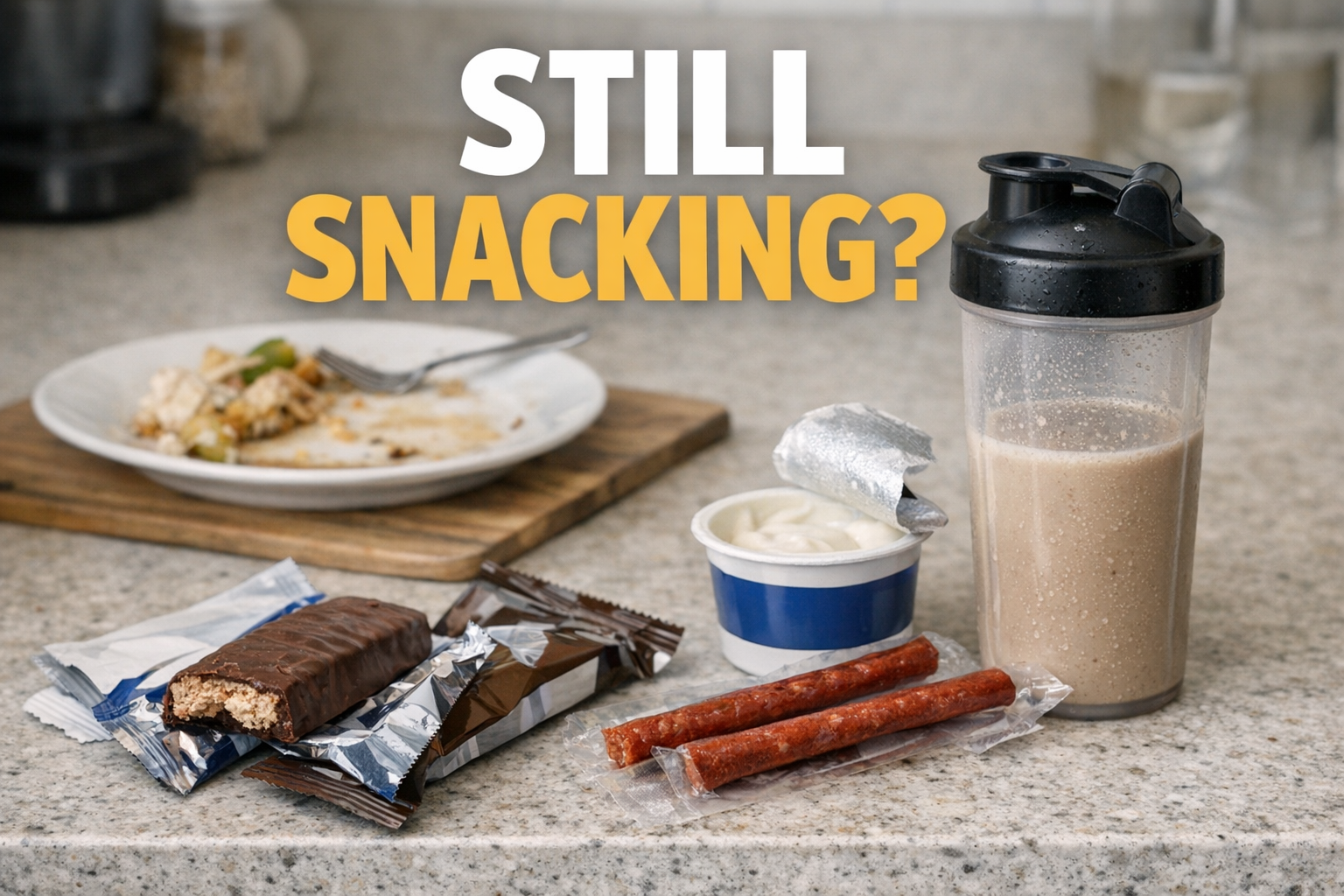
You can call it high protein keto all day, but if every meal is basically snack food, keto still breaks fast.
You stay technically low carb, but you keep feeling half-fed, weirdly hungry, and ready for another bite an hour later.
That is not a protein win. It is a meal structure problem wearing a high-protein label.
Maybe you have had one of those days where breakfast was a bar, lunch was a shake, and dinner somehow turned into cheese, meat sticks, and “something quick” from the fridge.
On paper it can look disciplined. In real life, it usually feels sloppy.
Here’s the truth: high protein keto still fails when protein shows up as snack food instead of real meals.
If you want better hunger control, better energy, and fewer cravings, you need meals that actually end.
Why high protein keto still goes sideways
A lot of people hear “eat more protein” and translate that into “buy more protein products.”
That is where things go wrong.
Protein matters. But a pile of protein-labeled convenience food is not the same thing as a solid keto meal.
When every meal becomes a grab-and-go item, you lose the structure that helps your body feel fed and settled.
The real problem is not just the amount of protein. It is the pattern.
Snack-based eating keeps appetite open all day because there is never a clear moment where your body registers, “That was a real meal. We’re done for now.”
If your hunger has been confusing lately, start with Keto Protein Problems: Why You’re Hungry, Snacky, and Stuck.
It helps you separate true protein issues from fake-keto-food problems.
And if your meals never seem to hold you, Keto Meal Structure That Actually Keeps You Full is worth reading next.
Start here:
Cause #1: your “protein meal” is too small to act like a real meal
This is where most people mess up. They grab a protein yogurt, a shake, a bar, or a couple meat sticks and assume the word protein means the meal is handled.
It usually is not. A lot of these foods are small, fast, and easy to eat, but they do not create much staying power.
You can hit a decent protein number and still end up underfed because the whole meal disappears in five minutes.
Real life version: breakfast is a ready-to-drink shake in the car. Lunch is a yogurt cup and a protein bar at your desk.
By 4 PM, you are in the pantry looking for almonds, cheese, peanut butter, or anything else that feels low carb enough to justify.
The common mistake is trusting the label more than your actual appetite.
“High protein” does not automatically mean filling. If the meal is tiny, drinkable, or over too fast, your brain may never get a clear signal that eating time is done.
The fix is simple but not glamorous. Build at least two real meals a day around solid protein you have to actually chew: eggs, chicken, beef, tuna, salmon, burgers without the bun, rotisserie chicken, or a real plate of leftovers.
If you use a shake, use it as backup, not as your whole food personality.
Cause #2: snack food keeps your body in grazing mode
Snack food does not just change what you eat. It changes how you eat.
Bars, yogurt cups, meat sticks, crunchy “protein” snacks, and little low-carb packs train you to keep opening, nibbling, and chasing the next small fix.
That matters because hunger control gets worse when your whole day becomes a string of mini eating events.
You are not sitting down, eating enough, and moving on. You are staying half-engaged with food all day.
That keeps appetite mentally active even when you are not truly starving.
Real life version: you start with a bar because you are busy. Later you grab a meat stick because lunch was weak.
Then you eat a handful of nuts because dinner is late. Then you tell yourself you had “high protein” today, even though you never once felt fully fed.
The mistake is thinking frequent low-carb snacking is the same as structure. It is not.
Grazing keeps food mentally active. When food stays mentally active, cravings usually stay active too.
That is why these days often end with stronger nighttime hunger, even if the macros looked fine earlier.
The fix is to create harder stops. Eat meals at a table when possible.
Put food on a plate instead of pulling calories out of wrappers for six hours straight.
If you need a backup snack, make it one deliberate bridge to the next meal, not a whole eating pattern.
Cause #3: “high protein” snack food is often too tasty, too sweet, or too fake to calm hunger
This is the part people hate hearing. A lot of high-protein keto foods are basically dessert with a better label.
Bars, puddings, flavored shakes, sweet yogurt cups, and crunchy low-carb treats often keep the reward side of eating switched on.
Even when the carbs stay lower, the whole experience can keep you in a snack mindset instead of a meal mindset.
That does not mean every flavored product is evil. It means the more your day feels like sweet little hits, the more likely you are to keep wanting more food.
That is one reason people say they are eating high protein and still feel snacky.
Real life version: breakfast tastes like dessert coffee. Lunch is a cookies-and-cream shake. Afternoon is a chocolate protein bar.
Nothing seems “off plan,” but by night you want salty food, crunchy food, more sweet food, or all three.
The common mistake is assuming macros erase food behavior. They do not.
Some foods are technically compliant while still making appetite control harder.
If that sounds familiar, read Keto Hunger and Cravings Fix Map.
It helps you sort out whether the problem is protein, meal timing, sweet-trigger eating, or a whole day that never really settled down.
The fix is to calm the food environment down. Make at least one meal each day boring in a good way: meat, eggs, fish, chicken, burger patties, leftovers, something plain enough that you eat it for fuel instead of entertainment.
When meals get simpler, hunger signals usually get clearer.
Cause #4: you lose volume, rhythm, and a clear stopping point
Real meals have shape. They take up space on a plate. They have a beginning and an end.
Snack food usually does not.
When your meals become shakes, sticks, cups, bites, and handfuls, you lose volume and rhythm.
There is less chewing, less time spent eating, less visual fullness, and less sense of completion.
That matters more than people think. The body does not only respond to protein grams.
It also responds to meal size, pacing, and whether eating actually felt like a meal.
Real life version: you eat a protein bar at noon because you are busy. At 1:30 you are not starving, but you are not settled either.
So you keep pecking at cheese, deli meat, keto cereal, or whatever else is easy. By dinner, you either overeat or feel weirdly unsatisfied even after eating.
The mistake is treating fullness like math only. If you want to feel done, the meal has to look and act like a meal.
The fix is to restore structure. Build meals with one clear protein anchor, a real serving size, and a simple plate you can finish.
Think eggs and sausage, burger patties and a side, chicken thighs and something salty, tuna mixed up into an actual bowl, or leftover steak with a quick side.
If you keep making “protein snacks” do the job of dinner, dinner never really lands.
This is also why so-called healthy light meals backfire. Why Keto Gets Harder at Night shows what happens when the whole day stays too light, too scattered, or too easy to nibble through.
Night hunger is often not random. It is the bill for a weak day.
What most people get wrong about high protein keto
The biggest mistake is thinking protein by label counts the same as protein in a real meal. It does not.
A bar can contain protein. A shake can contain protein. Jerky can contain protein.
But if your whole day is built from little protein products, you are still running a snack pattern.
That is why two people can both say they are doing high protein keto and get very different results.
One person is eating eggs, chicken, burgers, tuna, leftovers, and simple repeat meals.
The other is eating packaged convenience food every few hours and wondering why appetite never shuts up.
The label is not the full story. Meal structure is the full story.
The biggest high-protein keto mistakes
Here are the mistakes that show up again and again:
- Counting protein grams while ignoring whether meals feel finished
- Replacing meals with bars, shakes, and cups because they seem efficient
- Using snack foods all day, then wondering why nighttime hunger gets ugly
- Choosing sweet protein products that keep reward eating turned on
- Calling it high protein when it is really just low-carb grazing
If your keto day feels scattered, that is the clue. You do not just need more protein. You probably need fewer fake meals.
Related:
What high protein keto should look like instead
A better version of high protein keto is boring enough to work. It is not built on wrappers. It is built on repeatable meals.
That might mean eggs in the morning, leftover meat at lunch, and a simple protein-heavy dinner that does not leave you hunting for more food an hour later.
It might also mean keeping one emergency option around for rough days, but still treating actual meals as the default.
You do not need fancy keto products to fix this. You need more chewing, more structure, and fewer little “safe” foods pretending to be meals.
If your days keep collapsing into snack logic, start with two questions:
- Did I eat at least one real protein meal today?
- Did my eating have a stopping point, or was I low-carb nibbling for hours?
Those answers will usually tell you more than the label on a protein bar ever will.
Fix this first:
- Replace one snack-based meal tomorrow. Swap one bar, shake, or yogurt-cup meal for a real plate built around solid protein.
- Make your first real meal earlier. Do not wait until dinner to finally chew actual food. That is how all-day appetite stays open.
- Stop calling backup food a full plan. Keep shakes, bars, and jerky for emergency use, not as your main eating style.
- Build two repeat meals you can use on autopilot. The simpler they are, the more likely they are to actually fix the problem.
If this helped, read these next:
- Keto Protein Problems: Why You’re Hungry, Snacky, and Stuck
- Keto Meal Structure That Actually Keeps You Full
- Keto Hunger and Cravings Fix Map
Need the night-hunger version of this problem?