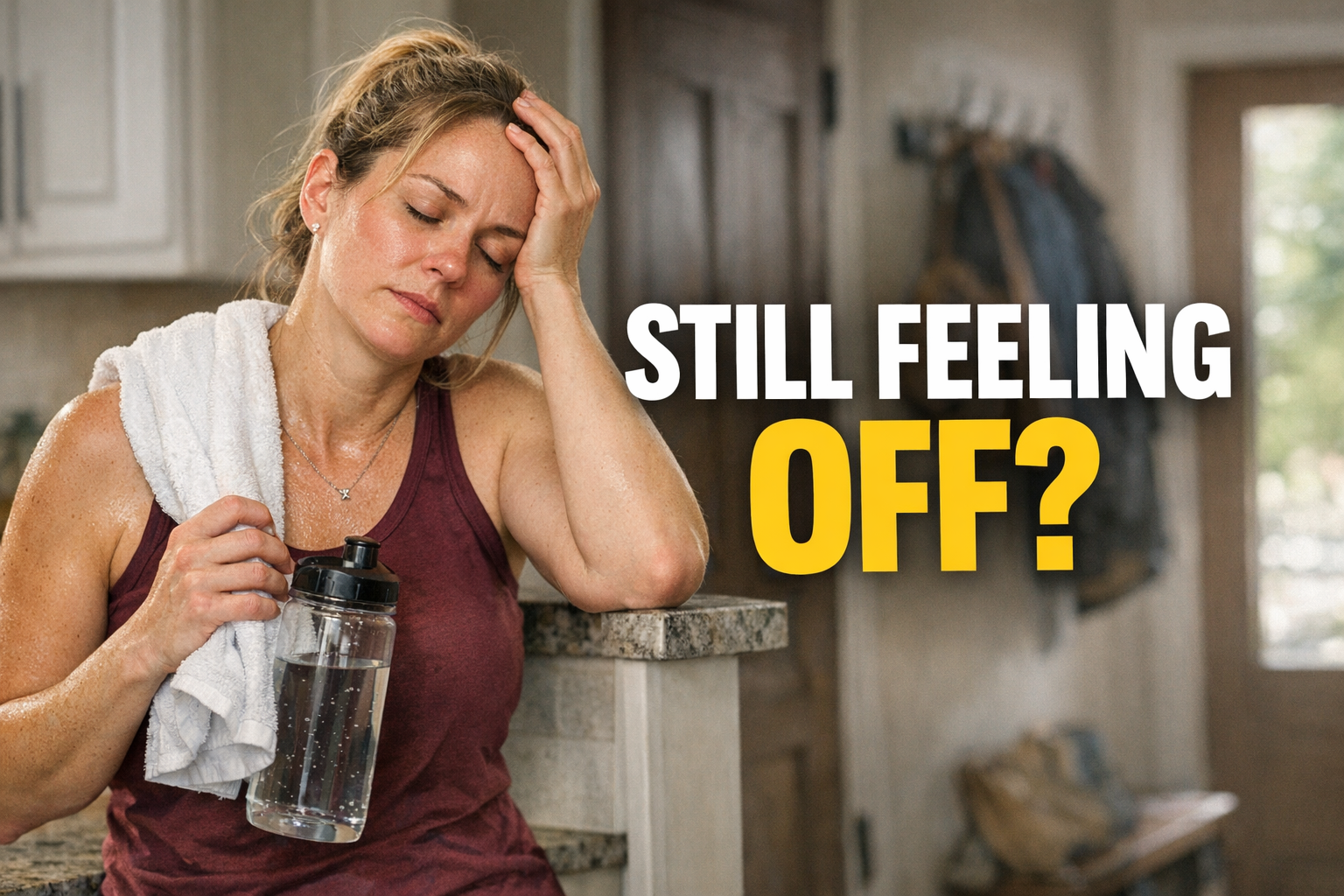
You can get through one hard day on keto and still feel fine. Then day two hits, or day three, and suddenly you feel flat, hungry, cranky, headachy, and weirdly wiped out.
If keto feels worse on back-to-back active days, the problem usually is not that keto "stopped working." It is that your first-day routine only covered the first day.
One good workout, one long yard-work day, or one travel day with lots of walking might be manageable. Stack them together, though, and the usual cracks show up fast.
It can look like this: you do a workout Friday, spend Saturday outside or on your feet, and by Sunday you are moody, snacky, sleeping badly, and wondering why everything suddenly feels harder.
Why keto feels worse on back-to-back active days
Back-to-back active days create a pileup problem. You lose more fluid and sodium than usual. You burn through easy energy. You delay or under-eat meals because the days are busy. Then you try to use the same old keto routine that barely worked on a quiet home day.
That is where people get fooled. Day one does not always feel dramatic, so they assume the plan is fine. But by day two or day three, the weak spots start stacking.
Here is the no-BS version: if activity goes up for several days, your recovery, hydration, meal timing, and sleep support need to go up too.
Start here:
Cause #1: Your electrolyte routine only covered the first day
This is the most common reason keto feels awful on back-to-back active days. You might replace some salt and water after the first workout, but not enough to cover what happens when the next active day starts before you have fully caught back up.
In real life, this shows up when Friday night seems fine, but Saturday afternoon you get a dull headache, feel shaky between meals, or start craving anything salty and easy. By Sunday, you are tired but restless, your appetite feels off, and you cannot tell whether you need food, water, or a nap.
The mistake is thinking electrolytes are a one-time fix. People treat them like a rescue tool instead of a running support system. One decent electrolyte drink after one workout does not always cover a whole weekend of sweating, walking, errands, and poor meal timing.
The fix is simple: support the whole stretch, not just the first event. If you know you have two or three active days in a row, start earlier and stay consistent. Salt your meals better. Drink water steadily instead of chugging late. If convenience helps, a simple electrolyte powder can make it easier to stay ahead of the slide instead of trying to rescue yourself at night.
If this keeps happening, read Keto Dehydration in Real Life. It breaks down why keto symptoms often show up after the stress has already started, not right when you expect it.
Cause #2: You are active for several days, but your protein stays stuck at lazy-day levels
A lot of people assume keto means fat matters most, so they never adjust protein when activity goes up. Then they wonder why they feel hollow, snacky, or impossible to satisfy after a string of active days.
What this looks like in real life: maybe you had coffee and eggs in the morning, a snack plate for lunch, and something random for dinner. That might not explode on a quiet desk day. But after a workout, a long walk, a sports weekend, or two days of hauling stuff around, that same intake often leaves you chasing food all evening.
The mistake is waiting until you are already starving and then grabbing whatever is fast. That is when keto turns into cheese, nuts, bars, bites while cooking, and the weird feeling that you ate a lot but are still not settled.
The fix is to make protein more deliberate when activity stacks up. Not perfect. Deliberate. Build at least one real meal around a strong protein anchor instead of hoping snacks will cover it. If dinner gets pushed late, use a practical bridge so you do not walk into the kitchen feral. A simple zero-carb protein powder can help on active weekends, travel days, or sports days when a full meal is delayed, but it should support real meals, not replace your entire plan.
For a deeper fix, read Keto Protein Problems. If your hunger keeps getting louder on active stretches, this is usually a big part of it.
Cause #3: Activity is climbing, but your meals are getting later and messier
Back-to-back active days are usually not clean gym-life days. They are messy real-life days. A workout rolls into errands. Yard work rolls into takeout. Travel rolls into grabbing whatever is nearby. The more active the stretch, the easier it is for meal structure to fall apart.
This is where the reader says, "But I was too busy to eat." Sure. That is exactly the problem.
You might have one decent breakfast, then spend the day outdoors, driving, walking, helping people, or doing chores. You grab a few bites here and there, maybe drink coffee, maybe have something salty, but you never really sit down to eat enough. Then dinner gets late, and now you are trying to solve two days of under-fueling in one sitting.
The mistake is assuming random low-carb bites count as a recovery plan. They usually do not. A few jerky bites, some cheese, and a handful of nuts can keep you upright for a while, but they often do not create the kind of meal that prevents an evening crash.
The fix is to protect one or two real eating points during active stretches. They do not have to be fancy. They just need to be real enough to stop the slide. Think protein first, salt your food, and do not let the whole day become "I’ll eat later." If your symptoms tend to show up after walking-heavy days, this long-walk keto side-effects guide will feel very familiar.
Cause #4: Bad recovery is bleeding into bad sleep
This is where the second or third day gets sneaky. People think the problem is only hunger or hydration, but poor recovery often rolls straight into poor sleep. Then the next day feels even worse.
Maybe you are thirsty at night, your legs feel jumpy, your heart feels a little too "on," or you wake up tired and wired. That does not just make the next morning annoying. It makes it much harder to eat well, salt well, and make sane decisions the next day.
The mistake is treating sleep like a separate issue. On keto, it often connects directly to under-eating, under-salting, too much late caffeine, and a long run of active days that never got proper recovery.
The fix is to stop looking only at the workout and start looking at the full chain. If you finished the day underfed, dehydrated, and overstimulated, your sleep is probably going to pay for it. Sometimes the first thing to fix is not a fancy supplement. It is earlier food, better sodium, less late caffeine, and not turning dinner into damage control at 9 PM.
If nights start getting worse during active stretches, read Keto Sleep Problems. It connects the dots between evening routine mistakes and next-day fallout.
Cause #5: You keep solving the wrong problem first
This is where people stay stuck. They feel bad after two or three active days, but they guess wrong about why. So they eat more fat when they really needed more sodium. Or they chug water when they actually needed a real meal. Or they blame keto entirely when the real issue was that recovery never matched the workload.
Here is the truth: the symptom you notice first is not always the root problem.
If you feel headachy, dizzy, or weirdly flat, think electrolytes first. If you are hungry nonstop and dinner never feels finished, think protein and meal size. If the second or third night starts getting restless, look at recovery, caffeine timing, and delayed meals. If you feel awful after a walking-heavy weekend, your body may simply be under-recovered from several small hits that did not seem like a big deal by themselves.
The mistake is using one fix for every version of "I feel off." That is why people bounce between coffee, keto treats, nuts, and random snacks without ever calming the situation down.
The fix is to identify the first broken link in the chain. Do not guess based on vibes. Ask what changed across the last two or three days: more sweat, less salt, weaker meals, later dinners, worse sleep, more caffeine, or all of the above?
Related:
Common mistakes on back-to-back active days
- Waiting until symptoms hit before thinking about electrolytes
- Using snacks as a substitute for one real protein-based meal
- Drinking more water but not increasing sodium
- Letting dinner get pushed too late two nights in a row
- Assuming walking, yard work, travel, or busy weekends do not count as "real" activity
- Trying to fix tired-and-wired nights with more caffeine the next morning
What to fix first if keto feels worse on back-to-back active days
Do not overcomplicate this. If your routine only works on calm home days, it is not a strong routine yet.
The goal is not to become perfect at sports nutrition. The goal is to stop letting two or three active days turn into a hunger, electrolyte, and sleep mess every single time.
Fix this first:
- Cover the whole active stretch, not just day one. Start sodium, water, and meal planning early if you know the next few days will be more active than normal.
- Protect one real protein-heavy meal each day. Do not let the whole weekend become bites, snacks, and "I’ll eat later."
- Watch the evening warning signs. Headaches, restlessness, cooking-time snacking, and late-night cravings usually mean recovery already slipped.
- Adjust the next day on purpose. If day one was heavy, do not wake up and run the exact same weak routine on day two.
- Match the fix to the symptom. Electrolyte problem, protein problem, meal-timing problem, and sleep problem do not all need the same answer.
If this helped, read these next:
- Keto Dehydration in Real Life: the no-BS guide to electrolytes, bad sleep, heat, alcohol, activity, and the next-day hunger mess
- Why keto side effects keep hitting on active days when your electrolyte routine only works at home
- Why keto side effects hit after long walks, yard work, and “not really a workout” days
Explore more Keto Problems & Side Effects guides here: