
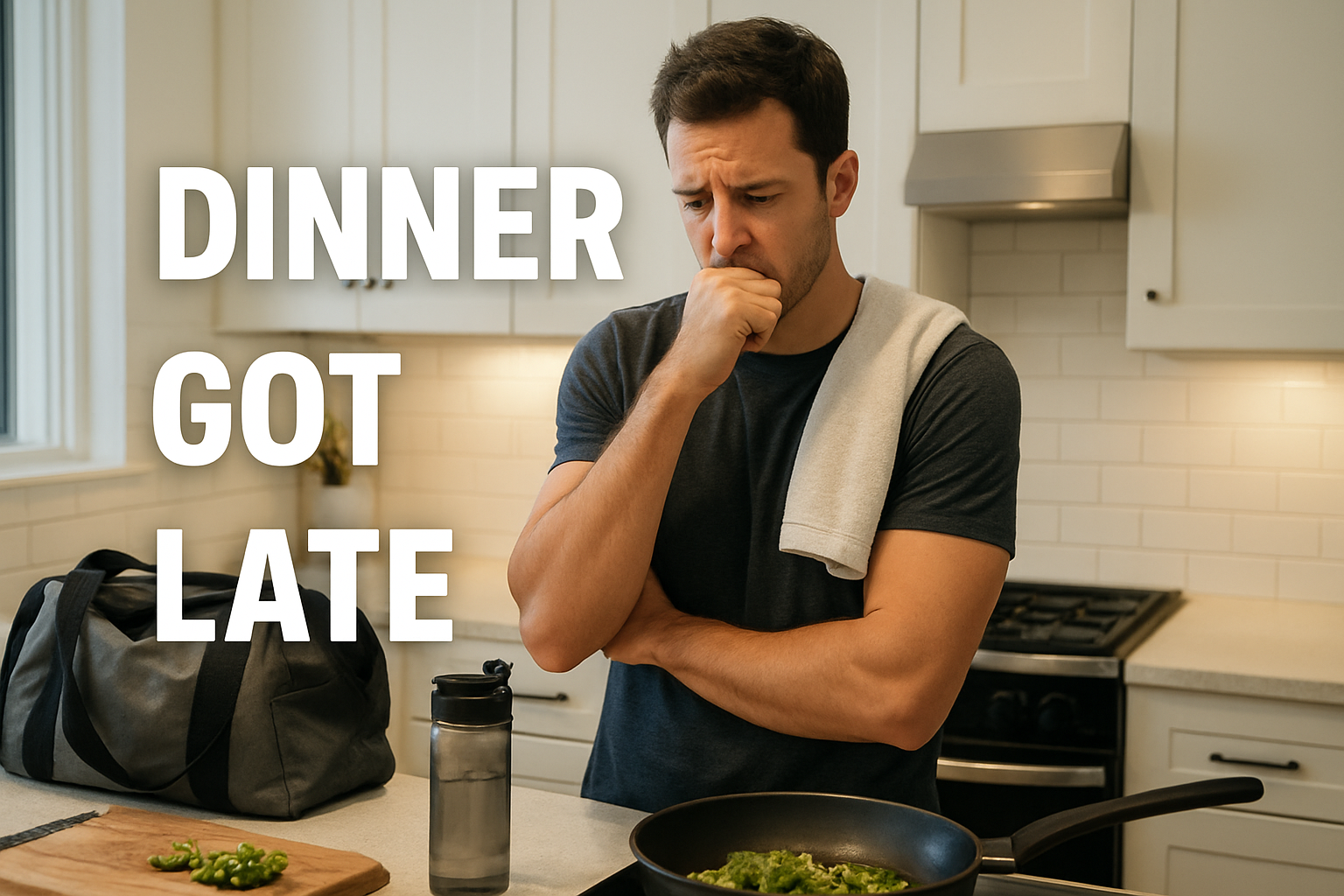
If keto gets harder after evening workouts, the workout usually is not the real problem.
The real problem is what happens before and after it. You finish training, dinner is delayed, sodium is low, protein is weak, caffeine is still hanging around, and now the whole night turns sloppy fast.
This is why some people feel fine during the workout, then 30 to 90 minutes later want everything in the kitchen.
That is not a discipline problem. It is usually a sequence problem.
Why keto hunger gets worse after evening workouts
Evening workouts expose weak spots that morning workouts sometimes hide.
If lunch was too light, the afternoon was mostly coffee, sodium was low, and dinner is still far away, the workout acts like a stress test. It reveals the weak setup all at once.
That is why this pattern often feels confusing. You tell yourself, “I was fine until I exercised.” But what usually happened is this: you were barely holding it together, then the workout tipped the whole second half of the day over.
The fix is not random post-workout snacking. The fix is figuring out which part of the sequence is breaking.
Start here:
Cause #1: The pre-workout window was too underfueled
A lot of people eat in a way that looks low carb but does not really support a late workout.
Maybe lunch was a small salad with a little chicken. Maybe you had coffee, a handful of nuts, and something you called a quick keto meal. Maybe work got busy and real food happened too late. You can still get through the workout, but the rebound hits later.
This is one of the biggest reasons keto protein problems show up as “mystery hunger” at night. The issue is not always carbs. Sometimes it is just weak fuel leading into the hungriest part of the day.
The common mistake is thinking any low-carb meal is good enough before an evening workout. It is not. If that meal does not have enough real food and enough protein to hold you, you are setting up the post-workout crash.
Fix it by making lunch more boring and more solid. Build it around a serious protein source first, then add the rest. If the workout is several hours after lunch and dinner will be delayed, have one planned bridge option instead of pretending willpower will cover the gap.
If you need something fast and structured, a simple shake using Isopure Zero Carb Protein Powder can work well as a backup when your earlier meal was too small or the timing is off.
Cause #2: Your post-workout protein is too weak, so dinner never really lands
Some people are not wrecking the night before the workout. They are wrecking it after.
This shows up when dinner is technically low carb but not that satisfying. Maybe it is mostly salad, eggs, cheese, or snacky pieces instead of a real anchor meal. Maybe you eat random bites while cooking, then sit down to a small dinner, then start hunting for more food an hour later.
In real life, this is the person who says, “I already ate, so why am I still hungry?” Usually the answer is that the meal was scattered, weak on protein, or stretched too long across random bites and a delayed dinner.
The mistake is calling a snacky dinner “close enough” because you already had some food. But jerky bites, cheese cubes, and a few leftovers do not always create the same stop signal as a proper meal.
Fix it by deciding what your repeat post-workout dinner is before the week starts. Make it easy, fast, and protein-first. If dinner will be 30 to 60 minutes away, use one deliberate bridge, then sit down to a real meal instead of eating in fragments. This works much better than turning the kitchen into an all-night tasting station.
Cause #3: Sodium loss is making hunger, shakiness, and cravings feel worse
This is where people get fooled.
After an evening workout, what feels like pure hunger is often a messy mix of low sodium, fluid loss, fatigue, and actual hunger stacked together. That combination feels urgent. It can feel shaky, headachy, irritable, and weirdly dramatic.
You see it in the classic after-work pattern: the workout felt normal, the drive home felt off, and now dinner prep feels almost impossible because your brain wants the fastest relief it can find.
This is why keto dehydration in real life matters so much. It does not always look like obvious dehydration. It often looks like a night where you want salty food, sweet food, more food, and still do not feel settled.
The common mistake is waiting until you feel terrible, then calling it a food emergency. If this pattern keeps repeating, the sodium problem probably started earlier than you think.
Fix it by treating electrolytes as part of the training-day setup, not just a rescue move. If your evening workouts involve sweating, heat, long gaps between meals, or next-day cravings, get more deliberate about sodium before and after training. A simple option like LMNT Zero Sugar Electrolytes can help when you need something fast and consistent, but it should support the routine, not replace actual food.
Cause #4: Caffeine timing is borrowing calm from later tonight
This one gets missed all the time.
People use coffee or pre-workout to get through the workday, power the workout, and push off hunger. Then they wonder why the night feels wired, snacky, and hard to shut down.
In real life, this can look like drinking coffee too late, feeling less hungry before training, then getting slammed with appetite when the stimulant effect fades. Or it looks like lying in bed tired but restless, sleeping badly, then repeating the same hunger-and-cravings mess the next day.
The mistake is thinking caffeine solved the problem because it got you through the workout. Sometimes it only delayed it.
If your main symptoms after late workouts are restless sleep, second-wind energy, or a weird mix of hunger and agitation, caffeine timing deserves a hard look. This connects directly with keto sleep problems, because a bad night makes the next evening even harder.
Fix it by moving caffeine earlier, using less of it, or testing a few workout days without the late boost. If dropping caffeine sounds impossible, that is often a clue that the earlier food and electrolyte setup is too weak.
Cause #5: Dinner starts too late, so the gap turns into a snack spiral
This is the most painfully real cause for a lot of people.
You train after work, drive home, maybe shower, maybe help with kids, maybe answer one more email, and only then start thinking about dinner. By that point, your body is done negotiating.
This is where keto stops feeling simple. You grab cheese while the pan heats up. A little jerky while you chop something. A few bites of leftovers standing at the counter. Then dinner finally lands, but now you are both overfed and still unsatisfied.
The mistake is pretending those “small bites” do not count because dinner is coming. They count, and they also keep appetite weird. This is one reason keto gets harder at night even when the daytime looked mostly fine.
Fix it by shrinking the time between “workout ended” and “real dinner is ready.” That might mean a repeat meal, pre-cooked protein, earlier prep, or a simpler dinner on training days. The goal is not variety. The goal is fewer chances to start grazing.
What most people get wrong after evening workouts
Most people assume the answer is a better snack, more willpower, or a harder workout.
Usually the real answer is much less exciting:
- the earlier meal was too weak
- the post-workout meal was too scattered
- sodium was low
- caffeine drifted too late
- dinner took too long to happen
That is why the same person can be “good all day” and still lose the night. The problem is not one dramatic mistake. It is several smaller mistakes stacking in the same 3-hour window.
What to fix first based on your main symptom
If you are not sure where to start, use this quick filter.
If the main problem is hunger: start with lunch and post-workout protein. Your food setup is probably too weak.
If the main problem is shakiness, headache, or feeling weirdly urgent: start with sodium and fluids. That usually points to an electrolyte issue faster than a carb issue.
If the main problem is cravings and random bites while cooking: start with the dinner delay. You need a faster path to a real meal.
If the main problem is bad sleep after the workout: look at late caffeine, electrolyte timing, and whether dinner is happening too late.
If the main problem is “I ate but I still want more”: look hard at protein quality and whether dinner turned into scattered grazing instead of one satisfying meal.
Related:
Simple evening-workout fixes that actually help
You do not need a perfect fitness nutrition system.
You need a repeatable after-work routine that stops the same evening from falling apart over and over.
- Use a stronger lunch on training days.
- Have one backup protein option for bad timing days.
- Handle sodium before the crash starts.
- Keep late caffeine on a short leash.
- Make training-day dinners faster and more repetitive.
If this is happening a lot, stop trying to freestyle your way through the hardest part of the day. Build one boring default sequence and repeat it.
Fix this first:
1. Strengthen the pre-workout window with a real lunch and enough protein to carry you into training.
2. Make your post-workout dinner protein-first so you stop eating in fragments and still feeling hungry.
3. Add sodium and fluids before the workout and after if needed, especially if shakiness or headaches show up.
4. Move caffeine earlier if late workouts keep wrecking your sleep and making the next day worse.
5. Cut the time between finishing the workout and eating real dinner so the kitchen does not turn into a snack trap.
🔎 If this helped, read these next:
- Keto Protein Problems
- Keto Dehydration in Real Life
- Keto Sleep Problems
- Why Keto Gets Harder at Night
Explore more Keto Problems & Side Effects guides here: