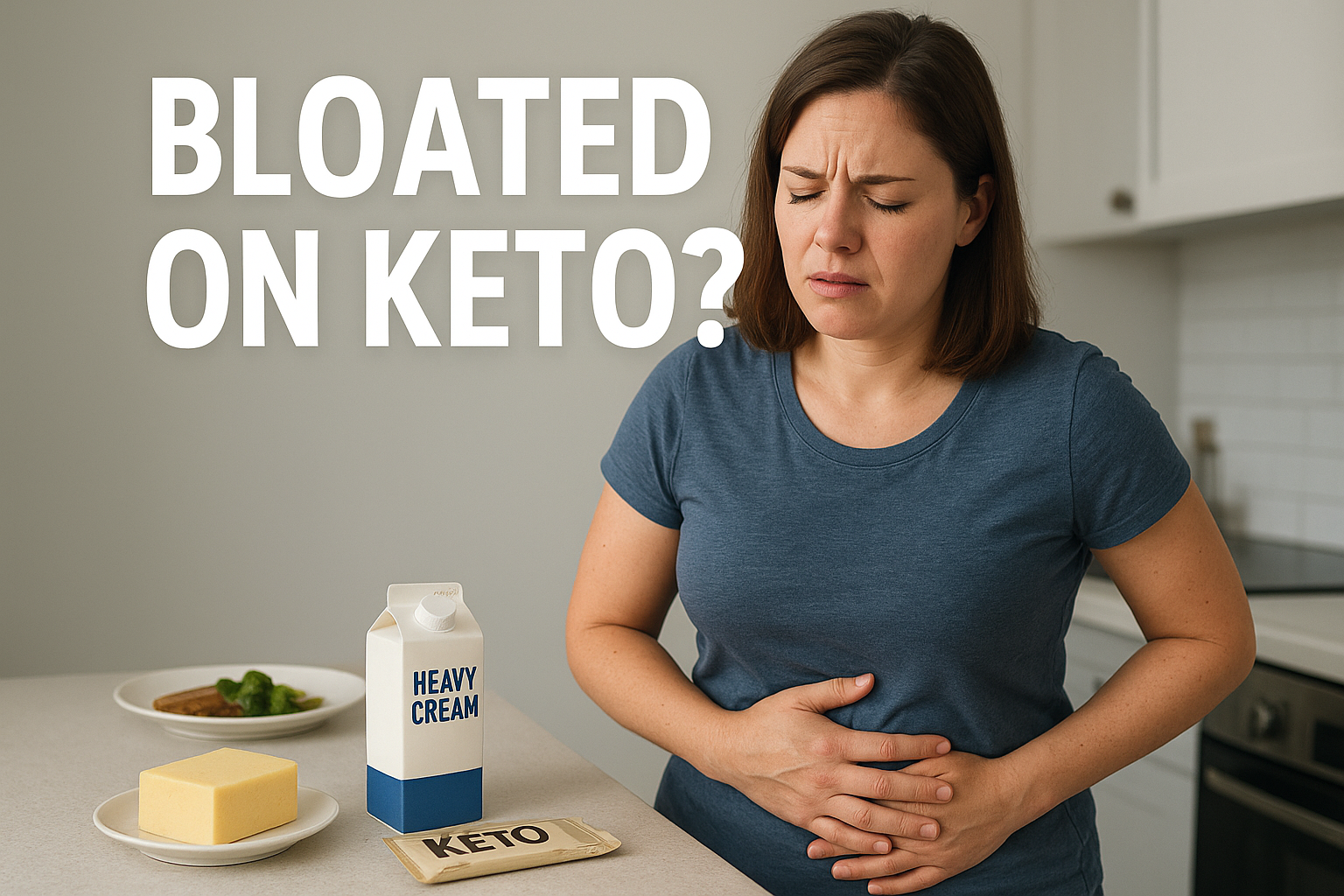
You cut carbs, cleaned up your meals, and somehow still feel puffy, heavy, or weirdly swollen. That throws people off fast.
If you feel bloated on keto, it does not automatically mean keto is failing. Usually it means something in the way you are eating is creating digestion trouble, water swings, or a fake sense of being “on plan” while your body is still dealing with a messy setup.
A lot of people expect keto to make their stomach flatter overnight. So when their jeans still feel tight or their stomach feels full and uncomfortable, they assume something is broken.
Usually the problem is more ordinary than that. Keto bloating tends to come from a few repeat mistakes, and most of them are fixable.
Why bloating still happens on keto
Going low carb changes more than carbs.
People often start eating more dairy, more sugar alcohols, more “low net carb” products, fewer simple whole foods, and a very different amount of sodium and water than before. Some also change meal timing, start snacking more, or suddenly load up on huge salads and cruciferous vegetables because they are trying to be extra healthy.
That combination can make your stomach feel off even when your carb count looks fine.
So if you are asking why you feel bloated on keto, the answer is usually not “because keto is bad.” It is usually because your version of keto got sloppy, reactive, or too product-heavy.
Start here:
1. You swapped carbs for a ton of dairy
This is one of the most common reasons keto bloating shows up.
People cut bread, pasta, and snack food, then rebuild the whole diet around cheese, heavy cream, cream cheese sauces, yogurt, and “keto” desserts made with dairy. It looks low carb on paper. It does not always feel great in your gut.
Real-life example: eggs with cheese for breakfast, a creamy coffee, a lettuce wrap loaded with cheese at lunch, then a cheesy casserole or bunless burger with more cheese at dinner. Technically keto. Also a lot of dairy in one day.
The common mistake is assuming dairy is automatically harmless just because it fits the macros. For some people, a little is fine. For others, too much dairy leads to bloating fast.
The fix is simple. Pull dairy back for a few days and see what changes. Build meals more around meat, eggs, fish, chicken, avocado, olive oil, and low-carb vegetables instead of trying to make every meal creamy.
If your keto setup already leans too hard on easy convenience foods, this is also why “Keto” Foods That Look Healthy but Sabotage Weight Loss tends to hit a nerve. A lot of those foods are digestion traps too.
2. Sugar alcohols and fake-keto treats are wrecking your stomach
This one gets ignored all the time.
Some people are not bloated from keto itself. They are bloated from bars, cookies, low-carb candy, protein desserts, flavored powders, and anything loaded with sweeteners and fibers that promise a tiny net carb number.
In real life, this looks like someone saying they are being disciplined while eating a keto bar in the afternoon, a protein cookie later, and low-carb ice cream at night. Then they wonder why their stomach feels stretched, noisy, or uncomfortable.
The common mistake is focusing only on carbs and ignoring what the product actually does to your digestion. A food can be low carb and still make your stomach miserable.
The fix is to strip your plan back to simpler foods for a few days. Meat, eggs, fish, plain Greek yogurt if it works for you, non-starchy vegetables, nuts in controlled amounts, and basic meals are much easier to troubleshoot than sweet packaged keto products.
If you suspect label tricks are a big part of the problem, read “Net Carb” Foods That Keep You Stuck on Keto next. A lot of “safe” keto products are only safe on the front of the package.
3. You suddenly started eating a lot more bulky vegetables than your body is used to
Not all bloating on keto comes from junk.
Sometimes people clean up their diet hard and go from barely eating vegetables to eating giant salads, cauliflower, broccoli, cabbage, and keto wraps stuffed with fiber-heavy ingredients. That can be a good move overall, but your stomach may not love the sudden jump right away.
Real-life example: before keto, meals were sandwiches and takeout. Now lunch is a giant salad with raw vegetables, dinner is cauliflower rice, and snacks are nuts and keto tortillas. That is a very different digestion workload.
The common mistake is assuming that if a food is healthy, more of it must be better immediately. Your gut does not always adapt that fast.
The fix is to calm the volume down a little and notice which foods seem to trigger the issue. Cook vegetables more instead of eating everything raw. Rotate lower-bulk options. Stop trying to force a giant “diet plate” if it leaves you miserable.
4. Your sodium, water, and meal timing are all over the place
Bloating is not always just about digestion. Sometimes it is a water-balance problem.
When carbs drop, your water and sodium balance changes. Then people make it worse by drinking unevenly, going too hard on processed salty keto foods one day, under-hydrating the next day, and eating at random hours. That can leave you feeling puffy, tight, and off even if you did not overeat dramatically.
In real life, someone does great all day, barely drinks, then has a salty restaurant dinner, a couple drinks, and wakes up feeling swollen and heavy. They think they are bloated from carbs. Sometimes they are just dealing with a sloppy fluid-and-sodium swing.
The common mistake is treating every “puffy” feeling like fat gain or digestive failure. Sometimes it is just a temporary setup problem.
The fix is to get boring for a couple of days. Drink fluids steadily. Salt meals consistently instead of swinging between ultra-clean and restaurant-heavy. Keep meal timing more predictable. If the whole early-keto transition still feels rough, Keto Flu Explained is worth revisiting because electrolyte imbalance can make your whole body feel off, not just your stomach.
5. You are eating too fast, too often, or too “close enough”
A lot of keto bloating is self-inflicted by meal structure.
People graze on cheese, nuts, deli meat, keto snacks, and bites while cooking, then tell themselves they barely ate. Or they eat giant meals because they skipped earlier ones and end up uncomfortably full. Or they keep using low-carb tortillas, sauces, dressings, and restaurant food that are “probably fine” without noticing how often the “probably” is happening.
Real-life example: coffee in the morning, almost nothing at lunch, then a huge keto dinner, dessert, and random snack food at night. That can absolutely leave you bloated, even if you technically stayed low carb.
The common mistake is thinking keto automatically fixes sloppy eating patterns. It does not. Low carb can still be chaotic.
The fix is to eat like a calmer person for a week. Two or three real meals. Less grazing. Fewer packaged extras. Smaller ingredient lists. Slower eating. Most people do not need a weird gut protocol. They need a less chaotic version of keto.
If your day already tends to unravel late, Why Keto Feels Easy All Day Then Falls Apart at Dinner connects with this hard. Bloating often shows up when dinner turns into a catch-up meal for a messy day.
Common mistakes that keep keto bloating going
- Using cheese and cream as the backbone of every meal
- Trusting keto bars, desserts, and sweeteners more than simple food
- Jumping straight into huge raw salads and fiber-heavy swaps
- Having inconsistent sodium, fluids, and restaurant-heavy days
- Skipping meals, grazing later, and calling it keto structure
Once you see the pattern, the problem usually gets less mysterious. Most keto bloating is not random. It is usually your body reacting to a version of keto that is harder on digestion than you realized.
Related:
What to do if you feel bloated on keto right now
Do not panic and do not start changing ten things at once.
Look back at the last two or three days. Were you leaning hard on cheese, sweeteners, bars, or low-carb junk? Did you suddenly add a ton of fiber-heavy foods? Did restaurant meals, drinks, or salty processed foods spike? Did your meal timing get weird?
Those clues matter more than guessing.
For most people, bloating improves when they simplify. Fewer products. Fewer sweeteners. More normal meals. More consistency. Less “I think this is keto enough.”
If bloating is severe, painful, constant, or comes with symptoms that feel bigger than ordinary digestion trouble, that is where common sense matters. Internet keto troubleshooting has limits.
Fix this first:
- Pull back on dairy for a few days. See if the pressure drops when meals get less cheese-heavy.
- Cut fake-keto treats and sugar alcohols. Use simpler foods so you can actually tell what your body is reacting to.
- Reduce the “healthy overload” effect. Cook vegetables more and stop forcing huge fiber-heavy meals if they leave you miserable.
- Keep sodium, fluids, and meal timing steadier. A boring two-day reset often tells you a lot.
- Stop the grazing-and-catch-up pattern. Eat two or three real meals instead of one giant cleanup meal at night.
If you feel bloated on keto, do not assume the whole diet is broken. Usually the problem is a noisy version of keto, not keto itself.
Clean up the structure, simplify the food, and your stomach usually gives you a much clearer answer.
🔎 If this helped, here are more no-BS keto guides worth reading next:
- Constipation on Keto? The Real Fixes Most People Miss
- “Keto” Foods That Look Healthy but Sabotage Weight Loss
- Keto Isn’t Working? The Real Reasons (And What Actually Fixes It)
Explore more Keto Problems & Side Effects stories here: