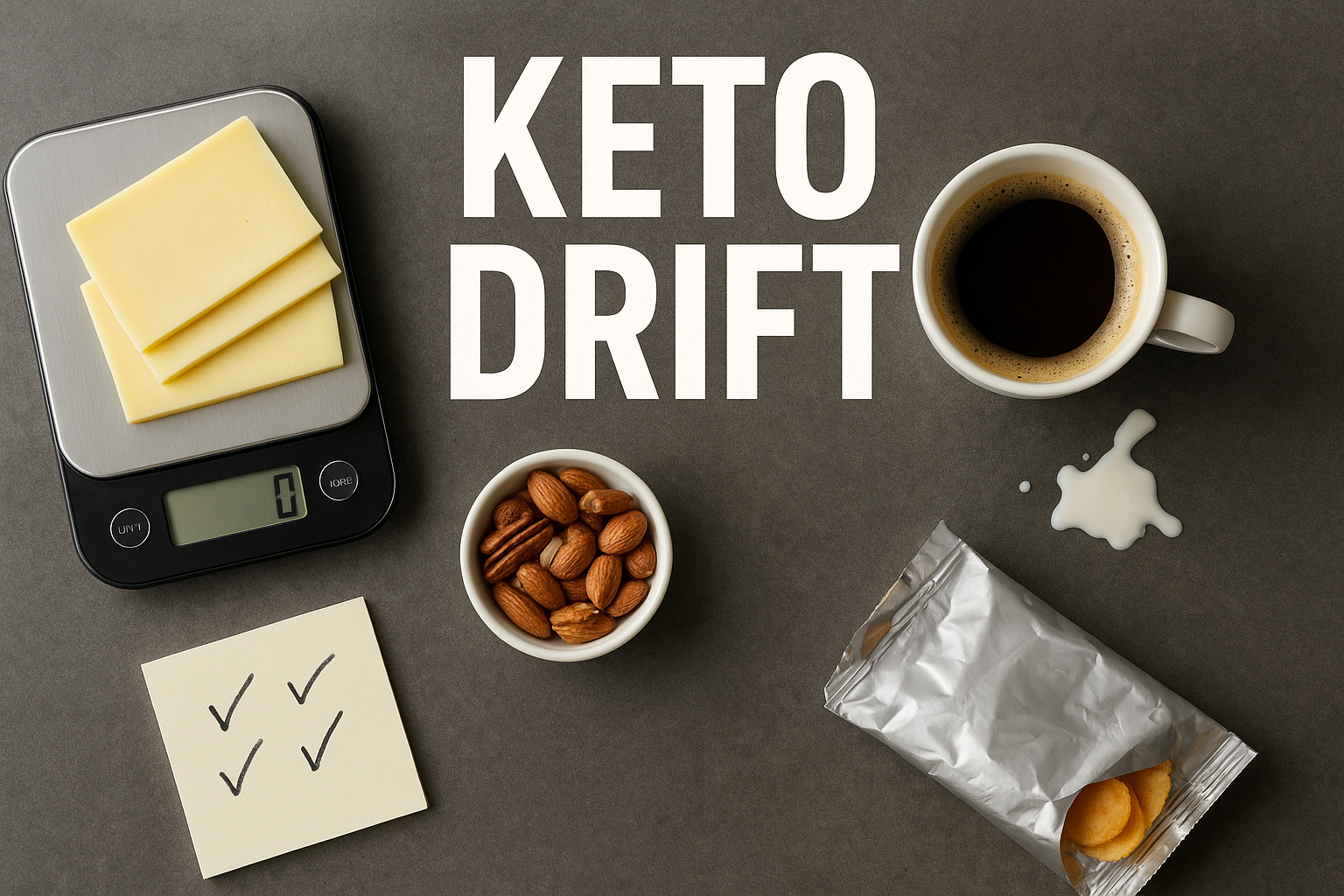
Keto worked at first. Then the details got loose.
You did not suddenly forget how keto works. You just stopped doing the sharp, boring things that made it work in the first place.
Here is the reality check: a lot of early keto stalls are not mystery metabolism problems. They are cleanup problems.
That matters because the fix is different. You do not need to restart from scratch. You need to tighten the habits that quietly got sloppy before a small stall turns into a full reset.
This is not the same as a generic weight-loss stall guide. It is for the phase where keto worked, confidence went up, structure got fuzzier, and now your daily routine still looks keto but does not feel as sharp.
Why early keto success often creates sloppy habits later
Early results make people relax too fast.
The scale drops. Hunger may calm down. Meals feel simpler. That is when small changes stop looking important. Portions get bigger. Extras show up more often. Weekends loosen up. You stop building real meals and start freestyling.
None of that feels dramatic in the moment. That is why this phase catches people off guard. You are still low carb, but you are no longer doing the version of keto that got the early win.
If you need the big-picture stall diagnosis, use Why You’re Not Losing Weight on Keto: The No-BS Stall Fix Map. If the issue is that keto just feels harder across the board now, read Why Keto Stops Feeling Easy After the First Few Good Weeks. This post is narrower than both. It is about cleaning up habit drift before it gets worse.
Cause #1: Your repeat meals got bigger without you noticing
This is one of the first places early success starts to leak away.
At the beginning, you pay attention. A serving of nuts is a serving. Cheese goes on the plate, not half in your mouth while you cook. Dressing gets measured or at least poured with some control.
Then the win streak makes you casual. Now the same foods are showing up in bigger amounts, but because they are familiar, they still feel normal.
In real life, it looks like saying, “I’m eating the same stuff,” while the portions are clearly not the same. The chicken piece is bigger. The cheese pile is thicker. The leftovers get picked at before the actual meal even starts.
The mistake is thinking a low-carb meal cannot drift enough to matter. It can. Especially with foods like nuts, cheese, cream, dressings, sauces, and leftovers.
The fix is not obsessive tracking forever. It is a one-week reality check. Re-measure the foods that drift fastest and compare them to what you were doing when keto felt easy. If this is your main problem, read Why Keto Weight Loss Stalls When Your Portions Quietly Get Bigger After the First Few Good Weeks and Keto Macro Blind Spots: Why Portions, Sauces, Bites, and Drinks Stall Progress.
Cause #2: Little extras took over the day
A lot of people do not get knocked off track by one big meal. They get knocked off track by ten tiny ones pretending not to count.
A forkful while cooking. A second coffee with cream. A few bites off someone else’s plate. A handful of nuts because lunch was weak. A keto bar because the afternoon got busy. A treat after dinner because you technically stayed low carb.
Each one feels harmless. Together, they turn a decent plan into a noisy one.
This is where people get confused. They track meals, but not the messy stuff around the meals. Then they say they are barely eating while the whole day is full of extras.
The common mistake is only auditing breakfast, lunch, and dinner. That misses the exact area where drift usually hides.
The fix is to write down every bite, sip, add-in, and after-dinner extra for three normal days. Do not clean it up. Just see it. If this is your pattern, go to Why You’re Not Losing Weight on Keto: The Hidden Intake Creep Problem.
Cause #3: Weekends started running a different version of keto
This one is common because the weekday plan can still look pretty solid.
Monday through Thursday, you are structured. Then Friday night hits and the whole rhythm changes. Meals get later. Restaurant food shows up. Portions stretch out. Keto desserts make an appearance. Drinks get added. Grazing becomes normal.
You may still stay low carb, but that does not mean the weekend is neutral.
In real life, this is the person who keeps saying, “I only mess up a little on weekends,” while every Monday feels puffier, hungrier, and harder to get back under control.
The mistake is acting like close enough should give you the same result as the tighter weekday version that was working.
The fix is to stop improvising the whole weekend. Pick a few guardrails that actually matter: protein-first meals, one plate instead of endless picking, fewer keto treats, and a limit on drinks. If weekends are where your progress slips, read Keto Weight Loss Stalls: The No-BS Hub for Portions, Snacks, Drinks, Takeout, and Weekend Reset Problems.
Cause #4: You started adding fat everywhere because it felt more keto
This is one of the easiest ways to make meals richer without making them better.
Early on, people keep things simpler. Later, they start stacking butter, oil, cheese, heavy cream, creamy sauces, and little fat-heavy add-ons onto meals that were already fine.
The problem is not fat itself. The problem is automatic extra fat that does not fix hunger, meal structure, or food quality. It just makes overshooting easier.
You see this when coffee turns into dessert, eggs turn into a pile of extras, and every salad needs enough dressing to become its own side dish.
The mistake is assuming more fat automatically means better keto. Sometimes it just means you made an okay meal much easier to overdo.
The fix is to question the automatic add-ons first. Keep the parts that help the meal. Cut the parts that are there from habit. If you feel flat, draggy, or snacky and keep chasing richer food, a simple electrolyte mix can help if the real issue is low energy or dehydration, not a need to keep layering on more keto extras.
Cause #5: You stopped building real meals because you thought you could freestyle it
This is the part that ties the whole pattern together.
When keto works early, people start trusting themselves to wing it. That sounds fine until breakfast becomes coffee and something tiny, lunch becomes cheese and random bites, and dinner becomes standing in the kitchen picking at food while deciding what to eat.
That does not look like a giant failure. It just creates a day with no structure, no clear stopping points, and no strong meals doing enough work.
In real life, this is the person who says they stayed keto but cannot understand why they are hungry at night, snacky all afternoon, or always looking for one more thing after dinner.
The mistake is thinking keto knowledge automatically creates meal structure. It does not. Knowing the rules and eating in a solid pattern are two different things.
The fix is to rebuild defaults. Pick three repeat meals that are boring in a useful way: clear protein, clear portion, clear ending. If every meal has drifted into snack mode, read Why High Protein Keto Still Fails When Every Meal Is Basically Snack Food.
Common cleanup mistakes people make after early keto success
- They tighten carbs harder instead of tightening habits.
- They assume a stall means they need a dramatic restart.
- They blame hormones, age, or bad luck before checking the obvious drift.
- They count meals but ignore extras, drinks, and weekend looseness.
- They try to fix low energy with richer food instead of checking hydration, electrolytes, and meal quality.
What to do when keto worked before but now feels fuzzy
The answer is not punishment. It is cleanup.
Go back to the habits that made keto feel easier in the first place:
- simpler meals
- clearer portions
- fewer extras
- better structure
- less weekend nonsense
If you need a full map, use the bigger troubleshooting guides. But if your real problem is that success made you sloppy, the fastest win usually comes from tightening the boring details instead of chasing a flashy reset.
Fix this first:
- Track three normal days, including bites, drinks, cream, sauces, and after-dinner extras.
- Measure your easiest-to-overeat foods for one week so you can spot portion drift fast.
- Pick two repeat meals to use this week so the day stops turning into freestyle keto.
- Set one weekend guardrail, like one plate only or protein first before treats.
- Cut one automatic added-fat habit that is making meals richer without helping.
If this helped, read these next: