Keto gets a lot harder when you are not the one making all the food calls.
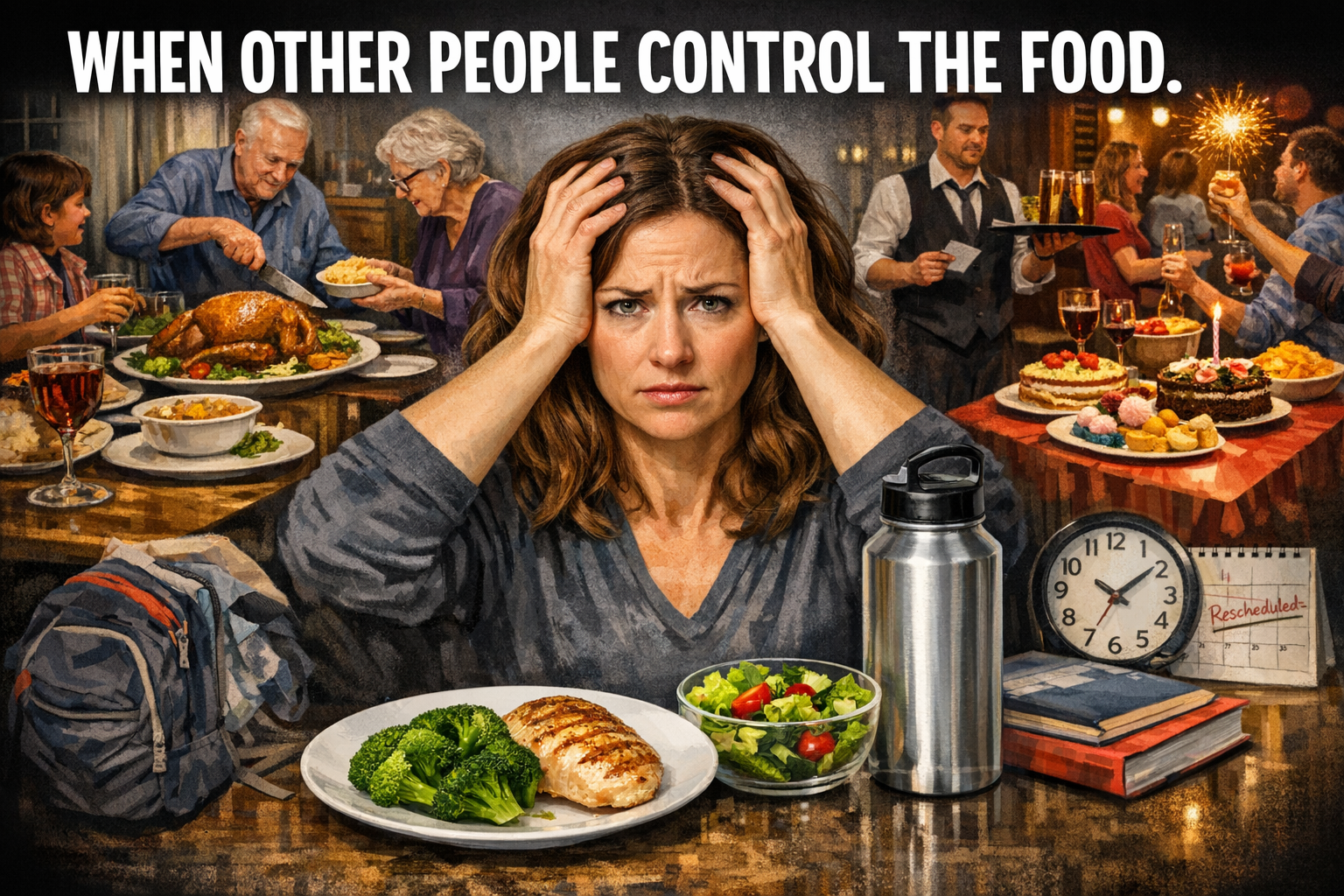
You can have a plan, groceries, and good intentions. Then family dinner changes, someone needs help, school nights run late, a restaurant gets picked for you, or a party turns into a long stretch of standing around food that was never your idea.
This is where a lot of people stop blaming the situation and start blaming themselves. That is usually wrong.
This page is the practical guide for the moments when other people change the plan.
Not a giant list of social tips. Not fake confidence. A real framework for staying steady when family meals, caregiving, parties, restaurants, and social pressure keep moving the target.
The goal is not to control everyone else. The goal is to stop their decisions from automatically becoming your food spiral.
The real problem is not temptation. It is losing control of timing, options, and attention.
When other people run the schedule, keto usually breaks in one of three ways.
You eat too late. You eat whatever is easiest. Or you spend so much energy managing everyone else that your own food decisions happen after your brain is already cooked.
That is why pages like the real-life keto breakdown and the caregiver day guide matter. They show that the mess is structural, not just emotional.
If your plan depends on you always having the first vote, it will keep losing when real life gets crowded.
Start here:
Situation one: family meals stop being your meal and become crowd control
This is one of the biggest hidden drains on keto because it does not look dramatic. It just slowly wears the plan down.
You are cooking for other people, adjusting for their preferences, handling complaints, changing dinner times, and grabbing little tastes while trying to keep the whole house moving. By the time you sit down, you are too hungry and too mentally tired to make a clean choice.
The family, kids, and houseguests page and the non-keto family meals page are strong next steps here because they deal with the reality that your dinner is not happening in a vacuum.
Real-life version: you made food for everyone else, told yourself you would eat your own thing later, and then later turned into random bites, cleanup food, and a second dinner.
Common mistake: acting like feeding other people does not count as a drain. Fix: protect your own meal before the house starts making demands.
Situation two: caregiving days eat your attention before they eat your carbs
Caregiving is a special kind of keto disruption because it turns your own needs into the thing that keeps getting postponed.
You are helping, watching, reminding, driving, cleaning up, or being on call. Food becomes reactive. You eat late, snack standing up, or keep telling yourself you will reset when things calm down.
That is why the caregiver keto page belongs near the center of this whole topic, and why the kids activity night guide matters too. Different surface problem. Same sequence: your meals keep losing priority until the evening gets loud.
Real-life version: everyone else got fed or handled, but now you are depleted, hungry, and suddenly very interested in whatever takes the least effort.
Common mistake: calling that a self-control issue. Fix: build in protected food moments before your energy is gone.
Situation three: social eating pressure works because it catches you tired, polite, and underprepared
Most people think social pressure means someone forcing dessert on you. Usually it is more subtle than that.
It is being hungry when plans run late. It is not wanting to be the difficult one. It is showing up without a backup. It is having just enough decision fatigue that the easiest answer starts sounding reasonable.
For that lane, use the social eating mistakes guide and the family events hub.
Real-life version: you did not cave because someone said one thing. You caved because the whole environment kept nudging you while your own setup got weaker by the hour.
Common mistake: making the pressure purely social. Fix: treat it like a timing and backup-food problem too.
Situation four: restaurants are easier when you stop treating them like isolated events
A restaurant meal rarely causes all the damage by itself. The mess usually starts before and continues after.
You arrive too hungry, order with a reward mindset, pick at extra food on the table, then decide the next day is already off because the night was messy. That is a sequence problem, not just a menu problem.
The strongest next reads are the restaurant survival guide and the eating out guide.
Real-life version: you are not just eating dinner. You are dealing with other people’s timing, a public setting, appetizers you did not order, and the voice in your head saying one off-plan choice means the night is gone anyway.
Common mistake: focusing only on what to order. Fix: manage the lead-in and the fallout too.
Situation five: parties and house events keep turning into all-or-nothing food logic
This is where people get weirdly fatalistic.
One cupcake table, one buffet line, one cookout, one birthday dinner, and suddenly the story becomes, well, this whole day is shot.
That is why the family events page matters so much, and why the cheat-day recovery page belongs nearby. One helps you reduce the damage in the moment. The other stops one messy event from becoming a full-week slide.
Real-life version: the event itself is only a few hours, but the mental spillover keeps running into the next meal, the next morning, or the whole weekend.
Common mistake: treating one social event like a referendum on the whole plan. Fix: separate a messy event from the story that everything is ruined now.
Situation six: split dinners and late nights make other people’s schedule feel like your appetite problem
Sometimes the food is technically keto and the timing is what breaks everything.
You feed kids early, eat a little, get interrupted, then eat again later. Or dinner gets pushed back because somebody else’s schedule took over. Or you spend all afternoon grabbing bits while waiting for the real meal.
For that pattern, use the split dinner page and the real-life breakdown page together.
Real-life version: you are not overeating because one dinner was huge. You are overeating because the whole evening turned into fragments.
Common mistake: only looking at carbs or calories. Fix: look at how many separate eating moments the night created.
The practical framework: control what is still yours
You do not control the school schedule, the restaurant choice, the party menu, or another person’s crisis. Fine. Stop wasting energy trying to control those parts first.
Control the parts that stay yours.
Protect your own food before the event, not just during it.
Have a small backup when timing is uncertain.
Decide what a good-enough meal looks like before social pressure starts talking.
And stop acting like recovery starts tomorrow. Recovery starts at the next decision.
If a night does go sideways, the next-24-hours recovery guide is the right follow-up because it keeps one messy situation from turning into a long punishment cycle.
How to build binge-reading paths without building overwhelm
If the main problem is family logistics, start with the family pages first.
If the main problem is social pressure in public, start with restaurants and social eating.
If the main problem is evening collapse after helping everyone else, start with caregiving and split-dinner patterns.
The point is not to read the whole site. The point is to follow the right lane instead of piling five different problems into one vague feeling of being off track.
That is the value of this page. It turns chaos into categories you can actually work with.
What this looks like in real life
Maybe your week goes like this: Monday dinner changes because the kids have something at school. Tuesday you spend the day helping a parent and eat standing up. Wednesday somebody wants a restaurant because nobody wants to cook. Friday there is a birthday, a cookout, or a house full of people grazing all night.
None of those moments sound huge by themselves. That is why they are dangerous. They do not feel like disasters. They feel like normal life. But when your own food keeps getting moved, delayed, or downgraded, normal life can quietly become normal derailment.
The fix is not becoming antisocial or impossible. The fix is noticing the repeat points. Your meals keep losing priority. Your hunger keeps getting delayed. Your options keep getting thinner as the day goes on. Your recovery keeps getting pushed to tomorrow.
Once you see that, the problem gets simpler. You do not need ten new rules. You need a way to stay fed, calmer, and less reactive when the plan stops being yours alone.
How to use this guide when several problems are happening at once
A lot of readers will not fit one box cleanly. That is normal.
You can be dealing with family meals during the week, restaurant pressure on weekends, and caregiving chaos whenever somebody needs you. The mistake is trying to solve all of it with one generic rule like just be more prepared.
Instead, find the first place your own food keeps getting shoved aside. That is usually the lever that calms the rest.
If your nights keep collapsing after caring for everyone else, start with meal protection and timing. If public situations keep knocking you off course, start with restaurant and party strategy. If the deeper issue is that normal life keeps fragmenting your whole routine, use this page as the map and follow the lane that matches the actual scene.
You do not need more keto theory. You need fewer moments where somebody else’s plan automatically becomes your appetite problem.
Reality check
Keto will keep feeling unfair if your plan assumes other people will stop being inconvenient.
They will not. Family life is messy. Social events are messy. Restaurants are messy. Caregiving is messy. Nights where you are not the priority are messy.
The win is not becoming immune to all that. The win is building a system where someone else’s schedule does not automatically become your food collapse.
You are not trying to become rigid. You are trying to become less easy to knock off course.
Fix this first:
- Pick the main lane that keeps breaking you: family meals, caregiving, restaurants, parties, or late split dinners.
- Protect your own meal timing before the social or family event starts moving around.
- Carry one backup option when you know other people are controlling the schedule.
- Stop treating one messy meal as proof the whole day or week is gone.
- If nights keep collapsing after helping everyone else, trace where your own food got delayed, fragmented, or pushed aside.
If this helped, start with these next:
- The caregiver guide for days when everyone else gets fed before you do
- The family events hub for parties, sports nights, and food you did not plan
- The restaurant survival guide for nights when someone else picked the place
Explore more Keto That Actually Works stories here: