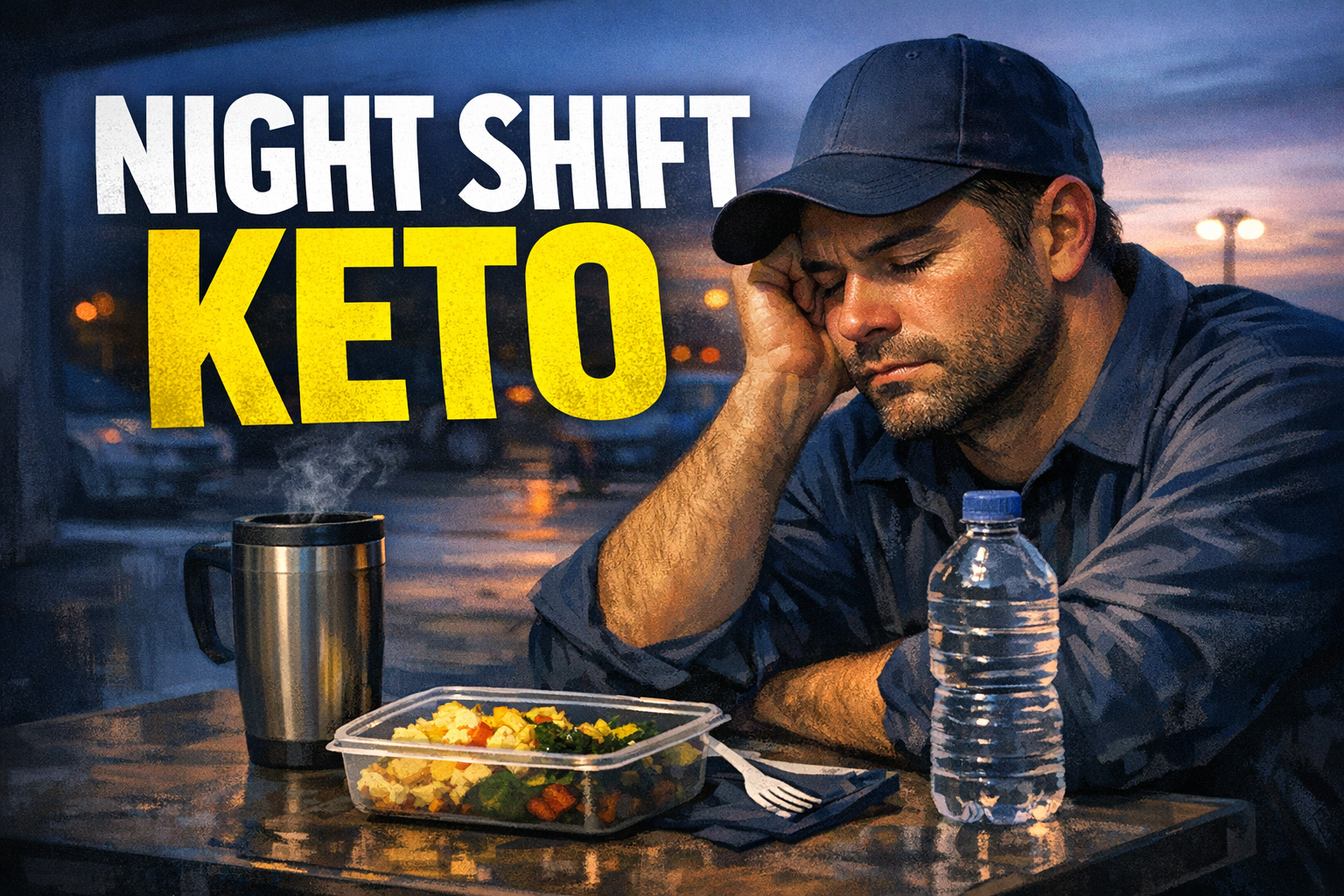
You can keep carbs low and still feel like your whole body is fighting you on night shift. If keto overnight shifts keep leaving you hungry, wired, headachy, and off, the problem is usually not keto by itself. It is the collision between sleep disruption, caffeine, weak meals, hydration mistakes, and bad convenience food.
One rough shift can feel manageable. A whole week of rough shifts can make keto feel broken.
By the third or fourth shift, the pattern is usually clear. You are tired but not sleeping well, drinking caffeine at the wrong times, eating too little real protein, and trying to patch the whole thing with whatever food is easiest at 2 AM.
Here’s the truth. Overnight shift weeks do not just change when you eat. They change hunger, thirst, salt, energy, patience, and recovery. If you keep using a normal-day keto routine on a night-shift week, it usually starts failing fast.
Why keto overnight shifts feel worse than normal workweeks
Night shift creates a stack of problems instead of one clean problem.
Your sleep gets shorter or broken. Hunger shows up at odd times. Caffeine starts replacing food. Water and sodium get sloppy because the whole day feels upside down. Then the food around you is usually vending-machine junk, break-room snacks, or drive-thru food that keeps you technically low carb but badly set up.
That is why the same person can feel fine on one shift and completely wrecked two days later. It is rarely one dramatic mistake. It is a chain reaction.
If sleep has already been getting weird even outside shift work, start with these common keto sleep problems. If the bigger pattern is that side effects keep changing form depending on the day, this side effects guide on what to fix first helps put the pieces together.
Start here:
What usually breaks first on overnight shift weeks
Most people assume the problem is just being awake at the wrong time. That is only part of it.
What usually breaks first is one of four things: sleep debt, under-eating real food, low sodium and hydration, or convenience food taking over the shift.
- If you feel wired and exhausted at the same time, start with sleep debt and caffeine timing.
- If you feel shaky, flat, or suddenly ravenous, look at delayed protein and missed meals.
- If you feel headachy, thirsty, crampy, or oddly drained, look at sodium and hydration.
- If every shift ends in snack food or takeout, the problem is your food system, not your discipline.
1. Sleep debt keeps making hunger and cravings louder
This is usually the first thing that starts running the show.
When you work overnight, your sleep is often shorter, lighter, or more broken than you think. Even if you technically got a few hours, the sleep may not feel deep enough to reset you. Then the next shift starts with lower patience and weaker impulse control.
Real life looks like this: you get home tired, sleep badly, wake up foggy, and promise yourself you will just push through with coffee. By the middle of the shift, your appetite feels weird. You may not want a real meal, but break-room junk suddenly sounds convincing.
The common mistake is assuming this is only about willpower. It is not. Poor sleep makes weak food decisions feel reasonable.
The fix is to treat post-shift sleep like part of the keto plan. Keep the room dark. Keep the temperature cool. Stop dragging caffeine into the end of the shift. If the bigger pattern is that nights always become the danger zone, also read why keto gets harder at night.
2. Caffeine starts replacing food instead of supporting it
This is where a lot of overnight keto plans quietly fall apart.
Coffee and energy drinks can make a shift feel survivable for a while. The problem is that they often cover up a weak setup instead of fixing it. If you are under-slept and underfed, caffeine can flatten your appetite for a few hours while pushing the real crash later.
A common pattern goes like this: coffee before work, more caffeine at midnight, almost no real meal, another drink around 3 AM, then trouble winding down after the shift. Now sleep gets worse, hunger gets stranger, and the next shift starts from a worse place.
The mistake is thinking caffeine is helping because it delays the problem. Really, it is moving the problem to a time when you are tired, hungry, and more likely to eat whatever is easiest.
The fix is to use caffeine earlier and pair it with real food.
3. Delayed protein and weak meals make the whole shift feel unstable
Night shift changes how predictable your appetite feels.
Some people are not hungry before work, then suddenly starving at 1 AM. Others nibble through the shift, then get home too tired to make a real meal and end up eating random food before bed. That makes keto feel unstable because the body never gets a clear meal anchor.
Real life example: before shift, you grab coffee and maybe a cheese stick because your stomach feels off. Mid-shift, you eat some jerky and nuts because break time is short. After shift, you are exhausted and half-hungry, so you eat whatever is fast. None of those moments feels huge. Together, they create a full day with no real protein meal.
The common mistake is calling a pile of convenience food good enough just because it is low carb. Low carb is not the same as filling.
The fix is to build the shift around two or three planned eating points. One real meal before work or early in the shift. One protein-forward backup meal during the hardest part of the night. One simple recovery meal after the shift only if you truly need it. If you know solid food gets hard at work, a backup option like Premier Protein Shake can help in emergencies, but it should support the plan, not become the plan.
If you keep hitting the point where appetite goes weird and real meals disappear, read this keto appetite breakdown guide.
4. Hydration and electrolytes get sloppy because the whole week feels upside down
This is the part people miss because they assume feeling bad must mean the schedule itself is the only issue.
On overnight shifts, hydration gets weird fast. You may drink less water because breaks are awkward. You may drink more plain water but not enough sodium. Or you may lean on coffee and zero-sugar drinks while real fluids and salt stay too low. Then headaches, weakness, dry mouth, cramps, and that washed-out keto-is-not-working feeling start showing up.
Real life looks like this: one shift feels okay, then the next night you feel flat, thirsty, headachy, and strangely snacky. You think you need more food or more caffeine, but part of the problem is that your fluid-and-electrolyte setup has been sloppy for two days straight.
The common mistake is waiting until you feel awful to fix hydration.
The fix is to make hydration boring and repeatable. Start the shift with water and sodium already handled instead of trying to rescue yourself at 3 AM. Salt your meals on purpose. Keep a bottle with you. If you need an easy backup, LMNT Zero Sugar Electrolytes can help when the work environment makes consistency harder. But the real fix is a steadier system.
If this part sounds familiar, read this guide to keto side effects outside the house.
5. Convenience food takes over when the shift gets hard
Night shift food environments are usually built for convenience, not recovery.
Maybe the cafeteria options are weak. Maybe the break room is all snack food. Maybe the only nearby food at 2 AM is drive-thru food, gas-station food, or a vending machine. Even if you stay technically low carb, those replacement choices can still wreck appetite control and leave you underfed on real meals.
This is where people end up doing keto on jerky, cheese sticks, nuts, bars, and sweetened drinks for an entire week. The carbs may stay low enough, but the food quality, meal structure, and satiety all get worse.
The common mistake is thinking the goal is just avoiding obvious carbs. That is too low a bar.
The fix is to bring food that acts like a meal, not just a snack. Leftover burger patties, egg bites, deli roll-ups, chicken, or a simple protein bowl work far better than piecing together low-carb convenience food all night. If workdays in general keep breaking your plan, this keto workday survival system is the next page to read.
A simple troubleshooting sequence for overnight shift keto
- Did you sleep badly after the last shift? If yes, expect worse cravings and worse decisions. Fix the next sleep window and pull caffeine earlier.
- Did you eat one real protein meal before the wheels came off? If not, fix that first.
- Did you get enough sodium and water before the headache or crash hit? If not, do not call it a mystery.
- Are you living on snacks because the shift is chaotic? Then your plan needs a backup meal, not more motivation.
Common mistakes that make overnight shift keto worse
- using coffee as breakfast and calling that a plan
- waiting too long to eat because hunger feels delayed
- trying to save carbs while ignoring protein and sodium
- drinking plain water without fixing electrolytes
- letting snacks replace meals for several shifts in a row
- using late-shift caffeine, then wondering why post-shift sleep is terrible
- expecting a day-shift routine to keep working on a full night-shift week
What a better overnight shift keto setup actually looks like
Before the shift, eat something real or have a clear plan for your first real meal early in the night. Use caffeine early enough that it does not wreck sleep after work. Keep water and electrolytes steady instead of reactive. Bring one food that can count as a real meal and one backup item for emergencies.
You are not trying to make overnight life feel normal. You are trying to make it less chaotic. Keto does not need perfection on night shift. It needs durability.
Fix this first:
- Pick one meal anchor for every shift week. Decide exactly when your first real protein meal happens and stop leaving that to chance.
- Move most of your caffeine earlier. If it is still carrying the back half of the shift, it is probably hurting tomorrow more than helping tonight.
- Handle water and sodium before symptoms show up.
- Pack one backup meal and one backup emergency item for every overnight stretch so vending-machine food stops running the show.
- Review the bad shifts in order: sleep first, then protein, then electrolytes, then convenience food. That usually shows the real failure point fast.
If keto feels worse on overnight shift weeks, that does not automatically mean your carbs are wrong. Most of the time, it means the schedule is exposing a weak routine. Fix the sleep, food timing, caffeine, hydration, and convenience-food chain, and keto usually starts feeling a lot less dramatic.
If this helped, here are more no-BS keto guides worth reading next:
- Keto Appetite Breakdown
- Why Keto Gets Harder at Night
- Keto Side Effects Outside the House
- Keto Workday Survival System
Explore more Keto Problems & Side Effects guides here: