A lot of keto stalls happen when food still technically fits, but the parts that add up fast no longer feel real. Portions get heavier. Sauces turn into second meals. Little bites never feel official. Drinks start acting like snacks. Then you look at the day and wonder why progress got messy. If keto used to feel easier than it does now, there is a good chance one of those blind spots has moved into the background. This page is a practical hidden-intake diagnostic. You do not need to track forever. You just need to find the leak.
What keto macro blind spots usually look like in real life
At the start, people track more carefully because everything is new. After a few decent weeks, confidence goes up and precision goes down. That is where the “it still fits” logic starts. Maybe it does fit. Maybe it only looked small because you stopped measuring, stopped noticing, or stopped asking whether the food was helping. If your progress has slowed across more than one part of the day, start with the keto weight loss troubleshooting map. If the bigger pattern is that keto looks clean on paper but still keeps backfiring, one of these blind spots is usually hiding in plain sight. That is why these problems are annoying. They do not feel dramatic enough to deserve attention. They just quietly keep stealing progress.Keto macro blind spot #1: portion creep turns decent meals into stall meals
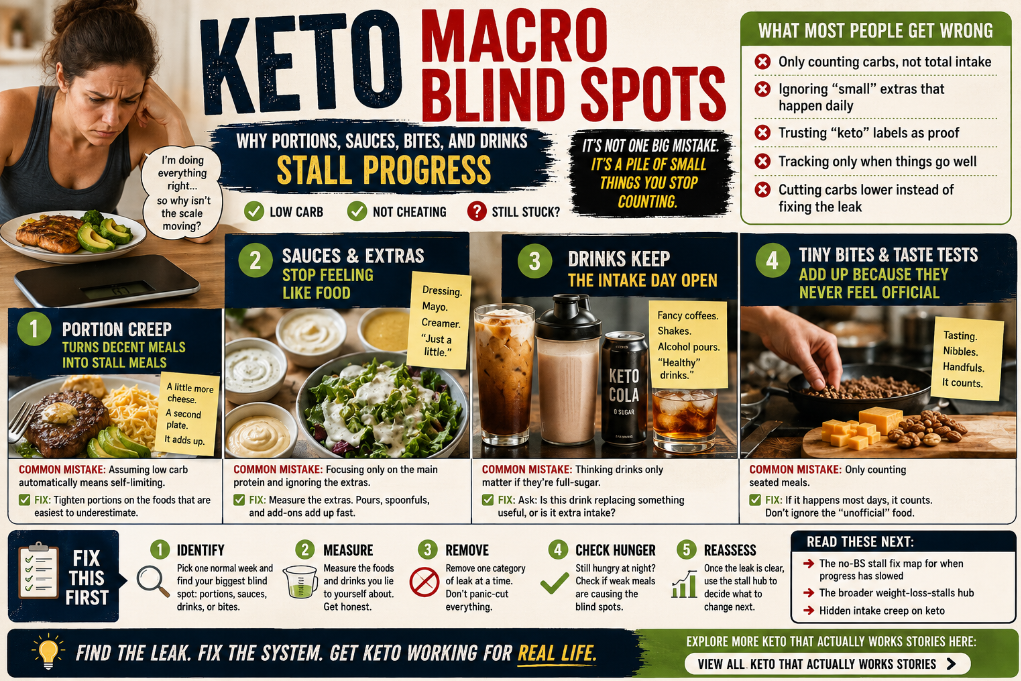
Portion creep is boring, which is why it gets missed so often. You do not usually go from one serving to three overnight. You add a little more cheese. A little more fat. A heavier handful of nuts. A second plate because the food is still keto. None of that feels dramatic. That is exactly why it works so well against you. Real life version: your weekday meals look disciplined, but the plate has gotten heavier than it was during the weeks when progress moved faster. Since carbs stayed low, you assume the stall came from nowhere. Another common version is the “I earned this” plate. You had a good day, stayed on plan, then gave yourself a bigger dinner because it still looked clean. The carbs stayed low, but the meal stopped matching your actual hunger. The common mistake is thinking low carb automatically means self-limiting. Sometimes it does. Sometimes it absolutely does not. The fix is simple: tighten the foods that are easiest to underestimate first. Cheese, nuts, nut butter, added fats, creamy sides, and second helpings are usually the fastest place to get honest again. If this sounds familiar, read why portion creep gets worse after the first good weeks. Then compare your current meals to the portions that were actually working before progress slowed.Keto macro blind spot #2: sauces and extras stop feeling like food
Sauces, dressings, creamers, dips, and “just a little” add-ons get a free pass because they look like helpers, not meals. That is how a salad that should have been light turns into a heavy lunch. That is how coffee that should have been small turns into a routine built around creamer, heavy pours, and extra flavor shots. The problem is not that sauce is illegal. The problem is that almost nobody mentally logs it the same way they log a plate of food. You see this with ranch, mayo-based dressings, sugar-free coffee syrups, butter added out of habit, and creamy side sauces that keep showing up on every plate. One serving is not always the issue. Repetition is. The common mistake is focusing only on the main protein and acting like everything riding along with it barely counts. The fix is to audit the extras for two or three days. Measure the dressing. Measure the creamer. Measure the spoonfuls and pours. Most people find the leak fast once they stop eyeballing it. Start with the hidden-intake creep page if your day looks clean until you count the extras honestly. If sauces and creamy add-ons are all over the place, that is usually one of the easiest stall fixes to clean up.Keto macro blind spot #3: drinks keep the intake day open
Drinks are their own problem because they often do two things at once: they add more than you think, and they keep appetite mentally switched on. Fancy coffees, protein shakes, canned low-carb drinks, alcohol pours, flavored electrolyte habits, and “healthy” smoothies all blur the line between drinking and eating. Real life version: you say breakfast was light, but the coffee was not. You say lunch was small, but the afternoon had a shake, a canned drink, and another coffee. By dinner, the day feels controlled because there were no obvious cheats, but intake never really shut off. Another version is weekend pours. A little whiskey, a couple of low-carb mixers, or heavier wine pours do not always look like a food problem, but they still affect appetite, food decisions, and total intake. The mistake is treating drinks like they only matter if they are full-sugar. That is too narrow. Some drinks stall progress because they stack calories. Others stall progress because they make it easier to keep nibbling and pouring all day. The fix is to ask a blunt question: is this drink replacing something useful, or is it quietly becoming extra intake? If drinks have become part of the problem, read healthy keto drinks that still stall progress. Then look at whether your coffee, alcohol, and convenience drinks are making real meals weaker instead of easier.Keto macro blind spot #4: tiny bites and taste tests add up because they never feel official
One bite in the kitchen does not feel like a problem. Neither does a few bites while packing lunch, tasting dinner, or finishing what someone else left on the plate. But this is one of the most common stall patterns because unofficial food is easy to forget and easy to repeat. Real life example: you are cooking, grazing, tasting, grabbing a handful of something, and by the time dinner starts you have already eaten enough to blur the whole day. Yet you still log dinner like it was the first real food. Sometimes it is not even hunger. It is friction. You are tired, the kitchen is busy, and little bites feel easier than sitting down and making one real decision. The common mistake is only counting seated meals. The better fix is to count every repeat behavior that keeps appetite and intake from ever settling down. A useful rule is this: if it happens most days, it counts. It does not matter whether it felt official. That is why low-carb bites between meals matters so much. If the day also includes weak meals and constant kitchen drive-bys, that pattern is often bigger than the individual foods.What most people get wrong about keto macro blind spots
Most people do not miss these on purpose. They miss them because the foods feel normal now. That is what makes blind spots dangerous. They stop feeling like choices and start feeling like part of the background.- Only measuring carbs and ignoring total intake patterns.
- Calling extras too small to count without checking how often they happen.
- Treating keto labels like proof a food is helping.
- Using tracking only when things are going well, then guessing when progress stalls.
- Trying to fix the stall by cutting carbs lower instead of fixing the obvious leak.
Simple keto stall triage: what to fix next based on your pattern
Do not try to fix everything at once. Match the fix to the pattern. If your meals look reasonable but your portions have quietly expanded, start with portion creep. That is usually the fastest way to see whether the stall came from heavier plates, second helpings, or energy-dense extras. If the problem is that the day is full of dressings, creamers, “healthy” extras, and things you barely count, go straight to hidden intake creep. That page is the better fit when the issue is not one meal. It is everything attached to the meals. If drinks are doing more work than food, use the drink-stall guide. That is the right path when coffee add-ins, shakes, alcohol, or low-carb convenience drinks are quietly stretching your intake across the whole day. If your issue is kitchen drive-bys, tasting while cooking, and random handful eating, start with low-carb bites between meals. That is the better fix when nothing looks huge but the day never really closes. If you clean up the obvious leaks and still feel stuck, go back to the full troubleshooting map. That is the best next step when the blind spots were real, but not the only thing slowing you down.Fix this first:
1. Pick one normal week and identify which blind spot shows up most: heavier portions, pour-on extras, drinks, or tiny bites. 2. Measure the foods and drinks that are easiest to lie to yourself about. Not forever. Just long enough to get honest again. 3. Remove one category of leak at a time instead of panic-cutting everything. Most people do best with sauces or drinks first. 4. If you are still hungry at night, check whether weak meals are causing the blind spots instead of only blaming willpower. 5. Once the leak is clear, use the broader keto weight loss stalls hub to decide what actually needs changing next.If this helped, read these next:Explore more Keto That Actually Works stories here: View all Keto That Actually Works stories
- The no-BS stall fix map for when progress has slowed
- The broader weight-loss-stalls hub
- Hidden intake creep on keto