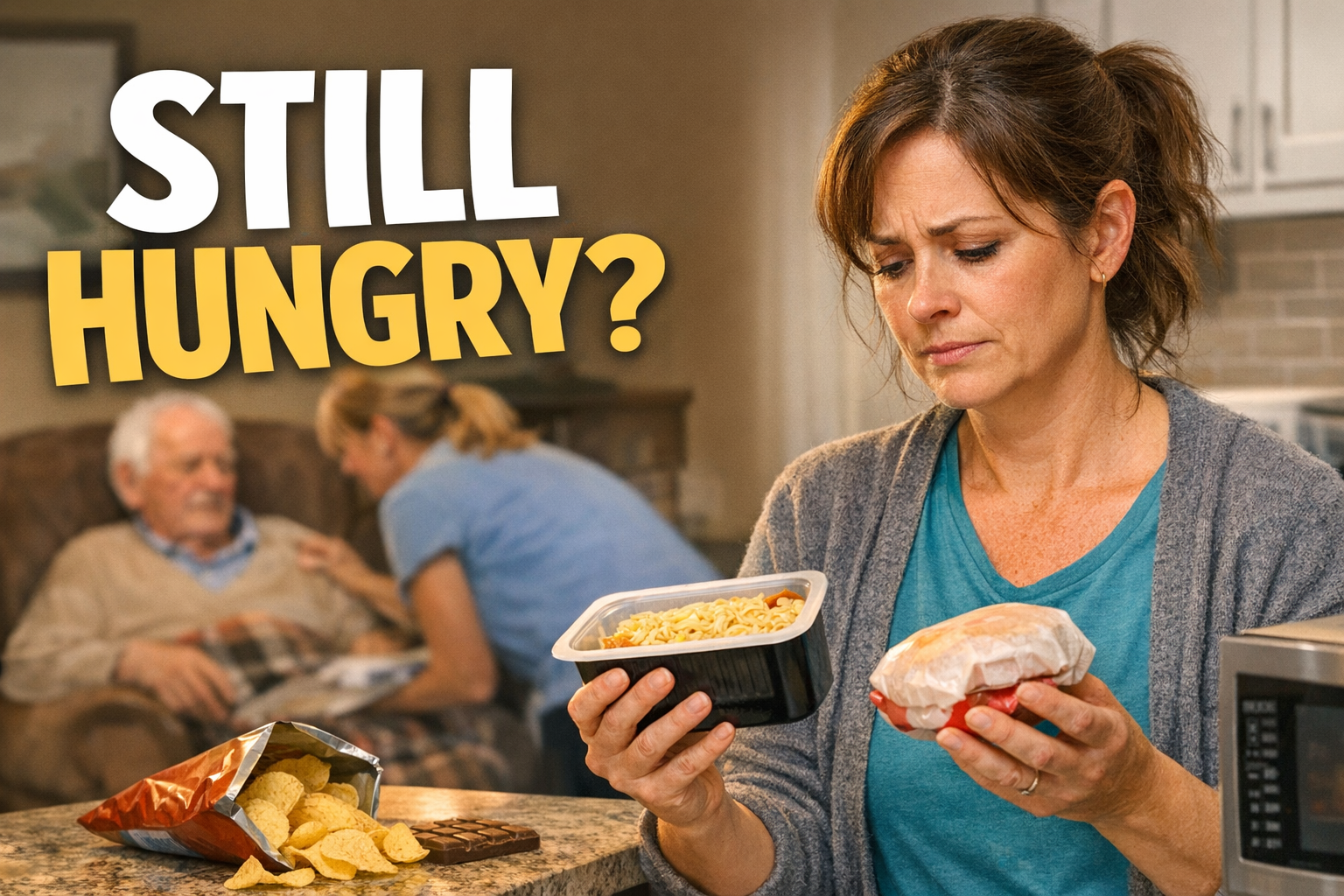
You can stay low carb all morning and still watch caregiver days keto fall apart by dinner.
That usually happens when you spend the whole day feeding other people, solving little emergencies, and telling yourself you will eat something real later.
Here is the truth: this is not a willpower problem. It is a structure problem. When caregiving takes over the day, keto breaks down because your own meals stop being meals and turn into coffee, random bites, stress, and whatever is easiest at 8 PM.
Why caregiver days keto gets messy so fast
Caregiving days are not like parties or restaurant nights. The problem is not one big food event. The problem is constant interruption.
You are in and out of kitchens, appointments, errands, and other people’s routines. That makes it very easy to under-eat real food all day and then overreact when hunger finally hits.
If this sounds familiar, you are not broken. You just need a plan built for chaotic days instead of ideal ones.
Start here:
Cause 1: You keep feeding everyone else while your own meals disappear
This is where most people mess up. You think you are “around food all day,” so it feels like you must be eating enough. But being around food is not the same as eating a real meal.
On caregiver days, your own eating often becomes tiny bites and delays. A spoonful while cooking. A few nuts from a bag. Half a deli slice. Coffee instead of lunch. None of that creates the kind of meal that keeps hunger stable.
In real life, this looks like making breakfast for a parent, rushing out for an appointment, grabbing nothing on the way home, then realizing at 4 PM that you have been running on caffeine and scraps. By then, your body does not want a calm dinner. It wants fast relief.
The common mistake is thinking you can just be “good” later and fix it at dinner. That usually turns into eating too fast, snacking while cooking, or inhaling whatever is easiest before your actual meal is ready.
The fix is simple. You need one protected meal window that belongs to you. Not a perfect meal. Just a real one with enough protein and enough volume to count. If lunch keeps getting wrecked, build a default early meal before the caregiving chaos gets rolling.
This is where Keto Meal Structure That Actually Keeps You Full matters, because fullness does not happen by accident on days like this.
Cause 2: Grazing while cooking keeps appetite open all day
Caregiving creates pressure. Even when you love the person you are helping, the day can feel nonstop. That stress changes how you eat.
Instead of sitting down for food, you start grazing while doing five other things. A bite of someone else’s casserole. A few crackers from a plate. A taste of mashed potatoes. Then you tell yourself none of it was a real problem because it was “just a little.”
But random bites can push carbs up without ever feeling like a meal. They also keep your appetite half-open. You never get the stop signal that comes from a proper protein-first meal.
You see this when someone is cooking for kids or a parent, finishes a few bites off a plate, eats a cheese stick while standing up, and calls that lunch. By late afternoon they feel foggy, annoyed, and hungry, but they still have not had a real meal.
The mistake is treating food contact like food structure. It is not the same. Picking at food all day does not give you a solid protein anchor.
The fix is to plate your food before you start helping everybody else. If you know dinner prep turns into grazing, eat your protein first while the kitchen is still calm. If you are in somebody else’s house, claim one shelf, one container, or one bag as your default keto lane.
If you already know delayed meals end in overeating, read Skipping Meals on Keto and Overeating at Night. For a broader troubleshooting path, Keto Hunger and Cravings Fix Map helps you figure out whether the real problem is under-eating, all-day snacking, or a weak meal setup.
Cause 3: The food around you is built for convenience, softness, and speed
When you are helping an aging parent, sick family member, or overwhelmed household, the food in the house is often not built for your goals. It is built for comfort, easy chewing, fast cleanup, or whatever the other person will actually eat.
That usually means toast, soup with crackers, cereal, casseroles, takeout, pudding cups, soft sandwiches, or snack foods that are easy to hand over quickly. None of that makes you a bad keto person. It just means your environment is pushing you toward easy bites instead of solid meals.
A lot of people keep trying to “make do” in that setup by eating a few slices of cheese, some deli meat, and then hoping dinner fixes the rest. Sometimes it leaves you hungry enough to start raiding bread, chips, or dessert by evening.
The mistake here is trying to win with good intentions inside a bad food setup. If the kitchen is working against you, you need a small emergency system.
That might be hard-boiled eggs, rotisserie chicken, burger patties, tuna packets, or a simple shelf-stable protein option in your bag. If you need something portable for the car, waiting room, or a relative’s house, a small stash of grass-fed beef sticks can be useful. Not as your whole plan. Just as a way to stop the long gap before it turns into a kitchen meltdown.
If family routines keep reshaping your food choices, Lazy Keto with Family, Kids, and Houseguests is useful because it shows how to protect your lane even when the kitchen is shared and chaotic.
Cause 4: Emotional depletion makes the evening crash feel bigger than it is
By the end of a caregiving day, a lot of people are not physically starving only. They are mentally cooked.
You have answered questions, made small decisions all day, managed moods, dealt with appointments, texted family members, cleaned things up, and kept everything moving. Then dinner shows up as one more decision.
Real life example: you get home late, you still need to help with meds or cleanup, and now the idea of cooking chicken and vegetables feels impossible. So you start with “just a little something” while figuring dinner out. Then it becomes cheese, nuts, leftovers, low-carb junk, and maybe non-keto food too.
The mistake is expecting your tired evening brain to build a smart meal from scratch. That is not discipline. That is gambling.
The fix is a default rescue dinner. Same meal, low effort, almost no thought. Eggs and sausage. Burger patties and pickles. Rotisserie chicken and a bagged salad. Taco meat in a bowl. Something boring is fine. Boring beats broken.
A ready-to-drink protein shake can also be a useful bridge when the day is collapsing and dinner will be late. It is not better than a real meal, but it is better than pretending coffee and stress count as food.
If your evenings always get harder, Why Keto Gets Harder at Night helps explain why the crash feels so dramatic after a day of under-eating, picking, and emotional overload.
Cause 5: You keep trying to restart the day at night
This is the hidden emotional trap. The whole day went sideways, so dinner turns into your chance to fix it. You try to be extra strict, or you snap and eat everything in sight because the day already feels lost.
Both reactions backfire. Going ultra strict after under-eating all day often leaves you hungry again an hour later. Going full “screw it” turns one hard day into a harder next day.
The mistake is judging the evening without looking at the whole sequence. Night eating on caregiving days is usually the result, not the starting point.
The fix is to ask one better question: where did the day first go off the rails? Was it the missed lunch? The all-day tastes? The no-protein stretch? The empty drive home? That answer tells you what to fix tomorrow.
If your rough evenings keep repeating, this matters too: Keto With Family Events is helpful for handling other people’s food pressure, but caregiver days usually need even more meal protection because the pressure is constant, not occasional.
Common mistakes that keep caregiver days keto stuck
- Waiting too long to eat because everyone else feels more urgent
- Calling random bites a meal
- Keeping only “healthy” keto snacks instead of one real backup meal
- Trying to wing dinner when your brain is already done
- Using coffee to push hunger away for hours
- Starting over tomorrow without fixing the specific part that broke today
What to set up before the day starts
This is the part most people skip. They wait to see what kind of day it becomes. On caregiver days, that is usually too late.
Set up one real meal before the first interruption hits. Pick one backup protein that can go with you. Decide what dinner is before the day gets emotional. If you are driving between houses or sitting in waiting rooms, pack your food like the chaos is guaranteed, not optional.
- Choose your protected meal: usually breakfast or an early lunch, because later meals get stolen first.
- Pack one grab-and-go backup: beef sticks, jerky, eggs, or leftover chicken so you are not trapped by someone else’s pantry.
- Pick your rescue dinner: one boring meal you can make on autopilot.
- Handle the fake-energy trap: if stress, heat, or long drives leave you drained, a simple electrolyte powder can help more than another coffee when the day is running long.
The best caregiver days keto plan is not more motivation. It is fewer decisions.
Fix this first:
- Pick one non-negotiable meal on caregiving days and make it protein-first.
- Stop letting tastes, scraps, and coffee pretend to be meals.
- Pack one backup food option before you leave home or before the day gets chaotic.
- Create a zero-thinking rescue dinner for nights when your brain is done.
- After a rough day, identify the first breakdown point and fix that tomorrow instead of chasing the evening crash.
If this helped, here are more no-BS keto guides worth reading next: