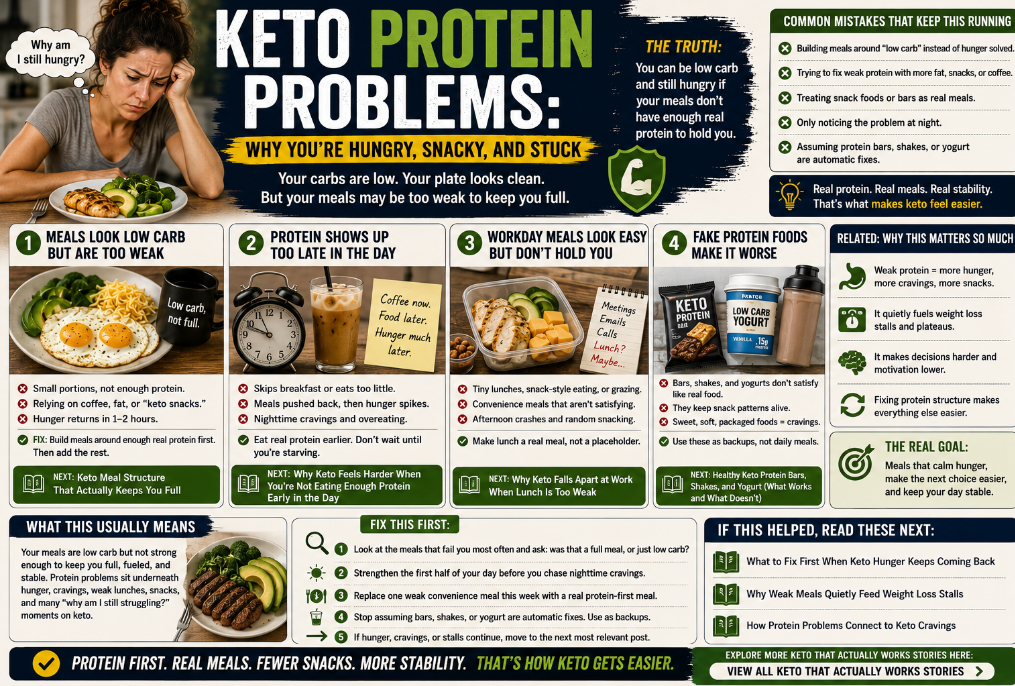
Your carbs are low. Your plate looks clean. But these keto protein problems can still leave your meals too weak to keep you full.
So why are you still hungry two hours later, thinking about snacks, and wondering why keto still feels harder than it should?
Here is the truth. A lot of keto meals are low carb without being strong meals. They look right on paper, but they do not give your body enough real protein to calm hunger and keep the day stable.
This is why protein problems hide so well. People blame cravings, willpower, routine, or snacks when the real issue started much earlier with weak meal structure. If you need a full foundation first, start with
keto meal structure that actually keeps you full.
Keto protein problems start when meals are low carb but not actually filling
This is one of the biggest keto mistakes because it does not feel like a mistake. You might eat eggs with a little cheese, a salad with chicken, or a bunless burger with no sides and think the job is done. The meal looks clean, but it may still be too weak to hold you.
In real life, this shows up as the meal that seems fine at noon and turns into random food decisions by three. You are not wildly off plan yet. You are just circling the kitchen, opening apps, or reaching for something small that turns into three more things.
The common mistake is assuming low carb automatically means satisfying. It does not. A meal can be low carb and still too light, too small, or too dependent on coffee and fat to do the job that protein should be doing.
The fix is not adding more random extras. The fix is building meals around enough protein first, then letting the rest of the meal support it. If hunger keeps coming back even after meals that look “good,” read
keto appetite control next.
Start here:
When protein shows up too late in the day
A lot of people do not really eat in the morning. They have coffee, maybe something small, maybe a bar, and tell themselves they will eat more later. Then later keeps getting pushed back. By the time real food shows up, hunger is already louder, cravings are already running, and the evening feels harder than it should.
This matters because protein is not just about totals on paper. Timing changes how stable the rest of the day feels. A weak start can leave you chasing hunger all afternoon, even if dinner is decent.
A very normal example is the person who starts with coffee, gets busy, grabs a low-carb snack at noon, holds out through work, and then suddenly feels impossible around dinner. That late-day crash often looks like a discipline problem when it started as a protein problem.
The mistake is thinking you can make up for a weak first half of the day with one better meal later. Sometimes you can. Often you just arrive at dinner too hungry and too reactive. If this pattern sounds familiar, read
why keto feels harder when you’re not eating enough protein early in the day.
When workday and convenience meals look efficient but stay weak
Protein problems get worse when the day is busy. Work lunches, errands, long meetings, and commute days push people toward meals that are easy to carry but not strong enough to stabilize hunger. That usually means tiny lunches, snack-style eating, or convenience foods that act more like placeholders than meals.
This is what it looks like in real life: a yogurt, a shake, a pack of nuts, maybe some deli meat, then another coffee. None of that sounds terrible by itself. Put together, though, it often creates a day where you are technically eating but never actually landing a solid meal.
The mistake is treating “easy” and “good enough” as the same thing. Easy food has to do a job. If it does not keep you settled until the next real meal, it is not solving the actual problem.
The fix is to stop judging lunches by how low effort they are and start judging them by what happens three hours later. If your whole day keeps falling apart after a weak midday meal, read
why keto falls apart at work when lunch is too weak. If hunger keeps bouncing back because portions never really land, read
why keto hunger comes back fast when your meals are low carb but still too small.
When fake protein foods make the problem worse
This is where a lot of keto confusion starts. Bars, shakes, sweet yogurts, and packaged “high protein” foods sound like they should help. Sometimes they are useful backups. A lot of the time, though, they turn into expensive little meal replacements that do not satisfy like real food.
Why? Because many of them are built to feel convenient, sweet, and easy to grab, not to act like a strong meal. They can keep the snack pattern running. They can leave appetite noisy. They can also train you to expect sweet, soft, packaged food instead of a meal that actually settles you.
A common real-life version is someone who keeps choosing bars or shakes because they look controlled. Then by late afternoon they are still hungry, still thinking about food, and still wondering why their low-carb day feels shaky.
The mistake is assuming anything labeled protein is solving a protein problem. Not always. Some of these foods are better treated as emergency backups, not the backbone of your day. If packaged protein keeps disappointing you, read
healthy keto protein bars, shakes, and yogurt next.
Common mistakes that keep this problem running
The first mistake is building meals around carbs avoided instead of hunger solved. “No bun” or “no sugar” is not the same thing as a strong meal.
The second mistake is trying to fix weak protein with more fat, more snacks, or more coffee. That usually buys time, not stability.
The third mistake is pretending snack foods are meals because they fit macros. If the day keeps feeling fragile, the food system is still weak.
The fourth mistake is only noticing the problem at night. By then it feels like evening cravings or low motivation, but the earlier setup is usually what caused it. If nights keep getting ugly, read
why keto gets harder at night.
Related:
What this usually means
Protein problems do not always mean you need extreme numbers, giant steaks, or perfect tracking. Usually they mean your meals are not doing enough real work. They look respectable, but they are not calming hunger, keeping energy stable, or making the next food decision easier.
That is why this topic matters so much. Protein sits underneath hunger, cravings, snack problems, weak lunches, and a lot of the “why am I still struggling” questions people ask on keto. Fixing it does not solve every problem, but it often removes the pressure that makes everything else harder.
If your meals keep looking fine but your day still feels messy, do not just blame yourself. Tighten the protein side of the plan first, then see what changes.
Fix this first:
1. Look at the meals that fail you most often and ask one honest question: did that really count as a full meal, or was it just low carb?
2. Strengthen the first half of your day before you chase nighttime cravings. Earlier protein usually helps more than late damage control.
3. Replace one weak convenience meal this week with a real protein-first meal that would clearly hold you for hours.
4. Stop assuming bars, shakes, or yogurt are automatic fixes. Use them as backups, not your whole system.
5. If hunger, cravings, or stalls are still running the show, move to the next most relevant child post instead of guessing.
If this helped, read these next:
Explore more Keto That Actually Works stories here:
View all Keto That Actually Works stories
Post Views Today: 673