You are keeping carbs low, but the scale still feels glued down.
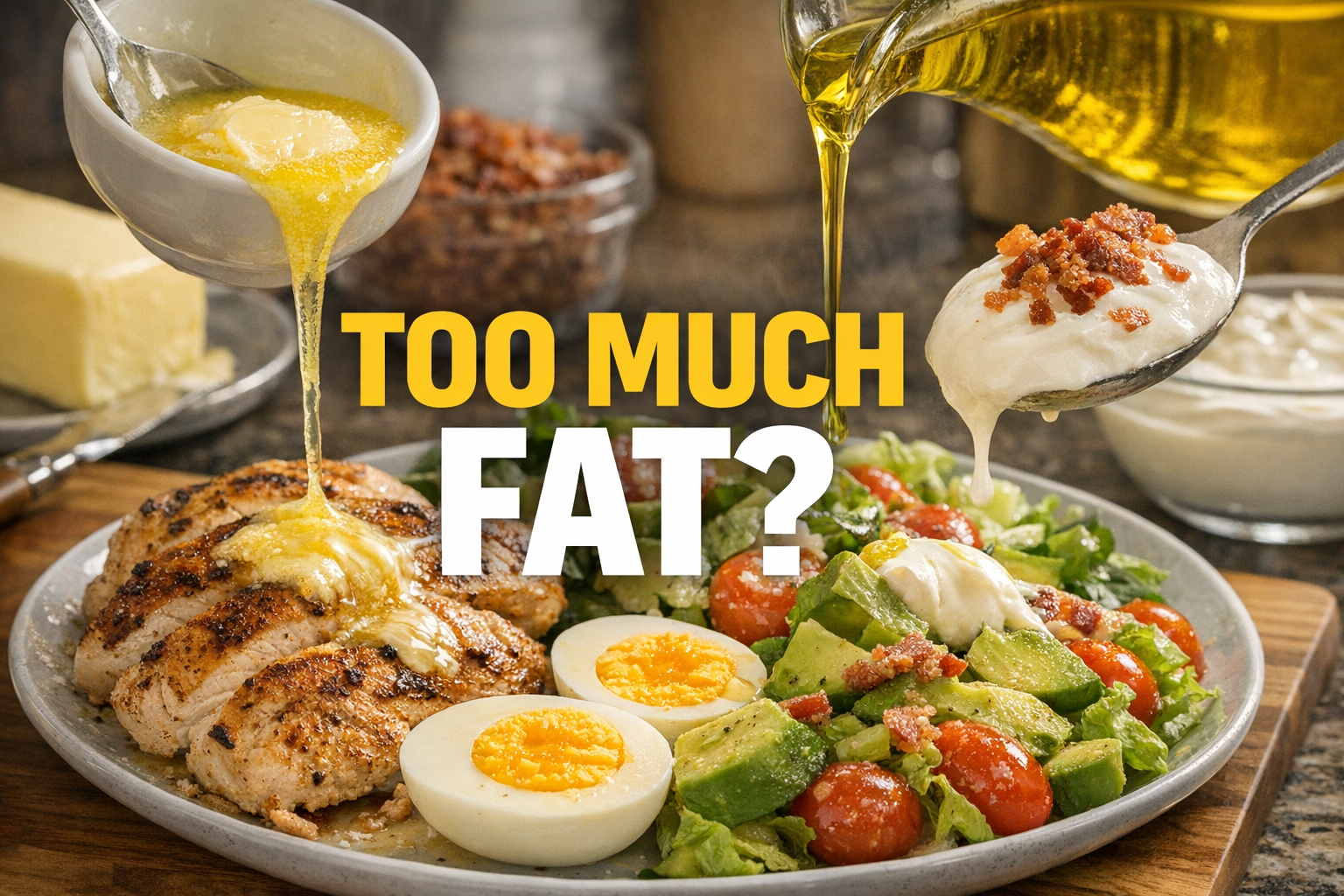
If adding fat to food keto style has become your default, this may be the reason. A lot of people start pouring oil, melting butter, and splashing cream onto meals that were already fine, then wonder why hunger gets weird and weight loss slows down.
It usually starts with good intentions. You hear that keto means high fat, so suddenly eggs need extra butter, coffee needs heavy cream, chicken needs more oil, and snacks need a fat boost too.
That sounds harmless. It is not always harmless.
Most of the time, the problem is not fat itself. The problem is using extra fat like a shortcut, even when the meal already had enough food to do the job.
If you have ever turned a normal plate into a calorie bomb just because it felt more keto, this is that problem.
Why adding fat to food keto style backfires so often
Keto is not a contest to see how much butter you can pour on everything.
Fat can help meals feel satisfying. But once people hear “eat more fat,” many stop asking a better question: does this meal need more fat, or am I just adding it because keto told me to?
That matters because extra fat is easy to add, easy to underestimate, and easy to defend with keto logic. A tablespoon here, a splash there, a handful of nuts on top, a creamy coffee on the side, and suddenly the meal is doing way more than you think.
This is not a keto failure first. It is a portion-blindness problem dressed up as keto advice.
If your overall setup already feels messy, Keto Isn’t Working? The Real Reasons (And What Actually Fixes It) is worth reading too. But this article is about one very specific myth that quietly slows people down.
Start here:
1. You turn normal meals into much bigger meals without noticing
This is the most common version of the problem.
A chicken thigh with vegetables is a normal meal. Eggs with bacon are a normal meal. Ground beef with a side salad can be a normal meal. But then people start adding oil, butter, mayo, cheese, avocado, cream-based sauce, and a handful of nuts on the side because they think more fat automatically means better keto.
Now the meal is not just keto. It is oversized.
Real life looks like this: two eggs were probably fine. But then they get cooked in extra butter, covered in cheese, served with half an avocado, and washed down with creamy coffee. That can still be low carb. It is just no longer a small meal pretending to help weight loss.
The common mistake is thinking food only counts if it feels like “real carbs.” People notice bread. They notice dessert. They do not notice all the add-ons that quietly double the energy in a meal.
The fix is simple and not glamorous. Start judging meals by whether they actually needed the extra fat. If the plate already has protein, some natural fat, and enough food to keep you full, stop adding stuff just to make it look more keto.
2. Extra fat can make weight loss slower without making you much fuller
This is where a lot of people get annoyed, because it feels unfair.
Some added fat helps with flavor and satisfaction. But a lot of “bonus fat” is just easy energy that does not always create much extra fullness. Oil in coffee is the classic example. Cream in every drink is another. A meal can get much heavier without becoming much more satisfying.
That is why someone can swear they are “not eating that much” while progress still drags. They are imagining meals by size, not by what got poured into them.
Real life example: lunch is grilled chicken and salad. Fine. Then you add a heavy drizzle of olive oil, extra dressing, cheese, avocado, and a side of nuts because you are trying to stay keto. On paper it still sounds clean. In practice it may be a lot more than your body needed.
The mistake is assuming all fullness comes from fat. Not true. Protein matters a lot. Meal size matters. Food volume matters. If you keep missing that, read Why You’re Always Hungry on Keto (And What to Fix First). People often chase fullness with extra fat when what they really needed was a stronger meal.
The fix is to build meals around protein first, then use fat as support instead of as the whole strategy. If you are full for an hour and snacky later, extra fat clearly did not solve the real problem.
3. Fat-heavy drinks and add-ons blur the line between eating and sipping calories all day
This one sneaks up on people fast.
When food turns into coffee with cream, coffee with butter, little bites of cheese, spoonfuls of nut butter, and random “keto-friendly” add-ons, the day starts feeling light even when it is not. That is because drinks and add-ons do not register the same way a plated meal does.
You can tell yourself you barely ate, then look back and realize the day was packed with creamy coffee, extra dressing, and “healthy fats” that kept showing up between meals.
Real life version: breakfast is coffee with cream. Mid-morning is another coffee with cream. Lunch is decent, but you add a rich dressing and cheese because keto. Afternoon is a fat bomb or nuts because you do not want carbs. By dinner you feel confused: not exactly full, not exactly hungry, but still not losing.
The common mistake is treating every fat-heavy add-on like it is nutritionally invisible because it fits keto rules.
The fix is to make the day look more like real meals and less like constant fat support. If your coffee routine has become a meal replacement or a snack delivery system, go read The “Healthy” Keto Coffee Routine That Leaves You Hungry, Wired, and Off Track by Noon. Same trap, different container.
4. Adding fat often covers up weak meal structure instead of fixing it
A lot of people are not actually solving hunger. They are patching weak meals.
If lunch is too small, too low in protein, or too random, pouring more dressing on it might make it taste better. It does not automatically make it a strong meal. The same goes for adding butter to eggs when you still did not eat enough protein, or dumping oil on vegetables while the actual meal stays skimpy.
That matters because people feel like they are doing keto correctly while the structure is still broken underneath.
Real life example: someone eats a tiny salad with chicken, gets hungry later, and decides the answer next time is more fat. So they keep the same weak salad but add more dressing, more avocado, and more cheese. It tastes richer, but it may still not solve the original problem if the meal was too light or too snacky in the first place.
The mistake is confusing richness with strength.
The fix is to ask what is missing before you add more fat. Is the meal low in protein? Too small? Too low in actual chew-and-eat food? If yes, fix that first. A better plate usually beats a richer plate.
If your “healthy” meals still leave you off track later, Why Keto Feels Harder When Your Meals Look “Clean” but Never Actually Fill You Up connects directly with this problem from the satiety side.
5. The more “safe” a fat source feels, the easier it is to stop respecting portions
This is the mindset trap behind the whole thing.
People get nervous around carbs, so they start treating fats like free food. Butter feels safe. Olive oil feels healthy. Heavy cream feels keto. Nuts feel natural. Cheese feels harmless. Then normal caution disappears.
That is when tablespoons turn into pours, small servings turn into handfuls, and one richer meal turns into a full day of add-ons.
Real life example: dinner was already enough. But because the food is low carb, you add another spoon of sour cream, another drizzle of oil, and a few bites of cheese while cleaning up. None of it feels like a big deal by itself. That is exactly why it adds up.
The common mistake is believing keto-friendly automatically means unlimited. That is how people get stuck with nuts, cheese, and “just a little more” habits. If that sounds familiar, Why “Just a Handful” of Nuts and Cheese Can Stall Keto Weight Loss is worth reading next.
The fix is to stop giving food halo status. Keto-friendly is not the same thing as consequence-free. Respect portions even when the food fits the plan.
When adding fat can make sense
This is not me saying fat is bad or that every lean meal needs to stay sad forever.
Sometimes adding fat makes a meal work better. Maybe your protein is too lean and the meal feels dry. Maybe you need enough flavor to make the meal satisfying. Maybe you are new to keto and truly under-eating because everything feels too low fat. Fine. That is different.
The problem starts when extra fat becomes automatic instead of intentional.
If every plate gets more butter, every drink gets more cream, and every hunger problem gets answered with more fat, you are probably leaning on the myth too hard.
What to do instead if you want keto weight loss to work better
Keep this practical.
- Build the meal around protein first.
- Use fat to make the meal satisfying, not to prove it is keto.
- Watch the extras: oils, dressings, cream, cheese, nuts, nut butter, sauces.
- Stop turning drinks into stealth meals.
- Judge the day by results, not by whether the ingredients sounded keto enough.
You do not need to fear fat. You just need to stop worshipping it.
Common mistakes that keep this problem alive
First, people hear “high fat” and turn that into “add fat to everything.”
Second, they use extra fat to patch weak meals instead of fixing the meal itself.
Third, they count carbs carefully but ignore oils, cream, nuts, and cheese because those foods feel safe.
Fourth, they drink a lot of their fat and still act like they barely ate.
Fifth, they assume stalled progress means keto needs more fat when sometimes the exact opposite is true.
Fix this first:
- Pick one week where you stop automatically adding butter, oil, cream, or extra fat to meals that were already fine.
- Build each meal around real protein first so you stop using fat as a substitute for meal structure.
- Cut back on fat-heavy drinks and make your calories look more like actual meals.
- Watch the “safe” extras like nuts, cheese, dressings, and avocado instead of assuming they do not count.
- If progress is slow, ask whether your meals need more food structure, not just more fat.
🔎 If this helped, here are more no-BS keto guides worth reading next:
- “Keto” Foods That Look Healthy but Sabotage Weight Loss
- “Keto Treat” Foods That Quietly Keep Your Cravings Alive
- “Net Carb” Foods That Keep You Stuck on Keto
Explore more Keto Lies & Myths stories here: