You can blow your carb limit fast without eating anything that looks obviously high carb. That happens all the time with keto nutrition labels.
Here’s the problem: people look at the front of the package, see “low net carbs” or “keto-friendly,” and stop there. That is exactly where bad label decisions start.
I’ve seen this play out in the most normal way possible: you grab a wrap, a protein bar, and a sauce because each one looks “fine.” Then you add them together later and realize the math was never on your side.
If keto keeps feeling confusing at the store, it usually isn’t because labels are impossible to read. It’s because food companies know which numbers and phrases get your attention first.
Why keto nutrition labels matter more than most people think
Keto does not just depend on whether a food sounds healthy. It depends on what actually ends up in your daily carb total.
A lot of packaged foods are built to look safer than they really are. The serving size is tiny. The net carb claim is pushed in giant text. The ingredient list hides sweeteners, starches, or fillers most people barely notice. And once a food says “keto” on the front, many people stop questioning it.
That is why reading the label properly matters. It helps you catch the real carb load before it turns into a stall, cravings, water retention, or one of those days where you swear you “did everything right.”
The first thing to check on a keto label
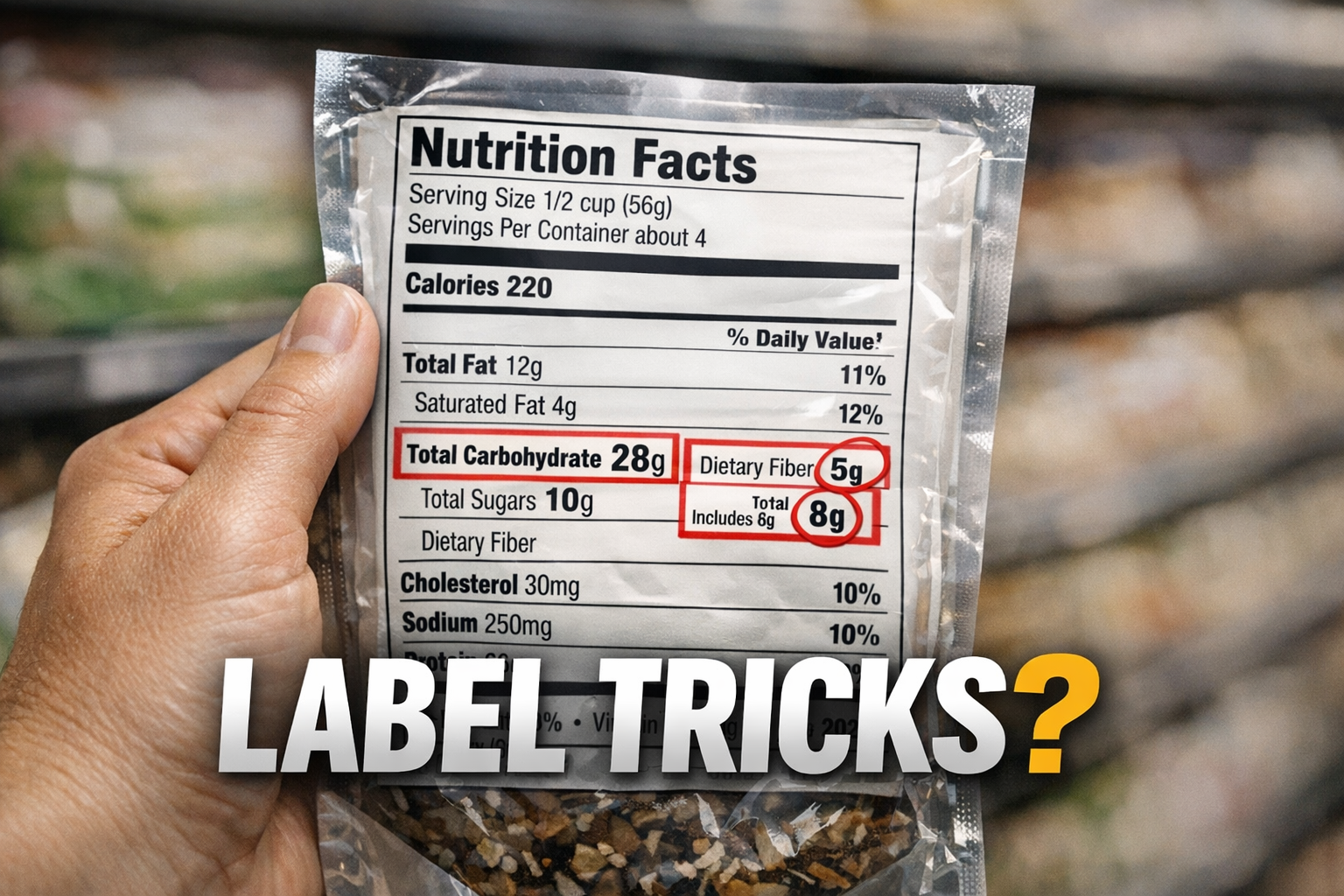
Start with three things in this order:
- serving size
- total carbs
- how many servings you will actually eat
Do that before you get pulled into fiber claims, sugar alcohol claims, or fancy package wording.
Why? Because a food can look low carb per serving and still hit hard if the serving is unrealistic. That is one of the oldest tricks in packaged food.
1. Fake serving sizes make the label look safer than the food really is
This is where a lot of keto label mistakes start. The package shows a small carb number, but the carb number only looks small because the serving size is tiny.
You will see this with tortillas, sauces, snack foods, chocolate, and frozen meals. A wrap may say 4 net carbs, but that is for one tortilla. If you use two, plus sauce, plus a side, you are not eating a 4-carb meal anymore.
The same thing happens with sauces. A label may show 2 grams of sugar or 3 net carbs per tablespoon. Sounds fine. But most people do not use one measured tablespoon. They pour. That changes everything fast.
This is the common mistake: reading the serving line like it reflects real life. Most of the time, it does not.
The fix is simple. Ask yourself, “How much of this would I actually eat?” Then multiply the carbs by that amount before the food goes in your cart.
If portions tend to creep, a simple digital food scale can make packaged foods a lot less guessy, especially for things like nuts, sauces, frozen meals, and low-carb desserts.
If you want a bigger picture of where packaged foods quietly go wrong, read Keto Convenience Food Traps.
2. Net carb math gets misused when people subtract things too casually
Net carbs are useful, but people treat them like a free pass. That is the problem.
Most readers know the rough formula: total carbs minus fiber, and sometimes minus certain sugar alcohols depending on the product. But many people never stop to ask whether the product deserves that much trust in the first place.
A bread or bar can brag about very low net carbs while still being easy to overeat. Some products are loaded with processed fibers and ingredients designed to make the numbers look better on paper than the food feels in real life.
That does not mean net carbs are fake. It means the label claim should not be the only thing you use to judge the food.
A real-life example: someone sees a “zero net carb” wrap, builds giant lunch wraps with two tortillas, adds sauce, cheese, and a packaged dessert, then wonders why keto feels harder that week. The label gave them confidence, but the overall meal kept getting bigger.
The mistake is thinking low net carbs automatically means low impact.
The fix is to use net carbs as one checkpoint, not the whole decision. Look at the full label. Check the serving size. Check how processed the product is. Check whether this is a food you tend to eat once or keep eating because the marketing makes it feel harmless.
For a deeper breakdown, read Net Carb Trap Map and Why Keto Bread and Low-Carb Wraps Keep You Stuck.
3. Sugar alcohols confuse people because the label sounds cleaner than the experience
This is a big one with keto bars, candies, ice cream, and sweet snacks. The package makes the carb number look low, but the ingredient panel tells a messier story.
Sugar alcohols are one reason people get tripped up reading keto labels. Many products use them to keep sweetness high while keeping the net carb claim low. On paper, that can look great. In real life, people often end up bloated, extra hungry, or stuck in a cycle of eating more sweet keto junk.
The common mistake is assuming all sugar alcohols work the same way and affect everyone the same way. They do not.
Another mistake is focusing only on whether the math technically fits keto while ignoring what the product does to appetite, digestion, and portion control. If a “keto treat” keeps you reaching back into the box, the label did not solve the real problem.
The fix is to slow down and read both the nutrition panel and the ingredient list. If the product leans heavily on sugar alcohols, ask whether it is worth the tradeoff. Sometimes it is a measured choice. A lot of times it is just a slickly packaged snack that creates more problems than it solves.
If you want the no-BS version of this issue, read Sugar Alcohols on Keto.
4. The ingredient list catches problems the front of the package hides
This is where smart label reading starts to separate useful foods from fake-safe foods.
The front of the box is marketing. The ingredient list is where you see what the product really is.
You do not need to panic over every unfamiliar word. But you do need to notice patterns. Added sugars, starches, syrups, maltodextrin, flour blends, and long lists of filler ingredients are worth paying attention to. So are products that lean hard on “protein,” “high fiber,” or “keto-certified” language while still reading like a chemistry project.
A common real-life example is a sauce or dressing that says low sugar on the front, but the ingredient list still shows sweeteners or starch-based thickeners that make the product easy to underestimate. Another is a frozen “keto” meal that sounds convenient until you realize the ingredients are doing a lot of work to make processed food look cleaner than it is.
The mistake here is trusting claims instead of checking ingredients.
The fix is not to memorize every ingredient on earth. Just get good at spotting the few things that matter most: hidden sweeteners, starch-heavy fillers, and long processed ingredient lists in foods that pretend to be simple.
If you need help spotting foods that look keto but are not as safe as they seem, read Keto Foods That Are Secretly High Carb.
5. “Keto” marketing language makes people stop thinking too early
This might be the biggest label trap of all.
Once a product uses words like keto, low net carb, grain-free, protein-packed, or sugar-free, a lot of people relax. They assume the label has already been checked for them. It has not.
Food companies know that front-of-package language sells trust. It is easier to get someone to buy a snack when they think it already passed the keto test.
You see this constantly with bars, packaged desserts, frozen foods, wraps, and drink mixes. The product may fit keto better than a regular version. That still does not make it a smart everyday food.
The mistake is turning a marketing word into a decision shortcut.
The fix is to treat the word keto as the start of the review, not the end. Flip the package over. Check the serving size. Check total carbs. Check the ingredient list. Then decide.
If you shop a lot with packaged foods, a barcode nutrition app can help you compare products faster, but it should support your judgment, not replace it. The label still matters more than the sales pitch.
Common label-reading mistakes that keep showing up
- Looking only at net carbs and skipping total carbs
- Ignoring how many servings are in the package
- Trusting “keto-friendly” wording without reading the ingredients
- Assuming sugar-free means harmless
- Counting the label once, then eating double the portion
- Believing packaged keto food is automatically better than simple whole foods
This is why label reading is a skill, not a one-line rule. You are not just checking whether a food technically fits. You are checking whether the label matches how people actually eat.
How to read keto nutrition labels fast in the store
If you want a simple filter, use this:
- How much would I really eat?
- What are the total carbs for that amount?
- Is the net carb claim doing too much work?
- Do the ingredients look simple enough to trust?
- Is this helping keto feel easier, or just giving me a reason to eat more packaged stuff?
That quick check will save you from a lot of fake-safe products.
It also helps to keep a few reliable staples around so you are not forced into random label decisions when you are tired or hungry. If you buy sauces, nuts, or snack foods in bulk, using portion-control containers can stop the “I only had a little” problem before it starts.
What matters most
Reading keto labels is not about becoming obsessive. It is about getting harder to fool.
The goal is simple: stop getting tricked by tiny serving sizes, sloppy net carb math, sugar alcohol marketing, and ingredient lists that hide what the food really is.
Once you do that, packaged keto food gets much easier to judge. Some products may still fit. A lot of them will not be worth it. That clarity is useful.
Fix this first:
- Stop reading the front of the package like it tells the whole story. Flip it over and start with serving size and total carbs.
- Multiply the carbs by the amount you will actually eat, not the fantasy portion on the label.
- Be more skeptical of low net carb claims on bars, wraps, sauces, and frozen keto foods.
- Check ingredient lists for hidden sweeteners, starches, and processed filler-heavy formulas.
- Keep using real internal benchmarks: if a food makes portions messy or cravings worse, the label is not good enough.
🔎 If this helped, here are more no-BS keto guides worth reading next:
- Net Carb Trap Map: The No-BS Hub for Bars, Wraps, Drinks, and Desserts
- Why Keto Bread and Low-Carb Wraps Keep You Stuck
- Keto Foods That Are Secretly High Carb (What to Avoid)
Explore more Keto Food & Carbs guides here: