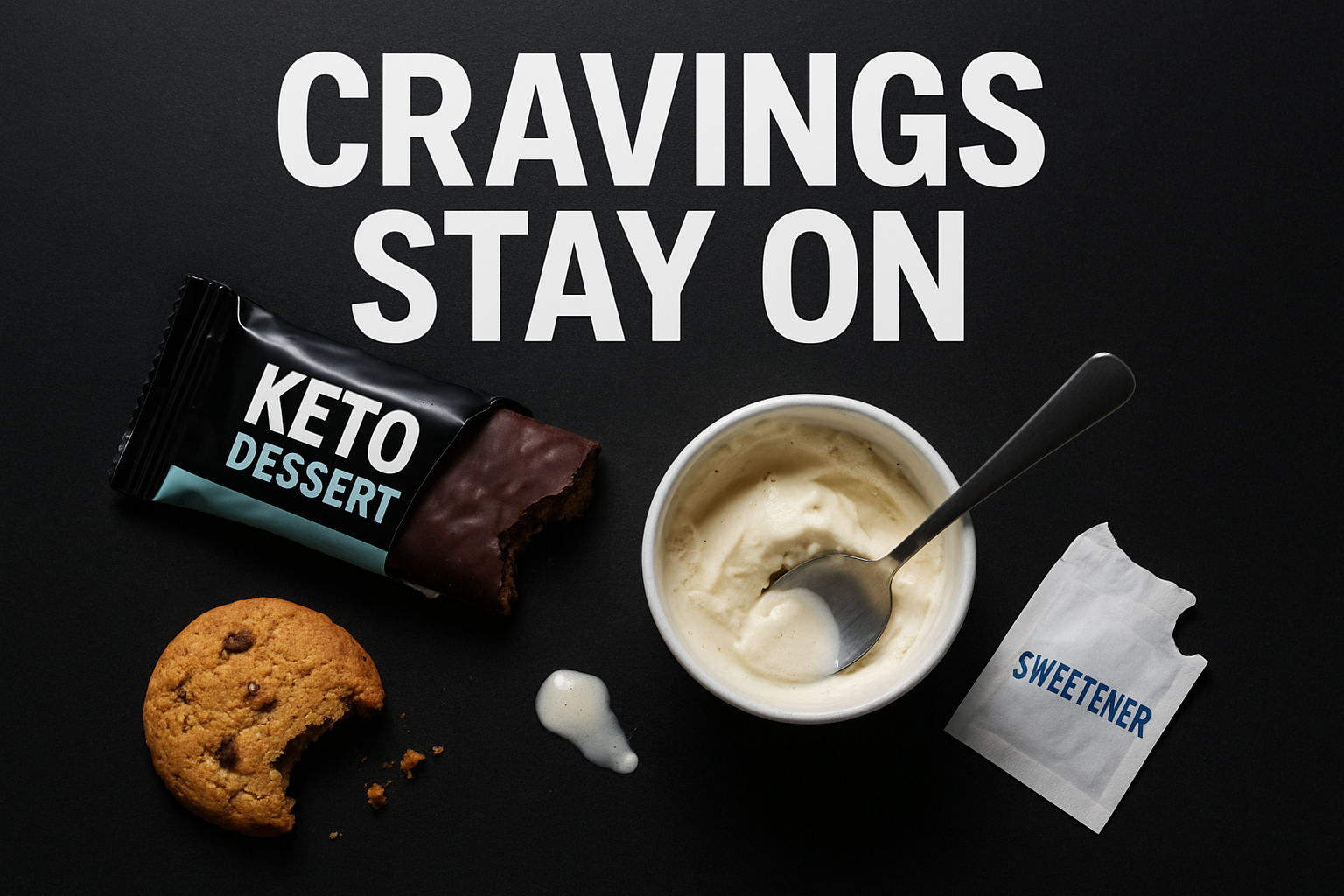
You buy keto treat foods because they look safe. They say low carb, sugar free, or keto right on the box. But if your cravings never calm down, those foods may be keeping the whole problem alive.
That is not a willpower failure. It is usually a pattern problem.
A lot of people have had this moment: you eat well all day, grab a “keto” cookie after dinner, then spend the next hour thinking about something else sweet. It feels small, but it tells you a lot.
The truth is simple. Some keto treat foods do not knock you out of ketosis, but they still keep your brain stuck in snack mode. That matters if your goal is fat loss, better appetite control, and fewer cravings.
Why keto treat foods can still be a problem
People hear “keto” and assume “helpful.” Those are not the same thing.
A keto treat can be low enough in carbs to fit your macros and still make your day worse. If it keeps you thinking about sweets, grazing more often, or eating calories you were not hungry for, it is working against the result you actually want.
This is where many beginners get stuck. They clean up bread, pasta, and sugar, but they keep replacing them with sweet low-carb copies all day long. The label changed. The pattern did not.
Start here:
Keto treat foods that quietly keep your cravings alive
1. Sweet taste keeps the habit alive
For a lot of people, the real problem is not just sugar. It is the constant expectation of sweet taste.
If breakfast is a sweet keto bar, lunch ends with a low-carb dessert, and night means sugar-free candy, your body may be low carb, but your brain is still waiting for reward hits all day. You never really break the loop.
In real life, this looks like someone saying, “I am not eating sugar anymore,” while still needing something sweet after every meal. Then they wonder why cravings hit every afternoon and night. The sweet trigger never left.
A common mistake is thinking artificial sweeteners or monk fruit automatically solve everything. Sometimes they help. But if the taste keeps your appetite switched on, the result is the same: you keep wanting more.
The fix is not necessarily to ban every sweet thing forever. The fix is to stop using sweet keto treats as a daily crutch. Keep your meals more savory for a week or two. Build around eggs, meat, Greek yogurt, chicken salad, burgers without the bun, and simple dinners that actually fill you up. Many cravings calm down when the sweet cycle stops getting fed.
2. “Technically keto” turns into overeating fast
This is where the label fools people. A food can be low carb and still be very easy to overeat.
Nuts, cheese crisps, keto cookies, peanut butter cups, and low-carb brownies all have one thing in common: they are easy to keep eating long after hunger is gone. They feel harmless because they are not bread or candy. But that does not make them light.
You eat one serving while standing in the kitchen, another while scrolling your phone, and a little more after dinner because it still fits keto. By the end of the day, you did not blow carbs. You just kept the snack door open the whole time.
This is not a dinner problem. It is a setup problem.
That line matters because most people blame the last thing they ate. The real issue usually started hours earlier with too many “safe” little bites that kept appetite high and structure low.
The common mistake is measuring success only by carbs. If carbs stay low, people assume the day went well. But if hunger stayed loud and portions got sloppy, fat loss usually slows down anyway. That is one reason posts like Why You’re Not Losing Weight on Keto matter so much: low carb does not automatically mean low friction or low intake.
The fix is to make treats occasional and portioned before you eat them. Do not eat from the bag, box, or tray. If a keto treat only works when you promise yourself “just one more,” it is probably not helping you right now.
3. They create fake safety signals
Once something gets called keto, people stop questioning it. That is dangerous.
Packaged keto desserts often come with health halo language: low net carbs, sugar free, grain free, gluten free. None of that tells you whether the food helps appetite, satiety, or weight loss. It just makes the product feel safer than it really is.
Someone buys a box of keto brownies and thinks, “At least this is better than regular dessert.” Maybe. But if it turns into a nightly habit that keeps cravings running, “better” is not the same as useful.
This is similar to the trap behind “Keto” Foods That Look Healthy but Sabotage Weight Loss. Foods can look clean, smart, and compliant while still pushing you in the wrong direction.
The mistake here is trusting branding more than results. If you are still hungry, still snacking, still craving sweets, and still restarting every Monday, the package is not the answer.
The fix is brutally simple: judge foods by what happens after you eat them. Do they calm hunger for hours? Or do they make you want more sweet stuff? The second outcome is a red flag, even if the label looks perfect.
4. Keto desserts keep dessert in the center of your day
A lot of people move into keto and keep the old structure: meal, treat, snack, reward, little pick-me-up, dessert. They just swap the ingredients.
That means the emotional role of sweet food never changes. It is still the thing you look forward to, still the thing that “makes the meal complete,” and still the thing you use when stress hits.
In real life, this might be the person who does fine until 8 p.m. Then they feel like they deserve something. Not because they are hungry, but because dessert is part of the routine. A keto ice cream bar becomes the new nightly ritual, and cravings stay active because the cue never got broken.
The common mistake is treating keto like a legal way to keep old food habits. That is why some people say keto worked at first, then suddenly got harder. They never really changed the reward system. They just found lower-carb versions of it.
The fix is to stop making dessert automatic. If you want something after dinner, start with a full glass of water or tea and wait ten minutes. If you are actually hungry, eat real food with protein. If you just want a sweet finish, that is a habit cue, not a fuel problem. Posts like Sugar Cravings on Keto: What They Usually Mean dig into this more, because cravings are often tied to patterns, not just carbs.
5. They distract you from the real fix: better meals
Most craving problems do not start with dessert. They start with weak meals.
If your breakfast is coffee and cream, lunch is tiny, and dinner is rushed, of course you want something sweet later. Your body is looking for quick reward and easy energy. Keto treat foods look like the fix, but they are usually covering up a meal problem.
You can see this all the time: someone says keto makes them snacky, but when you look closer, they are under-eating protein, eating random low-carb convenience foods, and going too long without solid meals. Then they blame cravings on keto itself.
A common mistake is trying to out-supplement or out-sweeten bad structure. More bars, more cookies, more fat bombs, more treats. That usually makes appetite more chaotic, not less.
The fix is to build meals that actually do their job. Start with protein. Add enough real food volume. Keep meals simple. A burger patty with cheese and a side salad will usually help more than a “keto” brownie ever will. If your meals are weak, treats become magnets.
Common mistakes people make with keto treat foods
The first mistake is keeping them in the house like an everyday staple. If it sits in the pantry next to your normal food, you will probably eat it like normal food.
The second mistake is using them when stress is high, sleep is bad, or meals were sloppy. That is exactly when craving control is already weak.
The third mistake is pretending small sweet hits do not count because they are keto. They count if they keep your appetite loud.
The fourth mistake is ignoring portion creep. A serving on the label and the amount people actually eat are often two different things.
And the fifth mistake is expecting weight loss to stay smooth while dessert stays daily. For some people, that works. For many beginners, it does not.
Related:
What to do instead
If cravings are a real issue, your goal should be calm appetite, not clever substitutions. That means fewer sweet keto products, better meals, and less random snacking.
You do not need a perfect diet. You need a cleaner pattern.
If a keto treat truly fits your life and does not trigger more eating, fine. Keep it occasional. But if it starts the mental chase for more sweets, believe the result, not the marketing.
Fix this first:
- Remove daily keto desserts for the next 7 to 14 days and see if your cravings drop.
- Make your next meals more savory and protein-first so you stop needing a sweet finish every time.
- Keep only portioned treats, not open-ended boxes and bags, if you decide to keep any at all.
- Pay attention to what happens after a keto treat: calm, or more wanting. That tells you whether it belongs.
🔎 If this helped, here are more no-BS keto guides worth reading next:
- “Net Carb” Foods That Keep You Stuck on Keto
- “Keto” Foods That Look Healthy but Sabotage Weight Loss
- Keto Foods That Are Secretly High Carb (What to Avoid)
Explore more Keto Lies & Myths stories here: