Keto during a 12-hour shift gets hard fast when breaks move, coffee replaces meals, and backup snacks turn into the whole plan.
If your workdays keep ending with vending machine decisions, random handfuls of food, or a giant dinner because you barely ate all day, that is not bad luck. Your shift structure is working against you.
A 12-hour shift is where keto gets tested in real life. You are busy, tired, distracted, and usually one delayed break away from a bad decision.
The goal is not perfect keto. The goal is fewer emergency food decisions.
Why keto during a 12-hour shift falls apart so easily
Long shifts break keto because they pile up the exact problems that make appetite harder to manage. Meal timing gets sloppy. Hydration slips. Coffee starts doing jobs it cannot do. Then snack food sneaks in and starts pretending to be a meal.
If you want keto to hold up during a 12-hour shift, you need food that is simple, filling, portable, and boring enough to work under pressure.
Cause 1: You start the shift underfed
This is the first mistake. If you begin a long shift already hungry, the whole day gets harder.
A real pre-shift meal does not need to be fancy. It just needs enough protein and fat to keep you steady for a few hours. Eggs with cheese, leftover chicken, burger patties, ground beef, or rotisserie chicken all work better than starting the day with snack food.
Real life example: you rush out with coffee and maybe a few cheese crisps because you are running late. By mid-morning, you are already thinking about the break room. By the time lunch gets delayed, you are willing to eat almost anything.
The common mistake is assuming keto foods automatically act like keto meals. They do not. A handful of nuts or a quick packaged snack can be low carb and still leave you underfed.
The fix is simple: eat before the shift starts, even if it is boring. One solid meal early beats trying to patch the whole day later. If hunger keeps showing up too early, read Why You’re Always Hungry on Keto (And What to Fix First).
Cause 2: You pack snacks instead of one real meal
This is where a lot of shift workers quietly sabotage themselves. They pack a cheese stick, some almonds, a bar, jerky, and coffee, then wonder why they are starving by the afternoon.
That is not a meal. That is grazing.
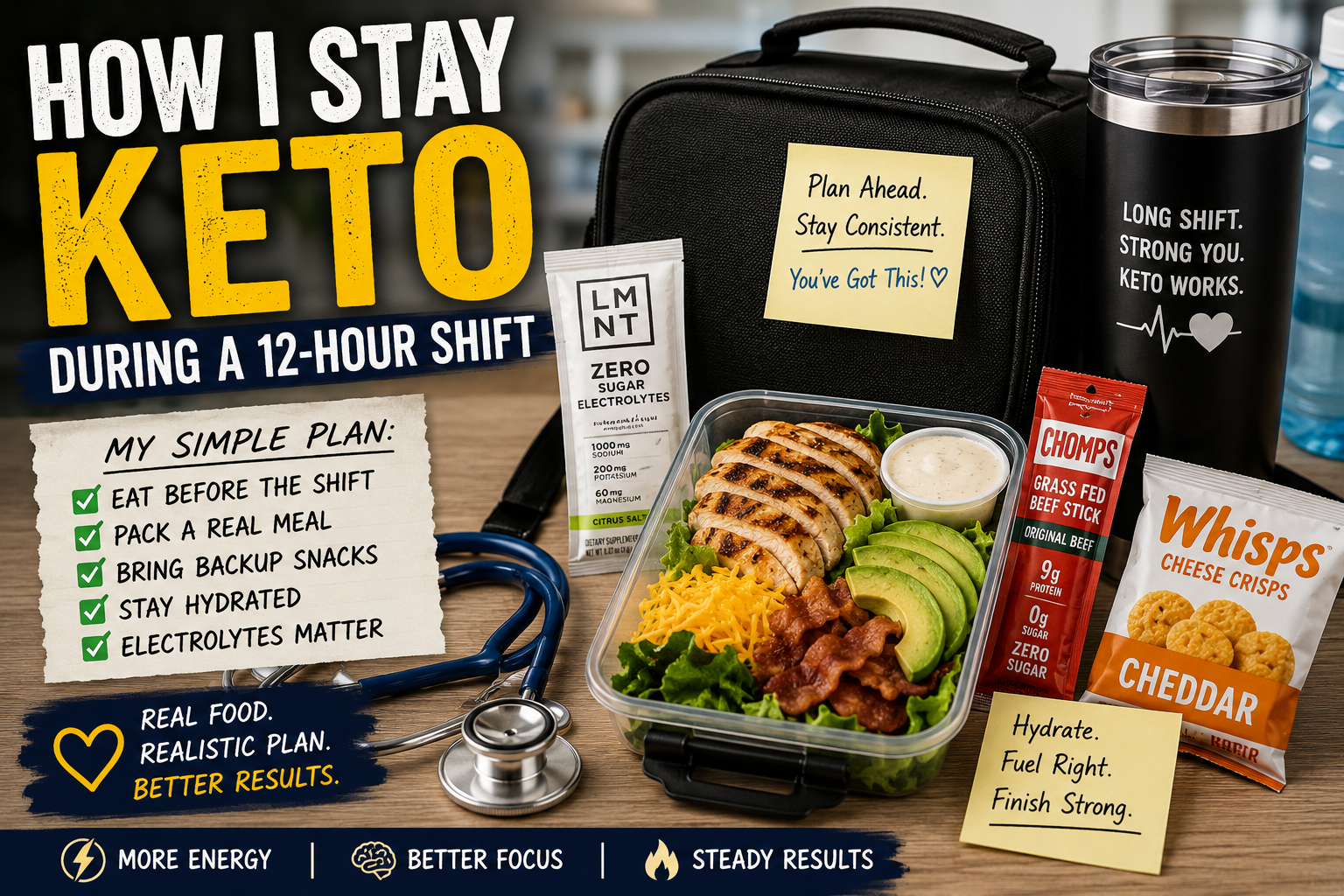
What works better is one real meal built around protein, plus a side and some fat. Chicken salad, a burger bowl, leftover dinner, eggs with turkey, or a tuna bowl all work better than five random mini-foods that never make you feel done.
A common scene looks like this: you grab little things all day because breaks are messy. Nothing feels like lunch. Then at hour ten, hunger is loud, your patience is gone, and the vending machine starts sounding reasonable.
The mistake is thinking convenience is enough. It is not. The meal still has to feel like a meal.
The fix is to pack one main container that you can eat quickly and actually trust. If you need easy options, Lazy Keto Meals for People Who Are Too Busy to Cook gives you better defaults.
Cause 3: Coffee starts replacing food and hydration
Coffee is not the enemy. The problem is using coffee instead of food, water, and electrolytes.
On long shifts, coffee can hide hunger for a while. Then hunger comes back harder. It also does nothing to fix low sodium, weak meals, or dehydration.
In real life, this looks like a morning that runs on coffee because eating feels inconvenient. Then by the afternoon you feel tired, foggy, shaky, or weirdly hungry but not quite ready to eat a real meal.
The common mistake is blaming keto when the real problem is that caffeine got promoted to meal replacement.
The fix is blunt: keep coffee in its place. Coffee is fine. Coffee is not a meal. Coffee is not hydration. Coffee will not fix low sodium.
If long workdays keep leaving you drained, this helps: Why You’re Tired on Keto Even After the First Week.
Cause 4: Electrolytes slip and the whole shift feels worse
Long shifts make electrolyte problems easier to miss. You are moving more, sweating more, drinking more coffee, forgetting water, or going too long without food.
Then the afternoon hits and you feel tired, foggy, dizzy, weak, or headachy. A lot of people think keto itself is failing when the real issue is that their basics fell apart.
That matters because once you feel bad physically, food decisions get worse too. You stop planning and start reacting.
The mistake is waiting until you already feel awful to do something about it.
The fix is to stay ahead of the problem. Bring water. Bring one electrolyte option. Keep it simple. A plain sugar-free electrolyte powder can help on heavy workdays, especially if you already know long shifts hit you hard.
For the full breakdown, read Keto Flu Explained (What It Is and How to Fix It Fast).
Cause 5: Your backup food starts running the whole day
Emergency food matters on a 12-hour shift. But emergency food is supposed to prevent a bad decision, not become your entire eating system.
When the day goes sideways, it helps to have a beef stick, jerky, cheese crisps, a protein shake, or boiled eggs ready. The problem starts when backup food quietly replaces lunch and dinner.
Real life example: you think you will eat your packed meal at noon, but your break disappears. So you eat a beef stick. Then another little snack. Then another. By the time you get home, you are hungry enough to wipe out half the kitchen.
The common mistake is treating portable keto foods like a full plan. They are not.
The fix is to use backup food as a bridge, not a lifestyle. Keep one simple emergency option in your bag, but still build the day around a real meal. For a portable fallback, grass-fed beef sticks are a cleaner option than most vending machine food.
Common mistakes that make shift keto harder
- Starting the shift with coffee and no real food
- Packing five snacks instead of one main meal
- Letting breaks move so much that hunger turns aggressive
- Ignoring hydration until the headache or crash already shows up
- Using bars, sweets, and crunchy keto snacks to fake meal structure
What actually works better on a 12-hour shift
The best setup is not glamorous. It is practical.
- Eat before the shift starts
- Pack one real meal with obvious protein
- Bring one backup protein food for emergencies
- Stay ahead of water and electrolytes
- Stop expecting keto snacks to do the job of meals
The more chaotic your workday is, the less creative your food should be. Boring wins here.
Fix this first:
- Eat one real protein-first meal before the shift instead of starting on coffee and hope.
- Pack one actual meal you can finish fast, not a bag full of random keto snacks.
- Bring one backup protein food only for delayed breaks or real emergencies.
- Keep water and electrolytes easy to reach before the afternoon crash starts.
- Watch the pattern: if your shift ends in a food blowout, the problem usually started hours earlier.
If this helped, read these next:
- Why You’re Always Hungry on Keto (And What to Fix First)
- Why You’re Tired on Keto Even After the First Week
- Keto Flu Explained (What It Is and How to Fix It Fast)
Explore more Keto That Actually Works guides here: