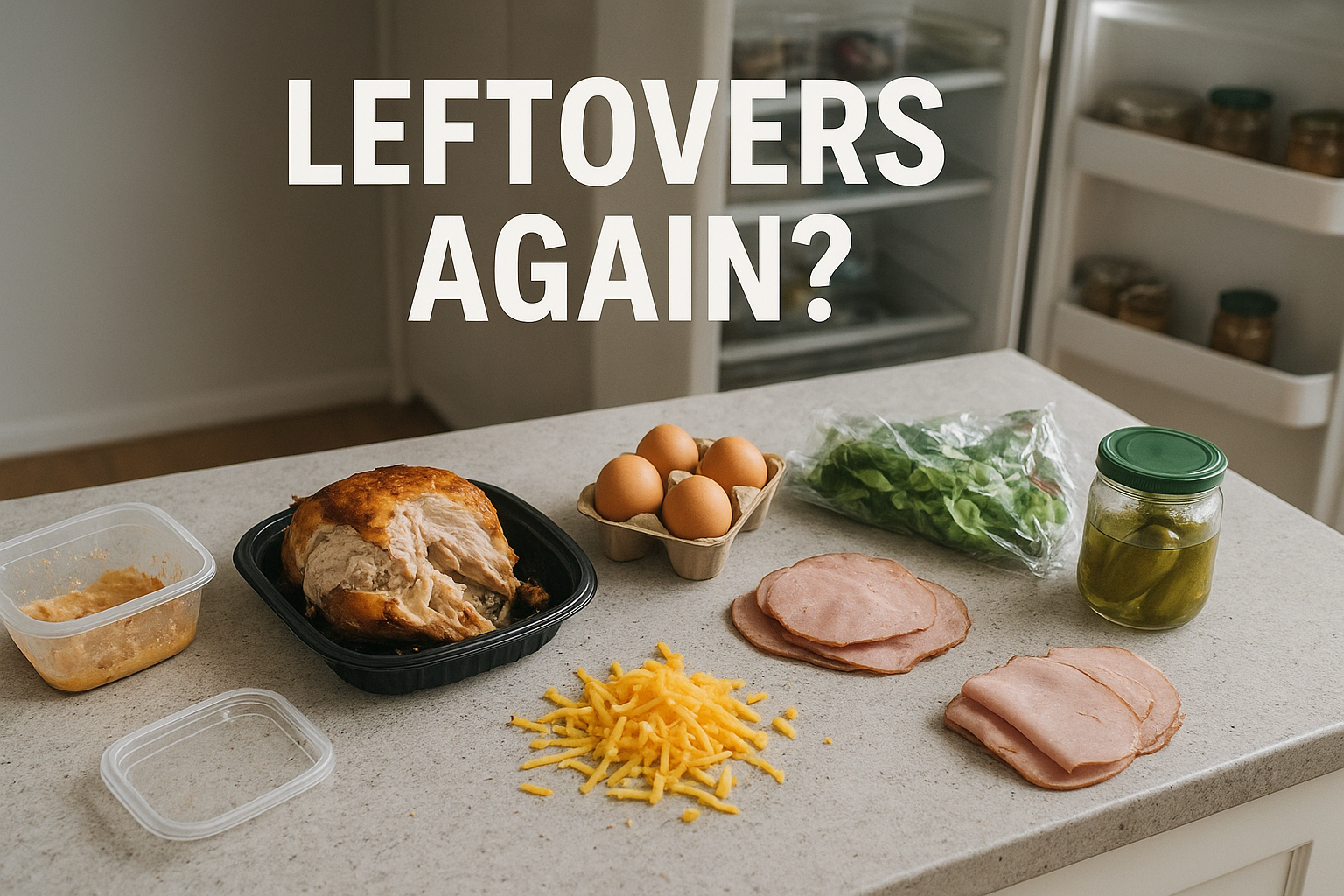
You start the week feeling organized. By Thursday night, lazy keto grocery week problems show up fast: a few slices of deli meat, some shredded cheese, half a bag of salad, maybe two eggs, and a container of leftovers nobody really wants.
That’s not a willpower problem. It’s usually a meal-structure problem.
You open the fridge, stare at random low-carb food, and somehow still end up thinking, “There’s nothing to eat.” A lot of people know that exact late-week moment when the fridge is technically full of keto food, but none of it feels like a real dinner.
Here’s the truth: lazy keto gets harder at the end of the grocery week because bits of low-carb food are not the same thing as complete meals. When your easy options shrink, snack logic takes over. That is when random bites, emergency store runs, and “I’ll just piece something together” decisions start making keto feel sloppy.
Why lazy keto grocery week problems show up late in the week
Early in the week, you probably have obvious meals. There’s meat to cook, eggs in the carton, a few easy sides, and enough food to make a full plate without much thought.
Late in the week, the clear options are gone. What’s left is usually scattered: part of a rotisserie chicken, a couple pickle slices, some cheese cubes, a spoonful of dip, and random low-carb snacks. None of that automatically turns into a meal that keeps you full.
That matters because lazy keto works best when you have repeat meals, backup meals, and enough protein to stop the all-day nibbling. If your setup falls apart every Thursday or Friday, the problem is not carbs alone. The problem is that your system stops producing real meals.
Start here:
You’re not out of food. You’re out of meal-ready food.
This is where most people mess up. They think, “I still have low-carb food in the house, so I should be fine.” But having food is different from having something fast, clear, and filling enough to eat right now.
That’s why posts like Lazy Keto Meal Systems: What to Keep at Home So You Stop Falling Back on Random Low-Carb Junk and Lazy Keto Grocery List for People Who Keep Buying “Keto” Food but Still Have Nothing to Eat matter so much. The issue is not whether the food is technically low carb. The issue is whether the food still works as a meal when life is busy and your patience is gone.
1. Your leftovers are too broken up to act like dinner
Late in the week, a lot of fridges look like this: a little taco meat, half a burger patty, three bites of chicken, and a container of vegetables nobody is excited about. Each item looks useful on its own, but together they still don’t feel like a plan.
In real life, that often turns into standing at the counter eating cold bites while you decide what to do next. Then you eat cheese. Then a few nuts. Then maybe a “keto” snack bar. An hour later, you still want dinner.
The common mistake is treating scraps like they should somehow add up to a satisfying meal without any structure. They usually don’t. Small leftovers are great helpers, but they are bad leaders.
The fix is to start combining leftovers on purpose instead of grazing through them. Put the protein on one plate. Add eggs if the protein amount is weak. Add a simple side like salad, frozen vegetables, or sliced cucumbers. If you need an easy bridge, build one or two default dinners around foods that survive the whole week better, like eggs, canned tuna, frozen burger patties, or a rotisserie chicken plan. That’s also why Lazy Keto Dinners Built Around Rotisserie Chicken So You Stop Grabbing Random Carbs at 6 PM works so well for people who hit the late-week wall.
2. Your easiest foods are snacks, not meals
When grocery-week energy is low, people almost always reach for what is visible and effortless. That usually means snack foods: cheese sticks, jerky, nuts, pork rinds, deli slices, and whatever low-carb packaged thing is still around.
Those foods can be useful. They just fail when they become your whole dinner strategy.
Here’s what it looks like in real life: you grab a meat stick while putting groceries off until tomorrow. Then some almonds. Then maybe a spoon of peanut butter. Then you tell yourself you ate enough because it was all low carb. But your body usually reads that as scattered bites, not a real meal, so the hunger keeps hanging around.
This is exactly the pattern behind Why Lazy Keto Breaks Down When Your Only Easy Foods Are Snacks, Not Real Meals. The mistake is assuming low carb automatically means filling. It doesn’t.
The fix is to keep at least one late-week emergency meal that is not snack-based. That might be eggs and sausage, burger patties with pickles, tuna mayo bowls, or a quick chicken-and-salad plate. If you use packaged foods, use them to support a meal instead of replacing one. A low-cost electrolyte mix can also help if you’ve been under-eating and drinking a lot of water, because sometimes the “I need a snack” feeling is partly a low-sodium, low-energy mess instead of true food scarcity. If you need a simple option for that, something like Ultima Replenisher electrolyte powder fits this kind of late-week recovery better than buying more random snack food.
3. You keep delaying the grocery refill, so every meal becomes a decision problem
A lot of lazy keto frustration is not about the food itself. It’s about decision fatigue.
By the end of the grocery week, you already know the fridge is getting weird. But instead of doing a small refill, you keep pushing it off because you’re tired, busy, or trying to “make what’s here work.” That sounds responsible. In practice, it often creates a whole night of annoying food decisions.
You open the fridge three different times. You consider takeout. You think about a convenience store run. You eat random bites while deciding. Then dinner happens late, and it’s usually worse than if you had just handled the problem earlier.
The mistake is thinking grocery shopping only counts if you do a full reset. It doesn’t. Sometimes the smartest lazy keto move is a tiny refill run with five practical foods.
The fix is to create a late-week refill list instead of waiting for a full collapse. Keep it simple: eggs, one easy protein, one salad base or frozen vegetable, one fast dinner option, and one backup item for the next day. If you want a bigger system for this, Lazy Keto on a Budget: Cheap Meals, Grocery Weeks, and Backup Food That Actually Work is the bigger-picture version of the same idea. You do not need a perfect grocery haul. You need enough food to stop the Thursday-night spiral.
4. You’re trying to “use things up” without protecting fullness
This one sounds smart, but it backfires a lot.
People get to the end of the week and start building meals around whatever needs to be used up. On paper, that saves money. But if that meal ends up being tiny, weak on protein, or built mostly from scraps and condiments, it does not actually solve the dinner problem.
A common example is making a sad plate out of leftover vegetables, a little shredded cheese, and a few bites of old chicken because you do not want to waste food. Then later that night, you’re back in the kitchen looking for something else. Now you’ve “saved” leftovers and still ended up eating extra.
The mistake is putting waste reduction above satiety. Both matter, but fullness has to come first if you want keto to stay easy.
The fix is to use leftovers as add-ons, not as the whole plan. If the leftovers are weak, anchor the meal with fresh protein or eggs first. Then use up the leftovers around that. This is also where cheap staples matter more than specialty keto products. A few simple proteins in the freezer can save the whole week. The site’s post The Cheap Keto Foods That Keep Beginners Full Without Living on Snacks is useful here because it focuses on foods that still work when the week gets messy.
5. Your late-week hunger gets worse because the whole day quietly turns into picking
By the time dinner is confusing, the problem often started earlier.
Maybe lunch was small. Maybe you kept grabbing little bites while working. Maybe your afternoon was coffee, cheese, and hope. Then by evening, you’re hungrier than you realize, which makes every random leftover look both disappointing and not enough.
That’s why late-week lazy keto can feel so sloppy. It is not just a dinner problem. It is a full-day underfed, underplanned pattern that finally blows up at night.
The mistake is acting like random bites “counted” the same way a proper meal would have counted. They usually don’t. They often make hunger less obvious for a while, then stronger later.
The fix is to treat the late-week stretch like a danger zone for structure. Eat a real lunch. Do not save all your food decisions for the evening. If your day keeps turning into mini-meals, read Why Keto Stops Feeling Simple When Every “Quick Bite” Is Really a Mini Meal because that habit is usually making the whole week harder than it needs to be.
Common mistakes that make the end of the grocery week worse
- Assuming leftover bits are automatically enough for dinner
- Calling snack food a meal because it is low carb
- Waiting too long to do even a small grocery refill
- Using up odds and ends without checking whether the meal will actually keep you full
- Letting lunch get weak, then expecting calm decisions at 7 PM
None of those are major character flaws. They are setup problems. And setup problems can be fixed.
Related:
Related:
What actually helps when the Thursday-night fridge shows up again
The goal is not to become a meal-prep robot. The goal is to stop reaching the end of the week with only fragments left.
That usually means keeping a short list of foods that survive the week well, building one emergency dinner that always works, and doing small refill runs before the fridge becomes a puzzle. It also means being honest about the difference between “I have low-carb items” and “I have dinner.” Those are not the same thing.
If you keep repeating this pattern, the fix is usually less about motivation and more about building a better late-week system.
Fix this first:
- Pick one late-week emergency dinner that is built from real protein, not snacks.
- Make a five-item refill list for the end of the week so you stop waiting for a total food collapse.
- Use leftovers as support pieces, not the whole meal, unless they clearly add up to enough protein and volume.
- Keep at least one cheap, week-long staple on hand like eggs, frozen burger patties, tuna, or rotisserie chicken.
- Stop counting random bites as a proper meal when they are clearly not keeping you full.
🔎 If this helped, here are more no-BS keto guides worth reading next:
- Lazy Keto Meal Systems: What to Keep at Home So You Stop Falling Back on Random Low-Carb Junk
- Lazy Keto Grocery List for People Who Keep Buying “Keto” Food but Still Have Nothing to Eat
- Why Lazy Keto Breaks Down When Your Only Easy Foods Are Snacks, Not Real Meals
Explore more Lazy Keto guides here: