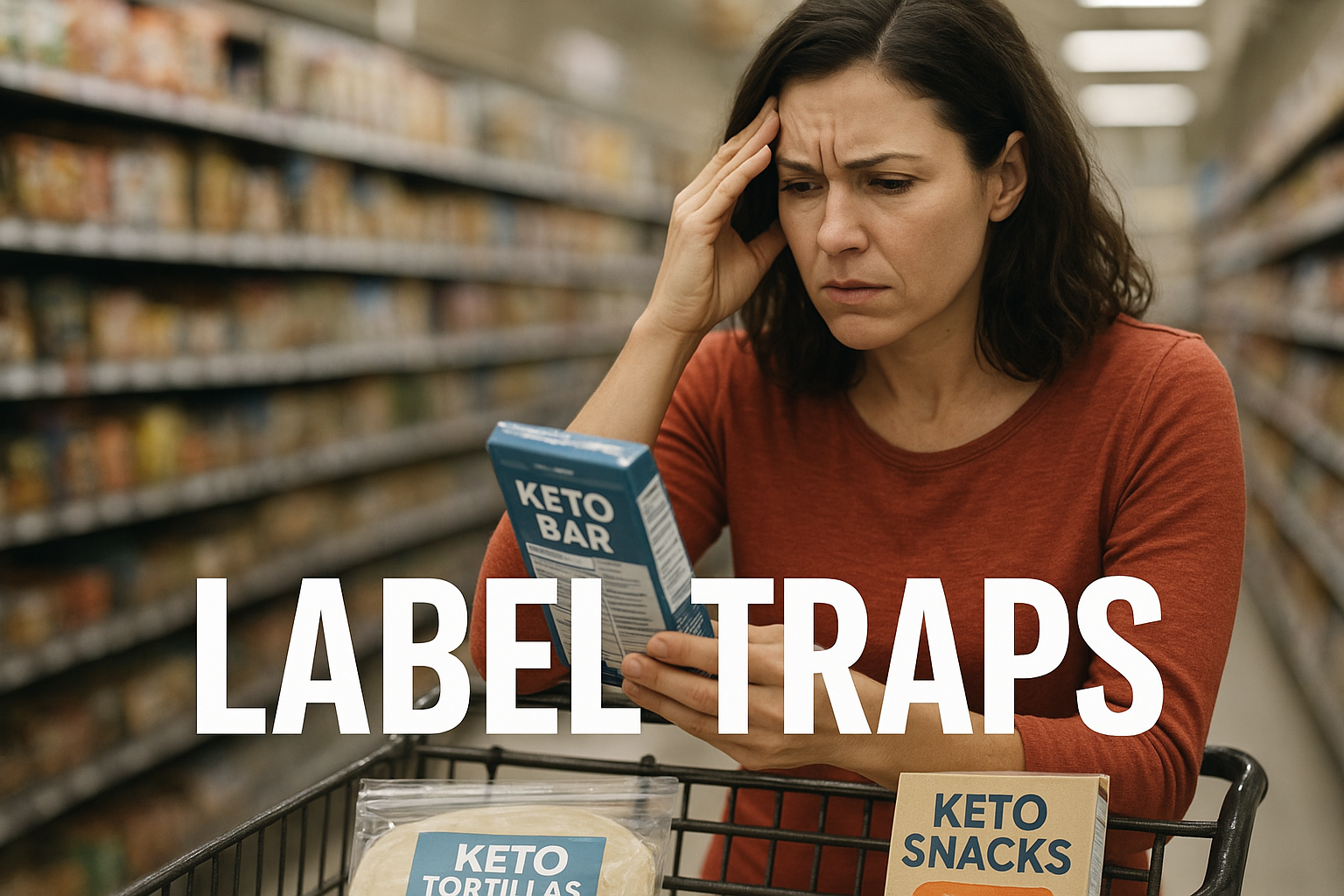
You buy the low-net-carb tortillas, bars, and treats. You stay in the keto lane. But progress still feels weirdly slow.
That usually is not bad luck. It usually means some “net carb” foods are doing more damage than the label makes you think.
One week you feel disciplined because everything in your cart says keto or low net carb. Then the scale stays flat and you start wondering if your body just hates keto.
Here’s the real problem with net carb foods
Net carbs are supposed to make keto simpler. In real life, they often make people too relaxed.
The label gives food a health pass before you ask the more important questions. Does this keep you full? Does it keep cravings quiet? Is the serving size even realistic? Are you eating one, or eating five because it feels “safe”?
That is where people get stuck. The problem is not always that the math is fake. The problem is that the label creates permission.
If that sounds familiar, these are the biggest net carb traps to fix first.
Start here:
1. You trust the front of the package more than your real results
This is the biggest mistake in the whole category.
A food says 2 net carbs or 4 net carbs, so people stop thinking. They do not look at the ingredient list, the serving size, or what happens after they eat it. The label feels like the decision is already made.
In real life, this looks like grabbing low-net-carb wraps, cereal, bars, cookies, and bread because they seem easier than building real meals. Technically, each item may fit. But the whole day becomes processed food with a keto costume.
The common mistake is acting like the net carb number is the only thing that matters. It is not. A low-net-carb product that keeps you snacking, keeps you craving sweets, or makes portions sloppy can still make keto harder.
The fix is to use your actual results as the test. If a food keeps you hungry, keeps showing up in overeating patterns, or makes your progress stall, stop defending it just because the package sounds smart. This is the same reason so many people end up stuck in the patterns covered in Keto Foods That Are Secretly High Carb.
2. “Net carb” foods make serving sizes feel fake and harmless
A lot of these products only look impressive because the serving size is tiny.
One tortilla. Half a bar. A small scoop. A few crackers. On paper, that sounds fine. In real life, people rarely eat the product that way.
You have one wrap, then another. You eat one keto cookie, then grab a second because it is “only” a few net carbs. You snack on low-net-carb crackers straight from the box and stop counting mentally after the first handful.
The common mistake is thinking a low number per serving means the full eating event is low. But keto problems do not start on the label. They start when real behavior and serving math stop matching.
The fix is simple. Look at how you actually eat the product, not how the company wishes you would eat it. If you always double or triple the serving, judge the food by that amount. A food is not helping you if it only works in fantasy portions.
3. Sweet low-net-carb foods keep your appetite and sweet tooth switched on
This is where many keto plans quietly go sideways.
A low-net-carb dessert may technically fit keto. That does not mean it helps you act like someone who is getting easier appetite control. Many bars, cookies, candies, and sweet shakes keep the dessert loop alive.
In real life, this looks like finishing lunch and immediately wanting something sweet because you are used to ending meals with a low-net-carb treat. Or eating a keto bar in the afternoon and then spending the next two hours thinking about more snack food.
The common mistake is thinking a low-net-carb sweet is automatically better than the old habit. Sometimes it is slightly better. But if the habit still keeps you chasing sweet food all day, it is not solving the real problem.
The fix is to notice whether the product calms appetite or wakes it up. If you eat it and want more food right after, it is probably not helping. This overlaps hard with Sugar Cravings on Keto: What They Usually Mean. Some people are not failing keto. They are feeding the same sweet loop with new packaging.
4. Low-net-carb replacements keep old eating habits alive
Sometimes the issue is not the product by itself. It is the behavior the product protects.
Low-net-carb bread, tortillas, pizza crusts, desserts, and snack foods let people keep eating the same way they ate before keto. The carbs are lower, but the pattern stays the same. Sandwiches all day. Wraps all day. Snack foods between meals. Dessert after dinner every night.
That matters because keto usually works better when eating gets simpler. Real meals. Less grazing. Fewer food decisions. But replacement products often pull you back into a more snacky, convenience-heavy pattern.
In real life, this looks like someone replacing bread with keto bread, chips with low-carb crackers, candy with keto candy, and ice cream with low-net-carb pints. They feel like they changed everything, but they still eat like a person chasing processed food all day.
The common mistake is thinking keto success comes from finding better versions of junk. Usually it comes from building stronger meals and needing fewer fake fixes.
The fix is not to ban every replacement forever. It is to stop letting them become the whole plan. If your best keto days still depend on bars, wraps, cookies, and snack packs, the structure is probably weak.
5. “Net carb” permission makes overeating feel reasonable
This is the trap nobody wants to admit.
People eat more of certain foods because they think the label protects them. They would never eat four regular bars in one week, but they will absolutely work through a box of low-net-carb bars because it feels controlled. They would watch portions with normal tortillas, but they stop caring when the wrap says keto.
In real life, this looks like saying, “It’s only 3 net carbs,” while eating the second or third serving. The food may not kick you out of ketosis. But it can still keep calories high, hunger messy, and progress slower than it should be.
The common mistake is treating ketosis and fat loss like the exact same thing. They are connected, but they are not identical. You can stay low carb and still create a pattern that makes weight loss harder. That is why this problem often shows up next to Keto Mistakes That Stop Weight Loss.
The fix is to stop asking only, “Can I fit this in?” Ask, “Does this help me eat better, feel fuller, and stay more in control?” If the answer is no, the label does not matter much.
Common net carb foods that cause the most trouble
Not every person struggles with the same products. But these are the ones that cause the most problems for a lot of people:
- keto bars that act like dessert but get treated like meal replacements
- low-net-carb tortillas and breads that turn every meal into a sandwich habit
- keto cookies, candies, and ice creams that keep sweet cravings loud
- crackers and crunchy snack foods with tiny serving sizes nobody follows
- sweet protein products that feel healthy but do not keep you full for long
None of these foods are automatically evil. The problem is how often they become daily staples instead of occasional tools.
How to tell if a net carb food is helping or hurting you
Use a simple test.
After eating it, are you calmer around food or more snacky?
Does it help you build a meal, or does it replace a meal badly?
Does one serving feel normal, or does the product always pull you into more?
Are your results steady when it stays in your routine, or do you keep feeling stuck and confused?
If a low-net-carb food makes your appetite louder, portions sloppier, or cravings more constant, it is not helping enough to deserve its place.
Related:
Related:
What usually works better than chasing net carb products
Most people do better when their food gets more boring in a useful way.
Eggs and sausage. Chicken and vegetables. Burger patties with salad. Tuna and pickles. Ground beef bowls. Greek yogurt if it fits your carbs. Leftovers that actually feel like a meal.
Those foods are easier to read. They are easier to repeat. They are also harder to romanticize into overeating permission.
This does not mean you can never use a wrap or a bar again. It means those products should support your plan, not become your plan. If keto still feels shaky overall, Keto Isn’t Working? The Real Reasons (And What Actually Fixes It) is worth reading next because net carb traps are usually part of a bigger setup problem.
Fix this first:
- Pick one low-net-carb product you use a lot and cut it for one full week.
- Replace it with a real protein-based meal or snack and see what happens to your hunger.
- Judge products by how you actually eat them, not by the fantasy serving size on the box.
- Stop using sweet keto foods as a daily reward just because the label says they fit.
- Ask whether a food makes keto simpler and calmer. If it does not, it probably does not belong often.
Net carb foods can fit keto. But a lot of them also keep people stuck because they make overeating, sweet cravings, and old habits feel smart.
That is the part the label does not tell you.
🔎 If this helped, here are more no-BS keto guides worth reading next:
- Keto Foods That Are Secretly High Carb (What to Avoid)
- “Keto” Foods That Look Healthy but Sabotage Weight Loss
- Keto Mistakes That Stop Weight Loss
Explore more Keto Lies & Myths stories here: