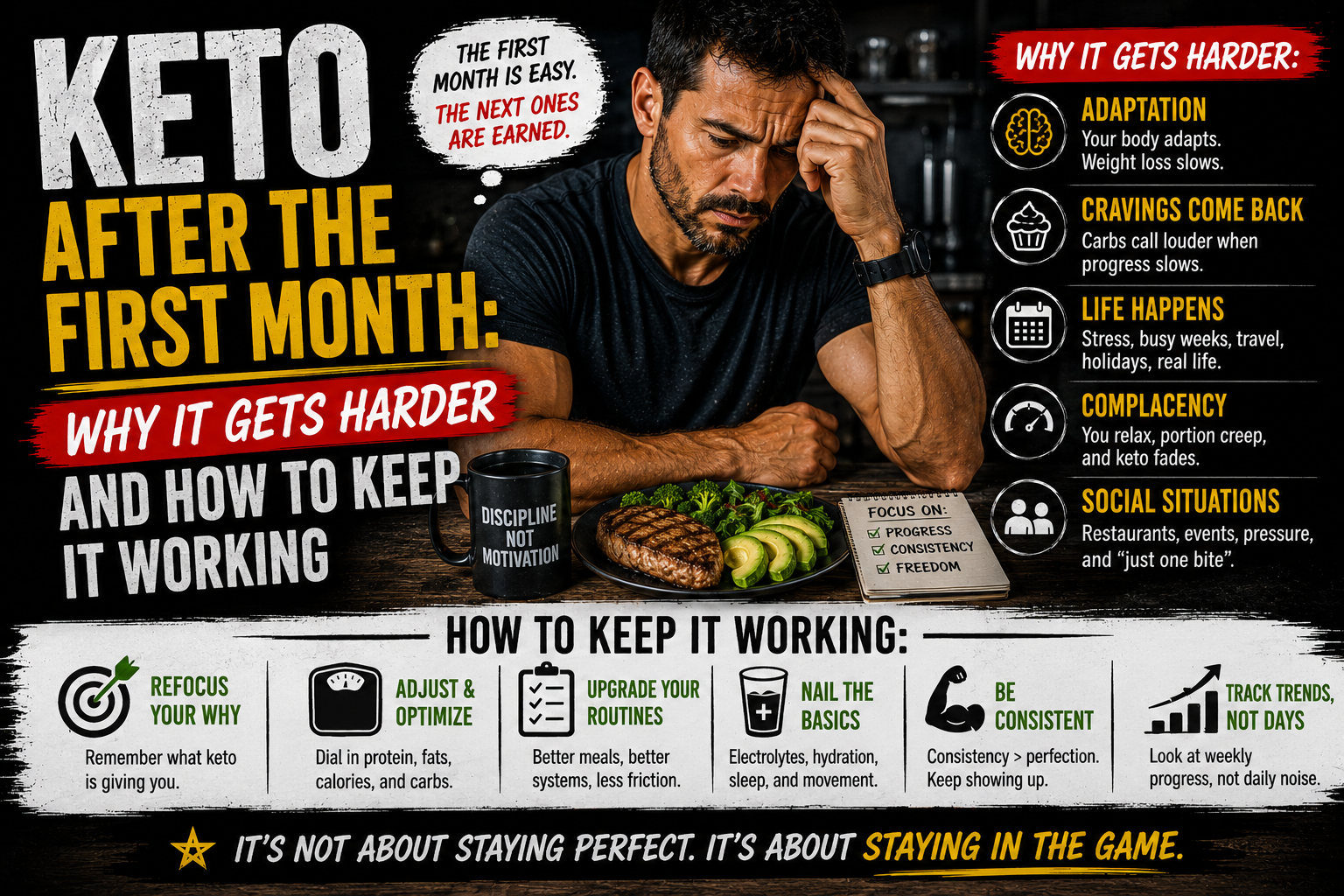
Keto after the first month is where a lot of people start slipping.
The first month has momentum. After that, hunger gets weirder, cravings get louder, routines get sloppier, and every day starts needing more discipline than it should.
That does not mean keto stopped working. It usually means your beginner setup never turned into a real system.
Why keto after the first month starts feeling harder
Most people do fine when the plan is new, simple, and a little exciting. Then the novelty wears off. The meals get repetitive. Family schedules change. Work gets busy. Restaurants, weekends, and random snack decisions start poking holes in the day.
That is why real-life keto problems and weight loss stall problems matter so much after the first month. The issue is usually not one dramatic mistake. It is a pile of small leaks that your first-month enthusiasm used to cover.
Use this framework: full enough, clear enough, easy enough
If you want keto to keep working, your routine has to do three things.
- Keep you full enough that meals do not turn into constant bargaining.
- Keep decisions clear enough that one messy moment does not hijack the whole day.
- Keep the plan easy enough that normal life does not break it every week.
When one of those breaks, keto starts feeling hard for reasons that seem random. That is why people keep drifting into Monday restarts or trying to solve everything with more willpower.
If you are not staying full, the rest of the plan gets stupid fast
A lot of month-two keto problems are really hunger problems wearing different clothes. You are not technically starving, but you are never quite settled either. Meals are too light. Protein is vague. Snacks are constant. Then dinner becomes a rescue mission.
This is where people quietly slide into bigger portions and fake little extras. Portion creep and low-carb bites between meals look harmless because they do not feel like a cheat. But they keep you in a half-fed, half-snacky state that makes the plan harder every day.
Real life version: coffee in the morning, a decent lunch that was not really enough, a handful of nuts at 3 PM, cheese while cooking, then a dinner that somehow became huge. On paper it still looks keto. In your body it feels chaotic.
The fix is boring, which is why it works. Build meals that actually land. Make protein obvious. Stop calling snack math a normal routine. If you are constantly negotiating with hunger, the next problem is not discipline. It is structure.
Cravings get louder when you keep feeding the same loop
After the first month, cravings are usually less about detox and more about repetition. You keep rewarding stress, boredom, or under-eating with sweet tastes, treat logic, or a bigger night meal. Then you wonder why the pull never really goes away.
Two common versions are liquid and delayed. Liquid means drinks that keep the dessert expectation alive. Delayed means saving carbs or calories so the evening can feel fun. That is where healthy keto drinks that stall progress and saving carbs for one big treat start doing damage.
The mistake is thinking a choice counts as harmless just because it fits the macro story. If it keeps the craving cycle active, it still costs you. The fix is to make more of your day neutral. Fewer reward foods. Fewer sweet drinks. Fewer moments where the whole plan depends on getting through the night without bargaining.
This is also why people say keto was easier in week two. It was. They had fewer food negotiations then. The longer-term win is not tougher self-control. It is designing a routine with fewer craving triggers in it.
Routine breakdowns are not random. They usually hit the same points every week
Once keto stops being new, your weak spots become very predictable. A certain workday. A certain evening. A certain family schedule. A certain time when you are tired and hungry and done making decisions.
That is exactly what routine breakdowns and specific times of day problems expose. The goal is not to become perfect at every hour. The goal is to stop being surprised by the same crash points.
Maybe lunch is too weak on office days. Maybe Thursday night always turns into takeout. Maybe Sunday feels loose, so Monday becomes a guilt reset. Those are not personality flaws. They are pattern failures. And pattern failures can be engineered around.
The fix is to stop asking, “Why am I like this?” and start asking, “What exact part of this day keeps needing a better default?” That one question usually gets you closer to the answer than another promise to be stricter.
Real life beats keto when the backup system is weak
A lot of people think their plan works because it works on good days. That is not the real test. The real test is whether it still works when lunch gets delayed, dinner changes, the house is busy, or your energy is shot.
That is why a backup food plan matters so much. And when takeout becomes the lazy answer to a long day, takeout mistakes that stall weight loss usually show you the leak faster than another general motivation article ever will.
A backup system does not need to be fancy. It needs to be fast, normal, and easier than the bad decision. Rotisserie chicken, burger patties, repeat lunches, simple freezer meals, and a few boring default options beat emergency willpower every time.
Think about the moments when your plan usually gets mugged by real life. The meeting runs long. The kid activity goes late. The grocery trip did not happen. You get home tired and suddenly every app on your phone is offering a quick answer. If the only keto option in that moment takes effort, the plan is already in trouble.
This is why repeatable defaults matter more after the first month than they did at the start. In week one, motivation can cover a bad setup. In month two, it usually cannot. You need a lunch that is easy to pack, a dinner you can make half-asleep, and one or two backup foods that keep you from turning mild inconvenience into a whole off-plan night.
If you do not have that layer, the plan starts feeling fragile. One late afternoon can turn into snacks, drive-thru logic, and another speech about starting clean tomorrow.
Weekends and looseness matter more than people want to admit
Month-one keto can survive a few sloppy choices because momentum is still carrying you. After that, weekends matter. Restaurant looseness matters. Casual portions matter. The little “I deserve it” logic matters.
That is why weekend portion problems show up so often next to stall complaints. People think they need a more advanced keto trick, but the bigger truth is that their weekdays are trying to outrun their weekends.
The real-life version is familiar: Monday through Thursday looks solid, Friday dinner stretches, Saturday gets snacky, Sunday is vague, and by Monday the scale feels rude. Then the person decides keto suddenly stopped working.
Weekends go wrong because structure disappears all at once. Wake-up time changes. Meals drift. Social food shows up. Drinks sneak in. Portions get eyeballed instead of noticed. None of that sounds dramatic by itself, but together it creates the exact kind of loose, low-awareness eating that makes progress feel inconsistent.
The fix is not to make weekdays stricter. It is to make weekends less lawless. Keep your meal rhythm. Eat enough earlier in the day. Stop treating every outing like a temporary suspension of the plan.
How to make keto feel simple again without pretending life is simple
This is the shift that matters most after the first month. Stop building the plan around best-case conditions. Build it around the normal mess.
That means meals you can repeat when you are busy. A small list of fallback foods. Fewer sweet workarounds. Less dependence on motivation. Better awareness of where the day usually cracks. Enough food at the right times so you are not making every choice half-hungry.
It also means dropping the fantasy that sustainable keto should feel exciting all the time. It should feel manageable. Clear. A little boring in a useful way. That is not failure. That is what repeatability looks like.
Reality check: if keto only works when life is calm, the system is still unfinished
A lot of people blame themselves for this stage. They say they lost their discipline. They say they got lazy. Sometimes that is partly true. But most of the time the bigger issue is simpler: the original setup was too fragile for regular life.
If your plan falls apart when work gets busy, family food changes, dinner gets delayed, or the weekend starts, that is useful information. It tells you where the system needs reinforcement. It does not mean you need a brand-new diet or a fresh blast of fake motivation.
Long-term keto works best when it stops feeling like a test. The goal is not to white-knuckle your way through cravings and chaos forever. The goal is to make enough of the day automatic that real life stops winning so easily.
That is the shift people miss. You are not trying to prove you can resist everything forever. You are trying to build a week that does not keep demanding heroic decisions in the first place.
Conclusion
After the first month, keto becomes less about knowing the rules and more about surviving normal life without constant renegotiation. That is the stage where people either build a real system or keep restarting the same beginner loop with different promises.
If you are still hungry too often, fix satiety first. If cravings are still loud, cut the loops that keep them alive. If the same day or time keeps beating you, engineer around it. If real life keeps knocking you loose, strengthen the backup plan instead of demanding better willpower.
That is how keto keeps working. Not by staying exciting. By becoming durable.
Fix this first
- Pick the one part of the week that keeps breaking the plan and fix that before chasing smaller details.
- Make your meals more filling and more obvious so random snack logic stops running the day.
- Cut the sweet drink, treat, or reward habit that keeps cravings alive after the first month.
- Build two or three backup meals that are easier than takeout or grazing when life gets messy.
- Make weekends and late-day decisions less loose so weekdays are not constantly cleaning up after them.
If this helped, start with these next:
- Why keto falls apart in real life even when you know what to do
- How weight loss stalls happen when the little leaks keep stacking up
- Why the same routine breakdowns keep showing up every week
Explore more Keto That Actually Works stories here: