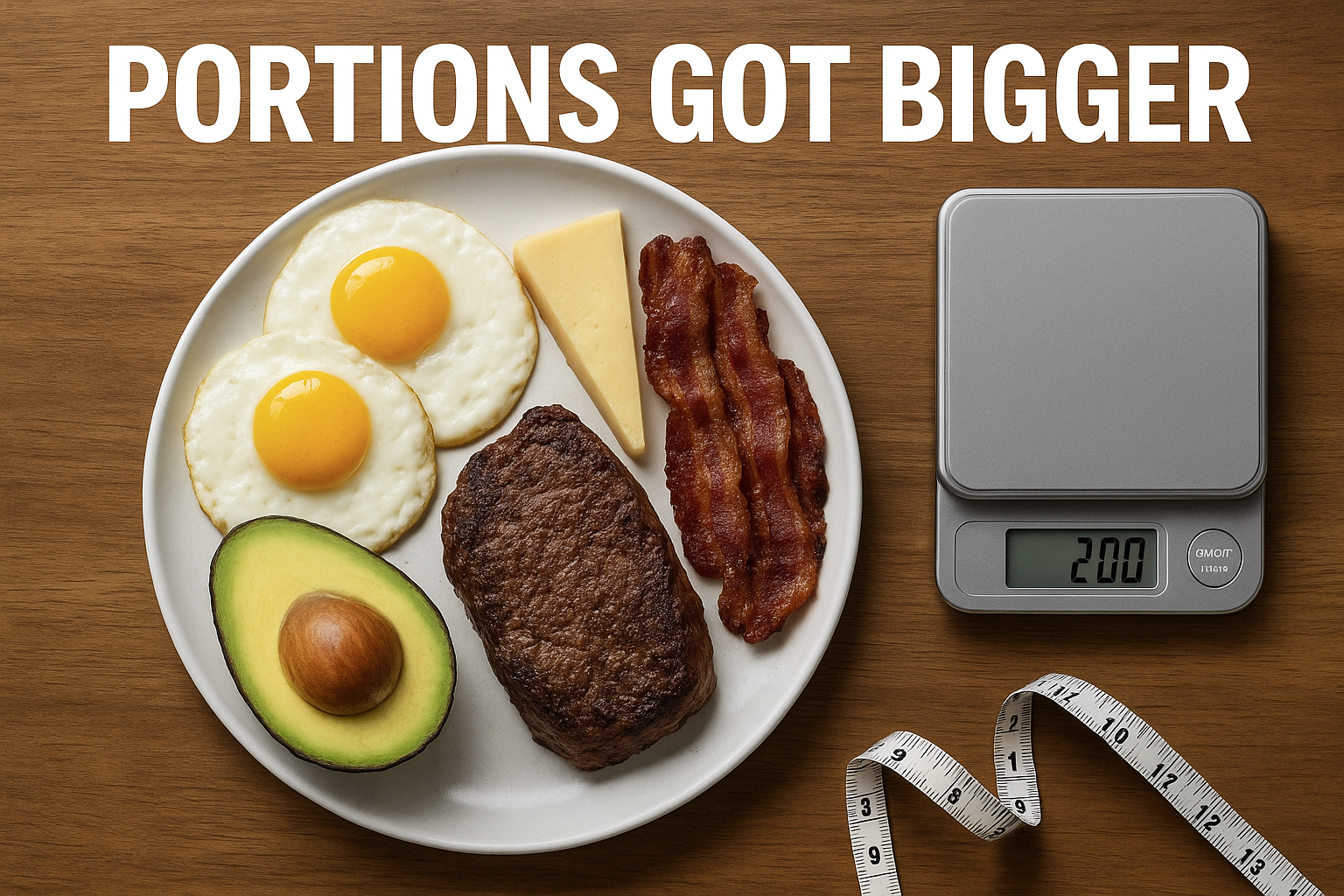
You start keto, the scale moves, and everything feels easy for a couple of weeks. Then keto portion creep shows up quietly: the same foods turn into bigger scoops, thicker slices, longer handfuls, and “close enough” portions that slowly kill your progress.
That is not bad luck. It is usually what happens when early momentum makes you less careful before your habits are actually solid.
Most people do not notice it at first. A little extra cheese here, a bigger spoon of peanut butter there, a second helping because the first one “looked small” – and suddenly the plan that worked two weeks ago stops working now.
I’ve seen this pattern a lot: keto feels almost suspiciously easy at first, so people relax right when the small details start mattering more.
Why keto portion creep happens after the first few good weeks
Early keto success can create a false sense of safety. When the scale drops fast at the start, it is easy to assume the plan is now automatic and that portion size does not matter as much as people say.
But your body does not care that the food is technically low carb. If your meals keep getting bigger, your snacks keep stretching out, and your “safe foods” stop having edges, weight loss can slow down hard.
This is also why some people end up reading broad troubleshooting posts like Why You’re Not Losing Weight on Keto (And How to Fix It) and still feel confused. The issue is not always hidden carbs. Sometimes the real problem is that the same low-carb foods quietly turned into much larger amounts.
Start here:
1. You stop measuring because early success made you confident
This is one of the biggest reasons portion drift starts. In the beginning, people are usually more aware. They check labels, count servings, and pay attention to how much they are actually eating.
Then the first few good weeks happen. The scale drops. Clothes fit better. Energy improves. That is when measuring starts to feel unnecessary.
Real life version: at first, one serving of nuts means one serving. A few weeks later, it means a bowl on your desk while you work. Same food. Totally different amount.
The mistake is thinking awareness equals obsession. It does not. You do not need to track forever, but if you stop paying attention too early, your eyes start guessing and your guesses usually grow.
Fix: pick the foods most likely to drift and tighten those up first. Nuts, cheese, cream, nut butter, sauces, and leftovers are the usual suspects. You do not need to measure every leaf of lettuce. You do need to stop pretending a heavy pour or giant handful is the same as a serving.
2. Your “safe foods” start feeling free
A lot of keto-friendly foods earn a mental halo. Cheese is low carb, so it feels harmless. Heavy cream is low carb, so people stop counting how often they pour it. Eggs are great, so the butter, cheese, and sides piled onto them stop registering.
That is where things get messy. Low carb is not the same as impossible to overdo.
You see this especially with foods people can eat straight from the package. A couple slices of cheese becomes five. A spoon of peanut butter becomes three. Bacon becomes part of every meal, whether it helps or not.
The common mistake is assuming the food that helped you start keto will keep helping in unlimited amounts. That only works in internet fantasy, not real life.
Fix: stop using “keto-friendly” as a substitute for “works for me in this amount.” If a food is easy to overeat, give it a job. Put cheese inside a meal instead of grazing on it. Put nuts next to a real plate of food instead of treating them like background eating. If your meals are still too small and that is why you keep circling back for extras, fix the meal itself. This is exactly where posts like Why Keto Hunger Comes Back Fast When Your Meals Are Low Carb but Still Too Small become useful.
3. You start eating by mood instead of by structure
Keto works better when your food has shape. Breakfast, lunch, dinner, and maybe one planned backup option if the day goes sideways. Portion drift gets worse when the day turns into random decisions.
Maybe lunch was light, so you “make up for it” later. Maybe dinner was late, so you snack while cooking. Maybe you had a stressful day and suddenly your plate gets bigger because bigger feels deserved.
None of that looks dramatic in the moment. That is why it is dangerous. It feels normal.
Real life version: you eat a decent lunch, then grab jerky, then a few bites while cooking, then a full dinner, then a little extra because you “didn’t eat much earlier.” On paper, everything was low carb. In reality, the whole day sprawled.
The mistake here is thinking the issue is motivation. Usually it is not. It is lack of structure.
Fix: make your meals more repeatable. Know what a normal lunch looks like. Know what dinner usually includes. Know what counts as a real meal and what counts as a snack. If every day feels different, progress gets harder to read and easier to sabotage.
4. You keep adding little extras that do not feel like “real eating”
This is where stalls get sneaky. The extra sauce. The second coffee with cream. The butter added “just because.” The handful while plating dinner. The bites off someone else’s plate. The second helping of meat because it was there.
Each one feels too small to matter. Together, they matter a lot.
This is also why some people think their weight loss randomly stalled after a good start. What actually happened is that their day got blurrier. The meals did not just get bigger on the plate. Eating spread out into more moments.
The common mistake is only counting what feels official. But your body does not separate ‘real meal calories’ from ‘just a bite while standing up.’
Fix: tighten up your edges. Sit down to eat. Plate your food once before going back. Stop cooking with a running stream of little tastes if those tastes are turning into a snack. If you suspect this is your pattern, compare your current routine with the first two weeks that worked. The difference is usually obvious once you look honestly.
5. You assume a stall means keto stopped working, when the real issue is drift
When progress slows, people often panic and start looking for exotic explanations. Maybe dairy is the problem. Maybe they need a longer fast. Maybe they need more fat. Maybe they need less protein. Maybe they need to cut carbs even lower.
Sometimes those things matter. A lot of times, they do not.
If weight loss was moving and then slowed after a few good weeks, the boring answer is often the right one: your portions got looser, your food decisions got sloppier, and your routine stopped being clear. That is not failure. It is drift.
Real life version: the person who was making simple plates at the start is now building ‘reward meals,’ pouring more extras, eating more often, and calling it the same plan. It is not the same plan anymore.
Fix: troubleshoot the obvious before you overhaul the whole diet. Rebuild the version of keto that worked at the start, but do it with better structure this time. If you are also dealing with the mental spiral that comes with slowed progress, Keto Plateau After the First Few Weeks? Here’s Why Progress Slows Down is a good place to reset your thinking.
Common mistakes that make portion creep worse
A few patterns show up again and again:
- Using giant bowls, plates, or mugs that make normal amounts look small
- Eating snacks straight from the bag or container
- Making meals too light, then patching the hunger with random extras
- Assuming ‘high fat’ means adding more fat to everything automatically
- Letting weekends become a free-for-all because weekdays looked good
If any of those sound familiar, that is good news. It means the problem is fixable without doing anything extreme.
Related:
Related:
What to do if your portions have clearly drifted
You do not need to become obsessive. You do need to become honest.
For one week, tighten up the foods most likely to sprawl. Build meals around protein first. Keep extras intentional. Plate your food. Stop the background bites. Use repeatable meals instead of constant improvising.
If you are still hungry, fix that on purpose instead of pretending giant portions are the only answer. A structured, satisfying meal beats low-carb grazing every time. And if hunger is part of the problem, read Keto Hunger Problems: Why You’re Still Hungry on Keto and What to Fix First next.
Fix this first:
- Pick 3 foods that always get bigger for you and tighten those up this week.
- Build your meals around a clear protein anchor instead of random low-carb extras.
- Plate your food once before eating, and stop snacking from bags, tubs, or pans.
- Compare your current routine to the first two weeks that worked and copy the structure, not just the food list.
If this helped, here are more no-BS keto guides worth reading next:
- Why You’re Not Losing Weight on Keto (And How to Fix It)
- Keto Hunger Problems: Why You’re Still Hungry on Keto and What to Fix First
- Keto Unstable Dinner Routine: Why Dinner Changes Make Keto Feel Harder
Explore more Keto That Actually Works guides here: