Your keto meals look fine. Two hours later, you’re hunting for snacks.
That usually means the meal is low carb, but not built to actually keep you full.
Most people learn what is low carb, then assume the rest will sort itself out. It does not. A day built on coffee, tiny meals, weak protein, long gaps, and random snack fixes still feels unstable even when the carb count looks decent.
That is why keto can look right on paper and still feel messy in real life.
This page is the practical system: how to build meals that actually hold you, where protein fits, why salt matters, why breakfast matters, and how to stop turning every rough patch into another snack decision.
What a solid keto meal structure actually does
A solid meal does not need to be fancy. It needs to do a job.
It should keep you full for a reasonable amount of time, keep energy steadier, lower the urge to keep grabbing little low-carb extras, and make the next meal easier instead of more chaotic. If you need a broader diagnosis first, this hunger troubleshooting hub is a good place to start.
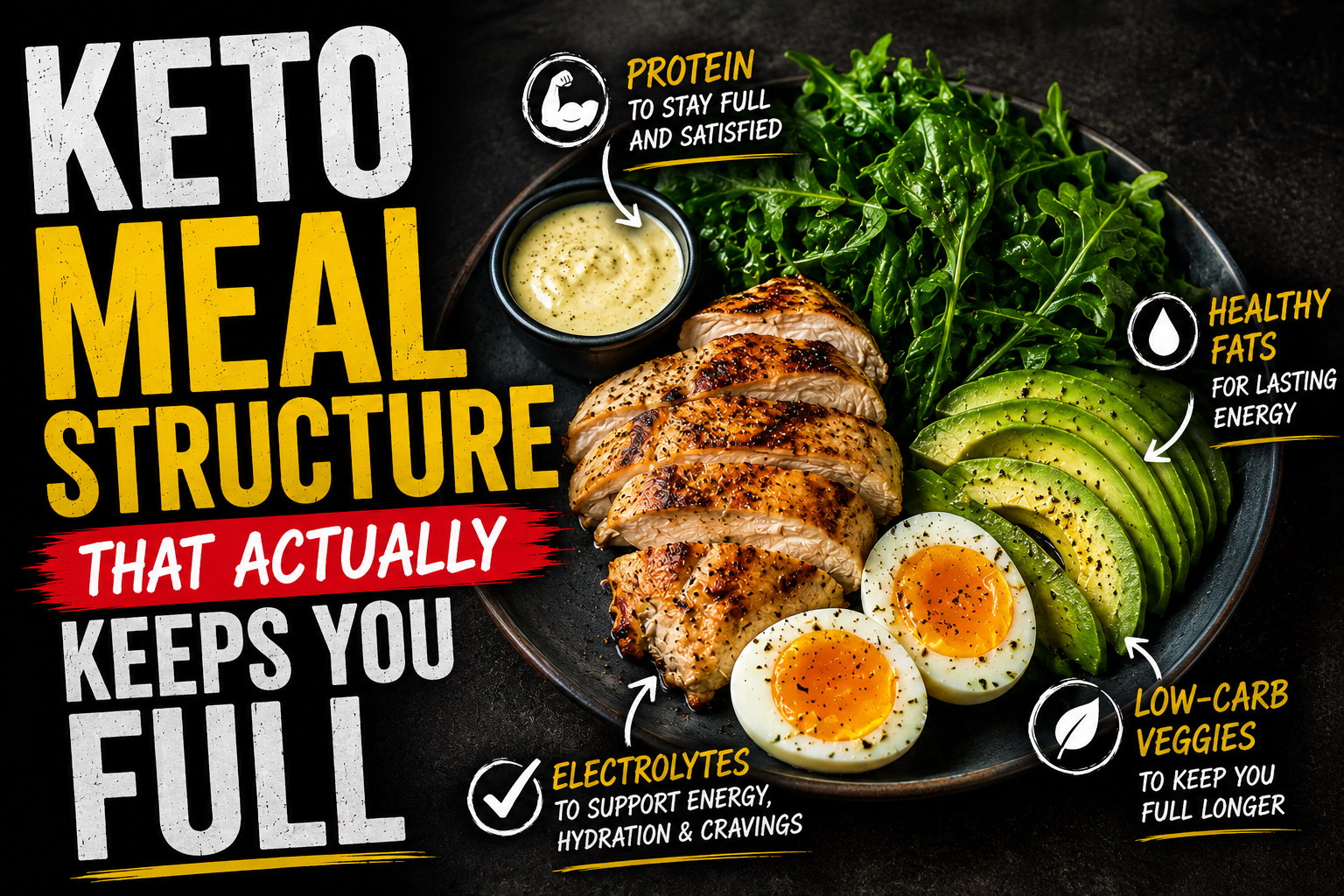
In practice, most meals work better when they have enough real protein, enough total food, enough salt, and timing that does not leave you trying to white-knuckle a big hunger gap.
Start here:
If breakfast is coffee and hope, the whole day usually pays for it
This is one of the most common keto breakdowns. People cut toast, cereal, and sugar, then call it a win while breakfast becomes coffee with a little creamer, maybe a cheese stick, maybe nothing at all. That is not a real first meal. It is a delay tactic.
What it looks like in real life: you feel fine early, edgy by late morning, weirdly unsatisfied at lunch, then snack-prone the rest of the day. It does not always feel like obvious hunger. Sometimes it feels like brain fog, irritability, or constant food thoughts.
The common mistake is thinking low carb automatically means filling. It does not. This protein-early article explains why weak morning protein makes the rest of the day harder. This breakfast hub is the better next step if mornings are where everything starts going wrong.
The fix is simple and not very glamorous: make breakfast more like food and less like a caffeine ritual. Eggs, meat, Greek yogurt if it works for you, leftovers, or any repeatable protein-first meal you can handle on a busy morning.
Protein is not a buzzword. It is the anchor.
Protein matters because it gives the meal weight. It helps stop the cycle of eating something low carb and still feeling like you never really ate. But a lot of people say they are eating protein when what they really mean is a little jerky, a few bites of chicken, a bar, or some cheese scattered across the day.
That is not meal structure. That is protein-shaped snacking.
Real protein works best when it is the center of the meal, not a side character. Even then, protein is not the whole story. If the meal is too small or salt is off, you can still feel rough later. This post on high-protein meals that still fail shows why salt and overall structure still matter.
The mistake is turning protein into a label instead of asking whether the meal actually has enough of it to hold you. The fix is to build around it first and add the rest after.
Low carb still fails when the meal is too small
This is where disciplined-looking keto creates dumb results. Tiny lunches. Clean little salads. Eggs with barely anything else. A handful of nuts because dinner is later. It all looks controlled. Then night arrives and the appetite comes back swinging.
A lot of people think they need more willpower at night. Usually they needed a stronger meal six hours earlier.
This article on meals that are still too small matters if you get hungry again fast. This clean-meals article matters if your food looks healthy but never really lands.
The fix is not pouring random fat on everything. It is making the meal more complete: more protein, more total food, and enough salt that you do not feel empty and off an hour later.
Snacky keto usually means your meals are doing a bad job
Snacks are not automatically the enemy. Backup food matters. Real life exists. But if your whole plan needs constant rescue snacks, that usually means the main meals are too weak, too delayed, or too annoying to repeat.
This is the difference people miss. You do not solve snacky keto by finding better snack foods. You solve it by creating fewer situations that require rescue food in the first place.
What this looks like: nuts at 11, cheese at 2, a low-carb drink at 4, then a huge dinner because nothing all day really counted. Every choice is technically keto. The day still feels sloppy. This snacks-not-meals post covers that pattern well. This article on low-carb drinks becoming snacks covers the liquid version.
The fix is to sort foods into clear jobs: real meals, emergency backup foods, and foods that only keep the cycle going. Those should not all live in the same category.
Electrolytes are part of meal structure
A lot of keto frustration gets blamed on hunger when the real issue is that you feel off. Flat. headachy. cranky. tired. a little dizzy. kind of hungry but not exactly. Then you eat because food feels like the most obvious fix.
Sometimes the real problem is sodium and fluid balance, especially if you are drinking a lot of caffeine, sweating more, or under-eating. Electrolyte problems can feel a lot like hunger and cravings.
If this keeps happening, read this electrolyte balance guide and this troubleshooting post. A meal plan that ignores sodium is not finished.
The mistake is treating salt like an optional supplement topic. The fix is building it into the actual day, especially in the morning, on active days, and anywhere your appetite gets weird for no obvious reason.
Timing problems are usually structure problems in disguise
People love debating fasting, meal frequency, and whether breakfast is necessary. That is usually not the first question. The first question is whether your current timing keeps blowing up your appetite.
If you are regularly eating your first real protein too late, letting lunch slide, or hitting the afternoon half-starved, the exact meal schedule matters less than the fact that the schedule is failing you.
This time-of-day breakdown helps if the same crash keeps showing up on a schedule. This morning-plan post helps if the trouble starts before noon.
The fix is not copying someone else’s fasting setup. It is fixing the points where your day repeatedly becomes unstable.
Meals need to survive real life, not just calm days
This is where a lot of keto advice falls apart. It assumes ideal mornings, easy lunches, and plenty of patience. Real life has school runs, work calls, errands, stress, bad sleep, and days when dinner starts late because everything else did too.
If your meals only work when life is perfectly calm, they are too fragile. You need repeatable defaults that still work when the day gets messy. That is the difference between a plan that looks good and one that actually lasts.
Good meal structure lowers drama. You stop needing dessert because dinner never satisfied you. You stop pretending snack foods are meals. You stop getting to 9 PM feeling both overfed and unsatisfied.
What stronger default meals actually look like
A stronger default meal is not some perfect macro masterpiece. It is a meal you can repeat when you are tired and still trust to do its job.
For breakfast that might mean eggs and sausage, leftovers, or Greek yogurt with enough protein to count as food instead of decoration. For lunch it might mean a container with real protein, something salty, and enough total volume that you are not scanning the office for snacks an hour later. For dinner it means having one or two boring reliable meals that do not depend on inspiration.
The common mistake is building a plan out of nice ideas instead of repeatable defaults. People know what they should eat, but the meals they actually repeat are coffee, snack cheese, a rushed salad, and whatever is quickest at night. The fix is to identify the meals you really live on and strengthen those first.
If keto keeps feeling unstable, ask a plain question about each meal: would I trust this to carry me for the next few hours on a busy day? If the answer is no, that meal probably needs more structure.
A simple decision tree for fixing your meals
If you are hungry before lunch, breakfast was probably too weak.
If you are okay until mid-afternoon and then start hunting for something crunchy or sweet, lunch was probably too small, too light, or too low in salt.
If you are good all day and then lose it at night, there is a good chance the whole day was built on underpowered meals and delayed hunger.
If you feel shaky, flat, or weirdly emotional, check sodium, fluids, caffeine, and whether you have been trying to run on almost nothing.
If your setup only works at home on easy days, the structure is too fragile. You need defaults, not ideal-day performance.
Related:
Reality check
If your plan only works when you are being perfect, it is not a strong plan.
You do not need more keto tricks. You need sturdier meals, clearer defaults, and fewer parts of the day that depend on discipline alone.
Conclusion
Keto meal structure is not about making meals more complicated. It is about making them solid enough that hunger, cravings, and side effects stop running the whole day.
Fix the meal that fails most often. Then fix the next weak point. That is how keto starts feeling easier without turning into a full-time project.
Fix this first:
- Pick the meal that breaks down most often and make it more real with more protein, more total food, and more salt.
- Stop using snack foods and drinks as stand-ins for actual meals.
- Build one repeatable breakfast and one repeatable lunch for busy days.
- Check electrolytes before assuming every rough patch is hunger or lack of willpower.
- Use the linked posts below based on where your day usually goes off the rails.
If this helped, start with these next:
- Fix the breakfast mistakes that wreck the rest of the day
- See why protein still fails when salt and structure are off
- Use the full hunger troubleshooting hub to find your weak spot
Explore more Keto That Actually Works stories here: