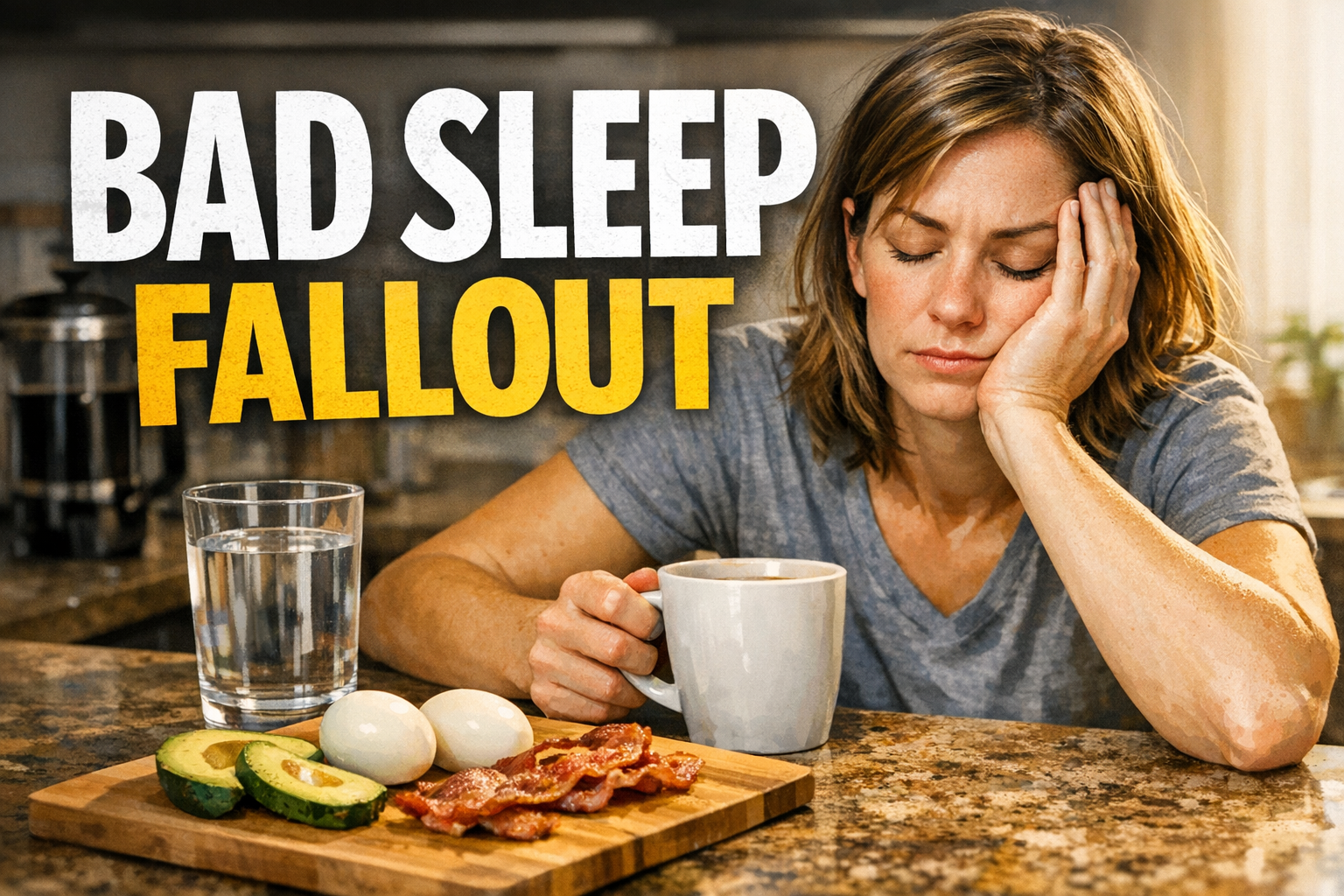
You wake up after a rough night, grab coffee fast, and tell yourself keto is suddenly not working. Then the headache starts. You feel weirdly shaky, flat, hungry, thirsty, and annoyed by noon. Those keto side effects after bad sleep are usually not random. They hit harder when the next day turns into caffeine first, food later, and sodium whenever you remember.
That is the real search-intent answer here. The bad night matters. But the bigger problem is the sloppy recovery chain that starts the minute you try to force the day instead of stabilize it.
Here’s the truth. One bad sleep night does not break keto. But bad sleep makes it much easier to stack three or four dumb decisions on top of each other. That is why the next day can feel far worse than it should.
Why keto side effects after bad sleep feel worse the next day
Bad sleep lowers patience, raises stress, and makes quick fixes look smarter than they are. On keto, that usually means more caffeine, less water with sodium, weaker food choices, and longer gaps before your first real meal. If you already drift into headaches, dizziness, cravings, or low energy sometimes, that chain gets ugly fast.
This is also why a rough night can make you think the problem is carbs, ketosis, or your whole plan, when the real issue is how you handled the next morning. If bad nights keep repeating, start with the bigger keto sleep problems hub. This post is about what happens after the bad night, when the next-day decisions make the symptoms hit harder.
Start here:
The cause sequence most people miss
This usually follows the same order. First you wake up tired and under-recovered. Then you use caffeine to fake momentum. Then you delay food and sodium because you are busy, not hungry, or trying to be “good.” By afternoon you feel shaky, snacky, headachy, or weirdly emotional. Then you either overdo caffeine again or eat whatever is fastest.
That sequence matters because it explains why the symptoms can feel out of proportion. The bad sleep opened the door. The caffeine-food-salt spiral is what usually kicks it in.
Coffee hits first, but your body needed salt and water first
This is where most people mess up. They wake up tired and go straight to caffeine because it feels productive. But after a bad night, you are often already a little dry, a little stressed, and not thinking clearly. Coffee on top of that can make you feel more wired, more thirsty, and more off.
In real life, it looks like this: you had broken sleep, maybe woke up hot, maybe got up to pee, maybe slept too short. You start the day with two coffees before you have had real water or sodium. By mid-morning you feel headachy and edgy, but you keep assuming more caffeine will fix it.
The common mistake is treating tired like it only means “need stimulation.” On keto, tired can also mean low fluids, low sodium, not enough food, or just a stress-heavy morning. Caffeine may cover that for an hour, but it usually makes the rebound worse.
The fix is boring, which is why people skip it. Drink water early. Get sodium in early. Then use caffeine like a tool, not like a rescue plan. If this part keeps going wrong for you, read this electrolyte guide and the broader side effects guide so you can tell the difference between “just tired” and “running low.” A simple sugar-free electrolyte mix can help on mornings when you know you are behind, but it works best when it supports real habits instead of replacing them.
You delay real food, then hunger shows up sideways
After bad sleep, hunger does not always feel normal. Sometimes you are not hungry in the morning, so you assume you can just ride it out. Then later you feel shaky, cranky, snacky, or weirdly desperate for something easy. That is still a food problem even if it does not feel like classic hunger.
A lot of people on keto make this worse by trying to be “good” after sleeping badly. They tell themselves they will wait until lunch, keep carbs low, stay disciplined, and push through. Then lunch gets delayed too, and now the day is running on stress, caffeine, and wishful thinking.
One rough example: coffee at 7, nothing else until 1, then a handful of nuts, a cheese stick, and maybe some jerky. Technically low carb? Sure. Still a terrible setup if you were already under-recovered. By 4 PM you are thinking about sweets, takeout, or anything fast. That does not mean keto failed. It means your first real meal showed up too late.
The fix is to get real food in earlier than your tired brain wants to. Prioritize protein and salt. Eggs, meat, leftovers, Greek yogurt if it works for you, or a proper meal-sized plate will do more for you than another energy drink. If low sleep keeps turning into sweet cravings or “I need something now” decisions, read why poor sleep makes keto cravings hit harder the next day.
Bad sleep makes you choose convenience over structure all day
When you are tired, every small task feels more annoying. That matters on keto because structure does a lot of the work. On good days, you can cook, prep, portion, and think ahead. On bad-sleep days, the easier option keeps winning.
That might mean grabbing a low-carb bar instead of lunch, sipping diet drinks instead of eating, picking at snack food in the kitchen, or pushing dinner later because you do not want to decide. None of that looks dramatic in the moment. Together, it creates the classic “why do I feel terrible and out of control?” day.
The mistake here is thinking each little choice is harmless because it is still low carb. But low carb does not automatically mean stable. You can stay technically on plan and still build a day that leaves you underfed, overstimulated, and chasing relief.
The fix is to reduce decisions fast. Pick one default breakfast or first meal. Pick one drink plan. Decide what dinner is before noon if possible. If you know your brain gets sloppy when you are tired, build that day to be more automatic, not more flexible. If your worst symptoms show up at night, the pattern often connects to the same loop explained in why keto gets harder at night.
Extra caffeine can quietly drag the problem into tomorrow
Bad sleep creates a nasty trap: you use caffeine to survive the day, but too much caffeine helps create the next bad night. Then you wake up feeling even worse and repeat the same pattern. That is how a one-night issue turns into a three-day mess.
In real life, this is usually not just black coffee. It can be a morning coffee, a second coffee, a zero-sugar energy drink, and maybe another low-carb drink in the afternoon because you still feel flat. The label may say zero sugar. That does not mean it is helping your appetite, your stress level, or your sleep that night.
The common mistake is acting like anything without carbs is neutral. It is not. Stimulants still affect hunger, anxiety, sleep pressure, and how stable you feel. If you keep using them to patch bad sleep, you end up extending the problem.
The fix is simple: cap caffeine earlier than usual after a rough night, not later. If you already lean on canned drinks, read why zero-sugar energy drinks can keep keto problems running. You do not need to white-knuckle the day, but you do need to stop pretending caffeine is a free fix.
What most people get wrong on a bad-sleep keto day
- They try to be stricter instead of more practical. Tired people do better with structure, not punishment.
- They treat coffee like breakfast. That delays the real fix and usually makes symptoms hit harder later.
- They wait for obvious thirst. By then they are already behind, especially if caffeine hit first.
- They nibble instead of eating. Snack logic makes it harder to tell whether they are actually fed.
- They use afternoon caffeine because the morning plan failed. That often sets up another bad night.
What to do on a bad-sleep keto day if you already feel off
If you are reading this halfway through a messy day, stop chasing the perfect comeback meal. You do not need a cleanse. You do not need to fast longer. You need to stabilize the basics.
Start with water and sodium. Eat one real meal with enough protein. Cut off the “I’ll just sip this” cycle. Then make dinner simple and early if you can. A bad-sleep day gets worse when you keep improvising.
If side effects keep cycling in and out even when you think your electrolytes are fine, go back to this side effects guide after this post. It gives you the bigger troubleshooting map.
Quick FAQ
Can one bad night of sleep cause keto flu symptoms?
Not exactly. One bad night usually does not create true keto flu by itself. What it does do is make you much more likely to under-eat, under-drink, under-salt, and over-caffeinate. That combination can feel a lot like keto flu.
Why do keto cravings get worse after bad sleep?
Because bad sleep lowers patience and makes fast relief more appealing. If you then delay food and run on caffeine, cravings usually get louder. This is why poor sleep and next-day cravings often travel together.
Should you fast after a bad night of sleep?
Usually no. If you already feel shaky, headachy, thirsty, or irritable, stretching the food gap longer often makes the day worse. A simple protein-and-salt-first meal usually works better than trying to be heroic.
Fix this first:
- Drink water and get sodium in early. Do this before you stack more caffeine on top of a rough night.
- Eat a real protein-based meal sooner than feels convenient. Do not wait until you are shaky, angry, or hunting snacks.
- Keep the rest of the day boring. Fewer decisions, fewer drinks, fewer “treats,” and a planned dinner beat tired-day improvising.
- Cut caffeine off earlier than usual. Protect tonight so one bad night does not turn into a streak.
🔎 If this helped, here are more no-BS keto guides worth reading next:
- Keto Sleep Problems: The No-BS Hub for Poor Sleep, Night Hunger, Caffeine Dependence, and the Next-Day Keto Fallout
- Why Poor Sleep Makes Keto Cravings Hit Harder the Next Day
- Keto Electrolyte Problems: Why You Feel Fine One Day and Awful the Next
Explore more Keto Problems & Side Effects guides here: