
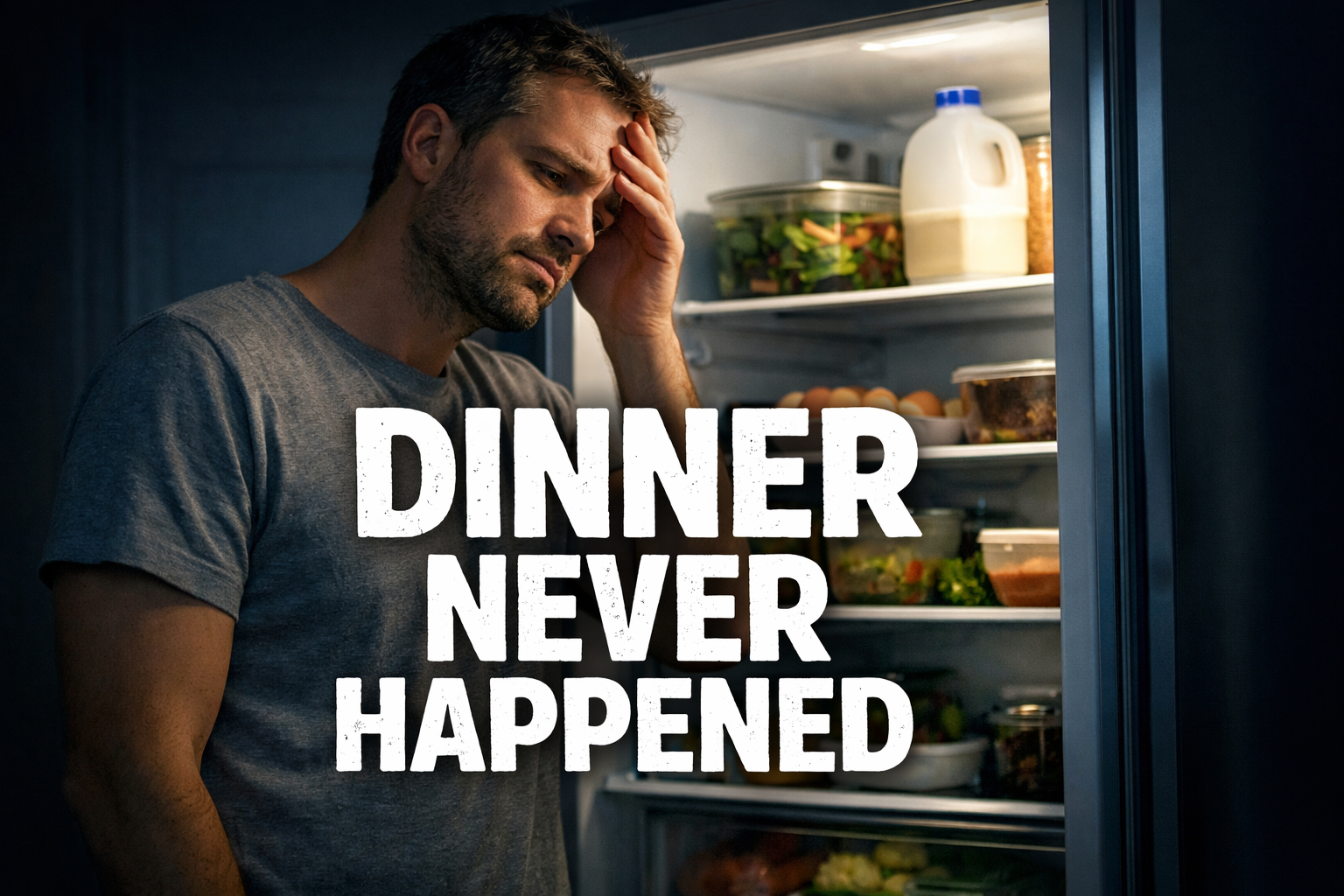
You kept carbs low. You skipped the obvious junk. On paper, it looked like a good keto day.
Then dinner never really happened, and suddenly the night turned messy. Now you are standing in the kitchen eating random cheese, nuts, jerky, spoonfuls of peanut butter, or whatever feels fast enough to stop the hunger.
That is why keto feels harder after a good low-carb day is such a common problem. The day looks clean, but the structure is broken.
I see this pattern all the time: breakfast was light, lunch was “fine,” the afternoon got busy, and dinner turned into grazing. It feels confusing because you were technically low carb, but you still ended up hungry, cranky, and harder to control around food.
Why Keto Feels Harder After a Good Low-Carb Day
Here’s the truth. Keto does not work well when you judge the whole day by carbs alone.
If your meals are too small, too weak, or too scattered, low carb does not magically protect you from hunger later. Staying under your carb limit is helpful, but it does not replace enough food, enough protein, or an actual dinner.
That is why some people feel confused after a day that seemed disciplined. The plan looked good from far away, but the body still spent hours underfed. By evening, cravings hit harder, patience gets weaker, and even keto foods start turning into a binge loop.
Cause 1: You stayed low carb, but your meals were still too small
This is the first big mistake. People often think a low-carb day is automatically a solid keto day. It is not.
A coffee with cream, a couple eggs, a handful of deli meat, and a string cheese might keep carbs low. But that does not always build a real day of eating. If the meals are too light, you can stay “on plan” while quietly setting yourself up to crash later.
Real life usually looks like this: breakfast was rushed, lunch was more like picking at food, and by 6 PM you realize you have not eaten much that actually sticks. Now the body wants quick relief, not perfect choices.
This is also why posts like Why Keto Hunger Comes Back Fast When Your Meals Are Low Carb but Still Too Small matter. Low carb is not the same thing as enough.
The common mistake is treating tiny meals as a win just because they fit the carb goal. Then people get shocked when the night gets ugly.
The fix is simple: make at least two meals in the day strong enough to carry real weight. That usually means a clear protein base, enough food volume, and a meal you would actually call a meal instead of a snack plate. If lunch is weak, dinner needs to be real, not random.
Cause 2: Dinner became a delay, not a decision
For a lot of people, the real failure point is not the whole day. It is the moment dinner stops being a plan.
You tell yourself you will figure it out later. Then later becomes 7:30. Then 8:15. Then you are opening the fridge, closing it, checking the pantry, grabbing a few bites, and calling that “basically dinner.”
That kind of delay matters because hunger gets louder while decision quality gets worse. When dinner is vague, you are much more likely to start nibbling before you ever build a plate. And once that starts, it gets easy to eat enough little things to feel off-track without ever feeling actually fed.
If this keeps happening, you are not dealing with a willpower problem. You are dealing with a weak dinner system. That is why Doing Better Tomorrow on Keto Won’t Fix Tonight’s Dinner Problem hits so hard for people. Tomorrow is not the issue. Tonight keeps collapsing.
The common mistake here is assuming hunger will wait while you decide what sounds good. It usually will not.
The fix is to make dinner easier to start than grazing. That can mean keeping one default dinner in rotation, using a fast protein that needs almost no thought, or deciding by 3 PM what dinner will be. If dinner is always a late debate, the night will keep getting harder.
Cause 3: Grazing feels safer than eating a real plate
This is where people accidentally fool themselves. A real dinner plate can feel like “too much,” especially if you are trying to be disciplined. But ten little low-carb bites spread over two hours usually end up being worse.
You eat a few slices of cheese. Then some nuts. Then a couple bites of leftover meat. Then maybe a protein bar, a keto treat, or spoonfuls of something easy. Each choice feels small enough to excuse. Together, they become a long, unsatisfying dinner that never actually shuts hunger down.
What makes this worse is that grazing rarely gives a clean stop point. A real meal has a beginning and an end. Random bites do not.
This is close to what happens in Why Keto Falls Apart When You Keep Skipping Meals Then Overeating at Night, but the dinner-never-happened version is sneakier. It can look controlled because the foods are still keto-friendly.
The mistake is thinking a scattered dinner is lighter or more responsible than a full plate. In practice, it often leaves you less satisfied and more likely to keep eating.
The fix is to build a real plate before the grazing starts. Pick one protein, one simple side, and enough volume to feel done. Even a boring plate of rotisserie chicken, eggs, burger patties, or leftover taco meat works better than two hours of “just a little something.”
Cause 4: Your daytime choices set up rebound hunger at night
Sometimes dinner does not fail by itself. It fails because the whole day quietly trained you for a rebound.
If breakfast was mostly coffee, lunch was too clean and too light, and the afternoon was powered by stress, errands, or work, the body reaches evening already behind. That is when keto starts feeling unfair. You think, “Why am I this hungry? I was good all day.”
But being good is not the same as being well-fueled.
A common real-life version looks like this: you avoid carbs, skip bread, skip sugar, maybe even feel proud of how “clean” the day has been. Then by night, you want something salty, crunchy, creamy, and sweet at the same time. That is not random. It is rebound.
The mistake is waiting until dinner to finally eat enough. By then, hunger is already too loud and food decisions get sloppy.
The fix is to stop building fake-success days. If your afternoons keep ending in chaos, work backward. Strengthen lunch. Add more protein sooner. Stop treating a half-meal as success. Articles like Why Keto Feels Harder When You’re Not Eating Enough Protein Early in the Day and Why Keto Feels Impossible at Night When You’ve Been “Good” All Day connect directly to this problem.
Cause 5: You keep measuring success too early in the day
A lot of keto frustration comes from scoring the day at 2 PM instead of at bedtime.
If someone says, “I did great until dinner,” that usually means the system is not actually working yet. A plan that only works while life is calm, hunger is low, and no real meal decision is required is not stable.
This matters because it keeps people chasing the wrong fix. They think the issue is cravings, discipline, or a bad food choice at night. But the real issue is that the day was never strong enough to carry them to the end.
The mistake is giving yourself credit for a “good” low-carb day before the hardest part is even over.
The fix is to use a better standard. Ask: did this day keep me steady through dinner and after dinner? Did I eat meals that made the night easier? Did I need to white-knuckle my way through the last few hours? Those answers tell you more than your carb count alone.
What people usually get wrong about this pattern
The biggest misunderstanding is thinking this problem means keto does not work for you. Usually that is not true.
What is really happening is that your day is too weak in the places that matter most. You are staying low carb, but not building enough structure to prevent the nighttime mess.
Another mistake is trying to fix this with more snacks. That usually makes the pattern worse. If dinner keeps disappearing, you do not need better nibbling. You need a dinner rescue plan.
And no, the answer is not making the day more strict. More restriction often just makes the rebound harder. The answer is more solid meals, fewer fake wins, and less improvising when hunger is already loud.
How to make dinner happen even on messy days
If this pattern sounds familiar, the goal is not to cook elaborate meals every night. The goal is to stop leaving dinner up to luck.
Keep one or two default dinners that are fast enough to happen even when you are tired. Think burger patties and eggs. Rotisserie chicken and a simple side. Taco meat in a bowl. Leftover protein turned into a quick skillet. Nothing fancy. Just dependable.
It also helps to decide what counts as a real dinner in your house. If you can eat it standing at the counter in six scattered trips, it probably does not count.
When dinner is shaky, the solution is not motivation. It is friction reduction. Fewer decisions. Faster start. More repeatability.
🔎 If this helped, here are more no-BS keto guides worth reading next:
- Why Keto Falls Apart When You Keep Skipping Meals Then Overeating at Night
- Why Keto Feels Impossible at Night When You’ve Been “Good” All Day
- Why Keto Hunger Comes Back Fast When Your Meals Are Low Carb but Still Too Small
Explore more Keto That Actually Works guides here:
Fix this first:
- Pick one default dinner you can make fast, even on a messy day.
- Make lunch stronger so you are not entering the evening half-fed.
- Stop calling random low-carb bites dinner. Build a real plate before you start snacking.
- Decide by mid-afternoon what dinner will be so hunger does not make the decision for you.