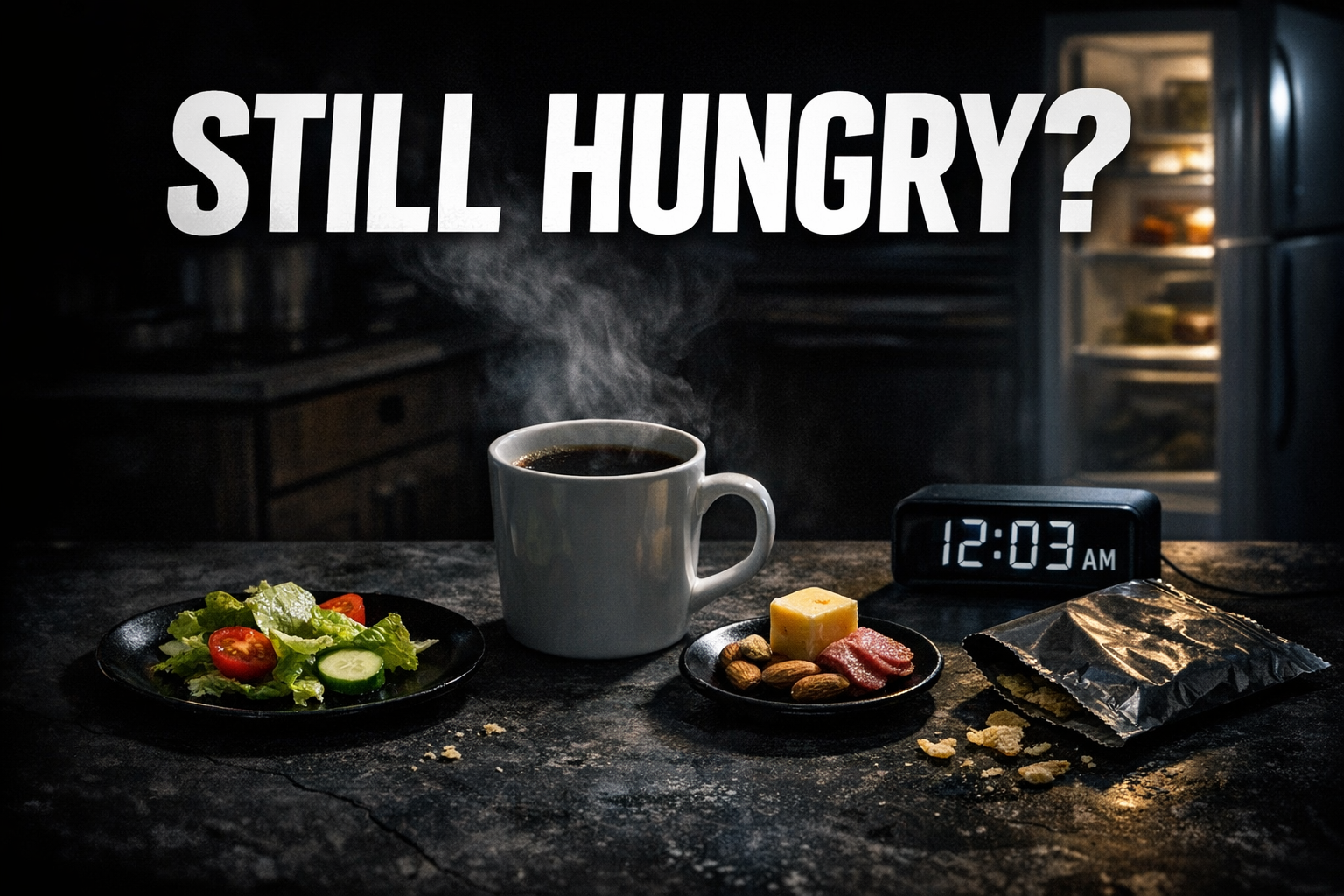
You stay low carb all day, avoid obvious junk, and still end up raiding the kitchen at night. That kind of hungry after a low-carb day feeling usually does not mean keto failed. It usually means you spent the day being “good” without eating enough real food.
Here’s the truth: low carb and well fed are not the same thing.
A lot of people build a day around coffee, a light breakfast, a snack bar, a handful of nuts, maybe a salad with barely any protein, then wonder why dinner turns into a free-for-all. The carbs may be low, but the actual fuel is weak. By the end of the day, your body is not calm. It is trying to catch up.
I’ve seen this pattern a lot because it feels responsible in the moment. You tell yourself the day is going well, then 8 PM shows up and suddenly every leftover in the fridge looks personal.
Why keto hunger gets worse after a “good” day
When people say they were “good” all day, they often mean they avoided bread, sugar, and obvious cheat foods. Fair enough. But if the day was built on tiny meals, weak protein, random little bites, and not much sodium or fluid, hunger does not stay quiet forever.
That is why this pattern often crashes late in the day. You are not just dealing with cravings. You are dealing with delayed hunger, low energy, and a body that never got a proper signal that it was fed.
If this sounds familiar, it helps to read Why You’re Always Hungry on Keto too, because the bigger hunger patterns matter. But this specific version usually comes from one of a few very fixable problems.
Start here:
You never ate a real meal early enough
This is where most people mess up. They start the day with coffee, maybe some cream, maybe a protein bar, maybe nothing at all. Then lunch is late and light. By the time dinner comes around, hunger is not normal anymore. It is aggressive.
In real life, this looks like saying you are “not that hungry” in the morning, pushing food off until noon or later, then trying to power through with something small. You may still be under 20 carbs, but your body is running on fumes.
A common mistake is thinking hunger only matters if carbs are high. It does not. You can stay perfectly keto and still under-eat enough protein and total food to make the rest of the day unstable.
The fix is boring, which is why it works. Eat a real meal earlier. That means actual protein, not just a snack-shaped keto product. Eggs with sausage, chicken leftovers, burger patties, Greek yogurt if it fits your plan, or a proper shake if mornings are rough can all work better than pretending coffee counts as breakfast. If this is a repeat issue, this protein-early guide is worth reading next.
Your meals were technically clean but too small to hold you
This is the sneaky version. The food looks healthy. Maybe it is eggs and avocado. Maybe it is a salad with grilled chicken. Maybe it is some cottage cheese, a few nuts, and a low-carb wrap. Nothing seems obviously wrong.
The problem is that a lot of these meals are lighter than people think. A small clean meal can look disciplined while still failing to keep you full for more than two hours. Then the whole day becomes patchwork eating.
You might eat a salad with a little chicken and tell yourself lunch was handled. Then at 3 PM you want something salty. At 5 PM you want cheese. By 8 PM you are staring at dinner like you have not eaten all day. In a practical sense, you have not eaten enough to settle hunger.
The mistake here is judging meals by how clean they look instead of by what they actually do. If the meal leaves you thinking about food again an hour later, it was not strong enough.
The fix is to build meals around staying power. Use more real protein. Stop making lunch look pretty and start making it useful. That might mean doubling the chicken, using a full burger instead of snacky deli meat, or making sure your meal includes enough food to buy you four solid hours. If your meals look fine on paper but never hold you, read Why Clean Keto Meals Don’t Fill You Up.
You kept replacing food with little keto products
A bar here. A shake there. Some nuts in the car. A spoonful of nut butter. A few bites of jerky. This is how a “good” low-carb day turns into a hunger mess without you noticing.
None of those things are automatically bad. The problem is when they start replacing real meals instead of backing them up. A keto bar is not the same as lunch. A few bites of cheese are not the same as dinner prep. A quick shake is not magic if the rest of the day is still thin.
This often happens when people get busy or try to stay in control. Small packaged foods feel safer because they are simple and low carb. But they can keep you in a half-fed state all day. You never get full enough to relax, so your appetite keeps hanging around.
The mistake is treating convenience as nutrition. Convenience should rescue a rough day, not become the entire structure.
The fix is simple: use backup foods as backup foods. If you truly need one, choose something that actually helps. A zero-carb protein powder like Isopure can work better than random snacking when you are short on time, but it should support a real meal pattern, not replace every meal. The goal is fewer scattered bites and more actual eating.
Your sodium and fluids were too low, so hunger got louder
Not every rough evening is just about calories. Sometimes the day also included too little sodium, too little fluid, or both. That can leave you tired, cranky, headachy, and weirdly hungry even when the real issue is part hunger and part electrolyte drag.
This is common on keto because people cut carbs fast, drop water weight, then keep drinking plain water without replacing much sodium. The result can feel like low energy, brain fog, cravings, and that restless “I need something” feeling.
In real life, this looks like drinking coffee, sipping water all day, eating light, then feeling off by late afternoon. You may think you need a treat, but sometimes you need a better meal and some electrolytes first.
The mistake is assuming every uncomfortable feeling means you need more willpower. Usually you need better setup.
The fix is not to chug more plain water and hope. Salt your food properly. Eat meals with substance. And if electrolyte issues keep showing up, a sugar-free mix like LMNT can be a practical backup. You can also read Keto Electrolyte Balance if you keep bouncing between hunger, fatigue, and cravings.
You told yourself dinner would fix everything
This is the final trap. After a weak day, people often try to white-knuckle their way to dinner. They think one solid meal will make up for the mess. Sometimes it helps. A lot of times it backfires.
When you come into dinner over-hungry, you are much more likely to eat too fast, overdo calorie-dense foods, chase seconds, or keep grazing after the plate is done. That is when the night starts to feel out of control.
You may tell yourself, “I was good all day, so this is fine.” But that logic is exactly what keeps the cycle going. The problem started earlier. Dinner is just where the bill shows up.
The fix is to stop treating dinner like a rescue plan. If the day is going sideways, correct it before evening gets ugly. Have a real protein-based meal or a stronger backup option in the afternoon. Do not wait until you are starving enough to make bad decisions feel reasonable.
Common mistakes that keep this cycle going
One mistake is confusing appetite suppression with success. Just because keto makes you less hungry sometimes does not mean you should ignore food all day.
Another is trying to stay too “light” because you are afraid of slowing weight loss. Ironically, weak meals often lead to the overeating that makes the whole day worse.
The other big one is building your plan around avoiding carbs instead of building it around meals that actually work. Keto works better when you solve hunger early, not when you spend all day trying not to need food.
Fix this first:
- Eat one real protein-based meal earlier in the day instead of relying on coffee, bars, or tiny snacks.
- Make lunch strong enough to hold you for several hours, not just low carb enough to feel safe.
- Use shakes, jerky, or snack foods as backup only, not as the main structure of your day.
- Check sodium and fluid intake if late-day hunger comes with fatigue, headaches, or that restless off feeling.
- Do not wait for dinner to save a weak day. Correct the day before evening hunger gets loud.
🔎 If this helped, here are more no-BS keto guides worth reading next:
- Why You’re Always Hungry on Keto (And What to Fix First)
- Why You Feel Shaky, Cranky, and Snacky on Keto When Your First Real Meal Happens Too Late
- What to Order at Restaurants to Stay Keto and Keep Losing Weight
Explore more Keto Problems & Side Effects stories here: