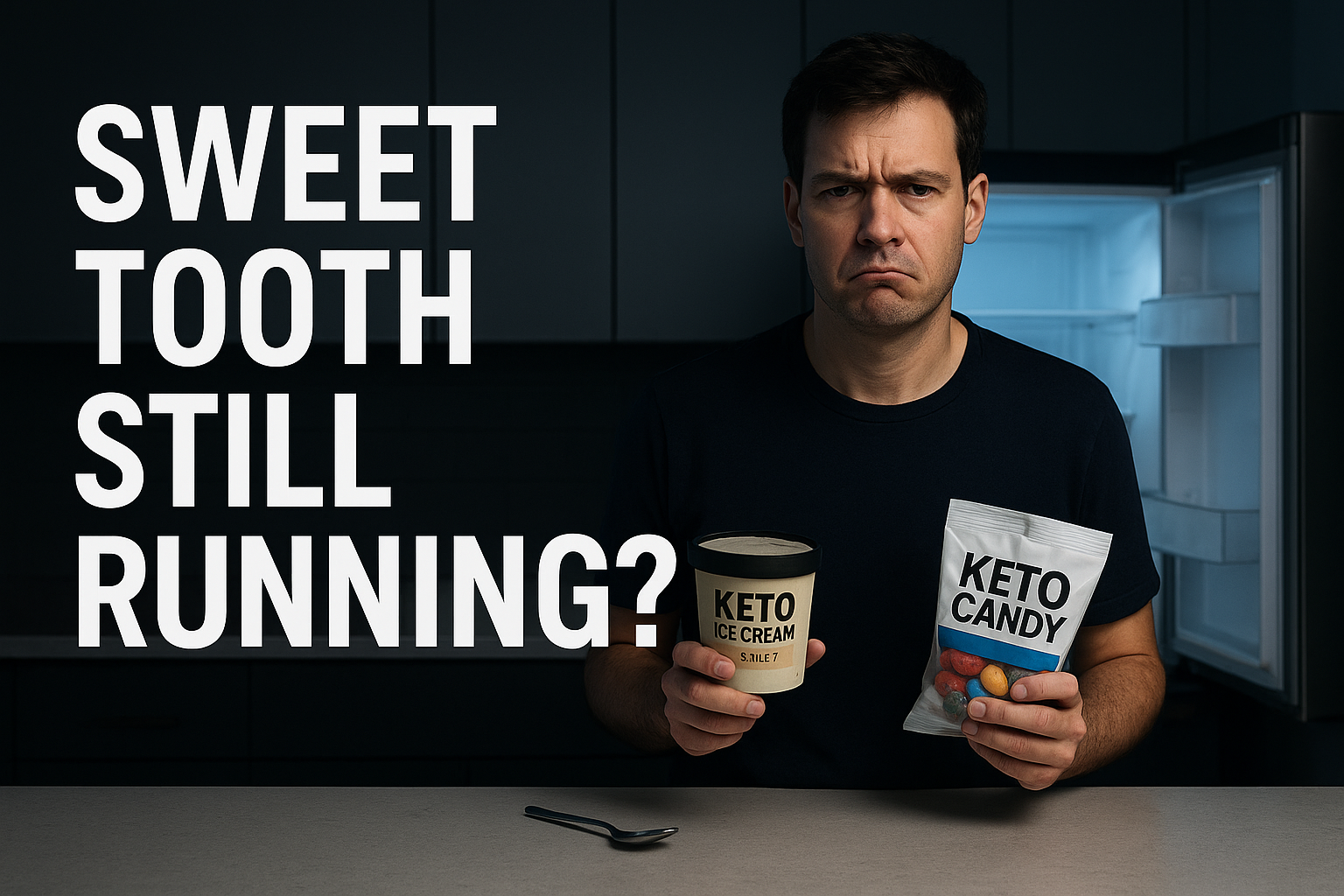
You buy keto ice cream and candy because they look like the safe version of dessert. Low net carbs. Sugar-free. Keto-friendly. Then somehow you still end up thinking about sweets every night, picking at treats after dinner, and wondering why cravings never really shut up.
Here’s the truth: the label is not the whole story. If your sweet tooth stays switched on, these foods can keep the pattern alive even when they technically fit your carb target.
I’ve seen this one a lot: someone gives up regular dessert, buys the “better” version, and two days later they’re back in the same nightly food loop with fancier packaging.
Why keto ice cream and candy can still keep cravings going
The problem is not that one spoonful of sugar-free ice cream magically ruins ketosis. The bigger problem is that sweet taste, easy portions, and “I can have this” logic often keep the same old habit running. That habit matters more than the marketing.
If keto feels harder than it should, this is one of the first places to look. The same pattern shows up in keto treat foods that quietly keep cravings alive and in the broader sweet cravings traps hub.
Start here:
1. Sweet taste keeps the reward loop alive
A lot of people think cravings are only about carbs. They are not. Cravings are also about repetition, expectation, and taste. If you keep ending the day with something that tastes like dessert, your brain still learns that dinner means dessert is coming next.
That matters because the habit stays active. You may not be eating a full pint of regular ice cream anymore, but you are still practicing the same routine: finish meal, want sweet, go get sweet, repeat tomorrow.
In real life, this looks like someone who says, “I don’t even want real candy anymore, but I need something sweet every night.” That is not freedom. That is a craving pattern wearing a keto label.
The common mistake is assuming the ingredient swap fixed the behavior. It didn’t. If the sweet finish is still required, the pattern is still in charge.
The fix is simple, even if it feels annoying at first: stop treating dessert as the automatic ending to every day. Eat a real dinner with enough protein, salt your food properly, and let a few evenings end without a sweet taste at all. That is how the volume starts to come down.
2. “Low net carbs” makes portion creep feel harmless
This is where most people mess up. A small serving of keto ice cream or candy may fit on paper. The problem is that these foods are easy to keep eating because they are built to feel like a treat without the guilt.
One serving turns into three fast when you are standing in the kitchen with a spoon, nibbling from a bag, or telling yourself you are still being good because it is not regular dessert. Suddenly the math is blurry, your hunger is still there, and the whole thing starts feeling weirdly hard again.
Real life example: you eat a light dinner, then have a few pieces of keto candy while cleaning up. Later you grab some ice cream because the candy did not quite hit. None of it looks terrible by itself. Together, it becomes another full eating event after dinner.
The mistake is focusing only on the label instead of the eating pattern. “Net carbs” does not stop overeating. It just gives people a reason to stop paying attention.
The fix is to stop using these foods as open-ended snacks. If you keep them, decide the portion before you start. Better yet, do not make them your nightly default. If your appetite is strongest at night, work on the meal that comes before the dessert, not just the dessert itself. Posts like why keto feels impossible at night usually explain that pattern better than another label check ever will.
3. Fake safety makes you ignore the trigger underneath
Sometimes the sweet tooth is not really about missing candy. It is about being underfed, stressed, overtired, or stuck in a reward habit that shows up at the same time every day. Keto candy feels like a solution because it lets you respond to the urge without “breaking keto.”
But if the trigger stays there, the urge keeps coming back. You never fix the real reason because the product gives you a smoother version of the same escape hatch.
Think about the person who white-knuckles through a busy day, eats too little protein, then opens a pint at 9 PM because it is “keto approved.” The issue is not just the pint. The issue is the day set them up for it.
The common mistake is fighting the symptom while protecting the trigger. People keep the late-night habit, the weak meals, the poor sleep, and the low-effort dinner, then wonder why keto dessert still has so much power.
The fix is to identify what keeps happening right before the craving. Are you tired? Are you actually hungry? Did dinner barely have any protein? Did you spend the whole afternoon sipping sweet stuff? When you fix the setup, the sweet product loses some of its grip.
4. Keto sweets can keep your taste buds calibrated to “more”
If most of your comfort foods are still sweet, your idea of a satisfying finish never really changes. Berries taste weak. Greek yogurt tastes plain. A normal meal feels unfinished unless something candy-like comes after it.
That is a real problem on keto because it keeps the bar high. Regular food has a harder time feeling rewarding when your palate keeps expecting sweeteners, flavor bombs, and dessert texture.
This shows up when someone says they are tired of plain food and need more “options,” but what they really mean is they need more sweet stimulation. That is why some people bounce from keto bars to candy to ice cream to whipped desserts and still feel mentally obsessed with food.
The mistake is thinking this means you need better keto treats. Usually it means you need fewer of them for a while.
The fix is a short reset. Not forever. Just long enough to stop flooding every evening with sweet taste. Choose a week where dessert is not the automatic move. Build dinner around real food. If you want something after, make it boring on purpose: tea, sparkling water, or nothing. That is how your baseline starts to calm down.
5. These products blur the line between snack, dessert, and emotional reward
Regular candy is obviously a treat. Keto candy often gets treated like a loophole. That makes it sneak into places it does not belong: afternoon slump, car snack, post-lunch reward, bedtime ritual, stress relief.
Once that happens, you are not just eating sweets after dinner. You are building a day-long pattern of little sweet rewards. Even if carbs stay lower than before, your head is still circling food all day.
Real life looks like this: a few candies after lunch because work is annoying, sugar-free chocolate after dinner because you earned it, then a bite of keto ice cream while watching TV because the day was long. That is not one dessert decision. That is a reward system running on repeat.
The mistake is saying, “At least it’s keto,” instead of asking why sweet rewards are needed this often in the first place.
The fix is to put these foods back in the treat category. Not medicine. Not emergency fuel. Not stress management. If a product only works when it stays occasional, use it occasionally. If it keeps turning into a daily dependency, it is not helping you.
Common mistakes people make with keto sweets
- Using them every night instead of once in a while
- Eating them after weak meals that never really filled them up
- Trusting “low net carbs” more than their own actual behavior
- Keeping multiple sweet products in the house and rotating through all of them
- Using them to calm stress, boredom, or exhaustion instead of fixing the setup
This is also why so many people get stuck in the same loop covered in keto-friendly convenience foods that keep teaching you to expect dessert after every meal. The food may be lower carb, but the pattern is still training your appetite.
Related:
Related:
What to do instead if sweets keep running the show
You do not need to panic over one keto dessert. This is not about acting like a few grams of sweetener ruined everything. It is about being honest about what happens next.
If keto ice cream and candy leave you thinking about the next sweet thing, they are not solving the problem. They are stretching it out.
Some people can keep a product like this in the house and use it once in a while without trouble. A lot of people cannot. That is not a character flaw. It just means the smarter move is to stop buying the thing that keeps the loop active.
Start by making your regular meals more stable. Eat enough protein. Stop saving all your restraint for the evening. Make dinner big enough to feel finished. Then take a week off the fake desserts and see what happens to your cravings by day four or five. That tells you more than any front-of-package claim ever will.
Fix this first:
- Remove keto ice cream and candy from your nightly routine for one week, even if you keep them for rare use later.
- Look at the craving setup: weak dinner, long gaps without food, stress, boredom, poor sleep, or a habit that starts at the same hour every night.
- Make dinner more filling with real protein and enough food so you are not hunting for a sweet finish 30 minutes later.
- Stop using “low net carbs” as a free pass for open-ended portions. If you choose a treat, decide the amount before you start.
- If cravings stay loud, follow the next steps in the Keto Sweet Cravings Traps hub so you fix the pattern instead of swapping one version of dessert for another.
If this helped, here are more no-BS keto guides worth reading next:
- Keto Sweet Cravings Traps: The No-BS Hub for Desserts, Sugar-Free Foods, Bars, Wraps, and “Healthy” Keto Extras
- “Keto Treat” Foods That Quietly Keep Your Cravings Alive
- “Sugar-Free” Keto Habits That Keep Your Sweet Tooth Running All Day
Explore more Keto Lies & Myths guides here: