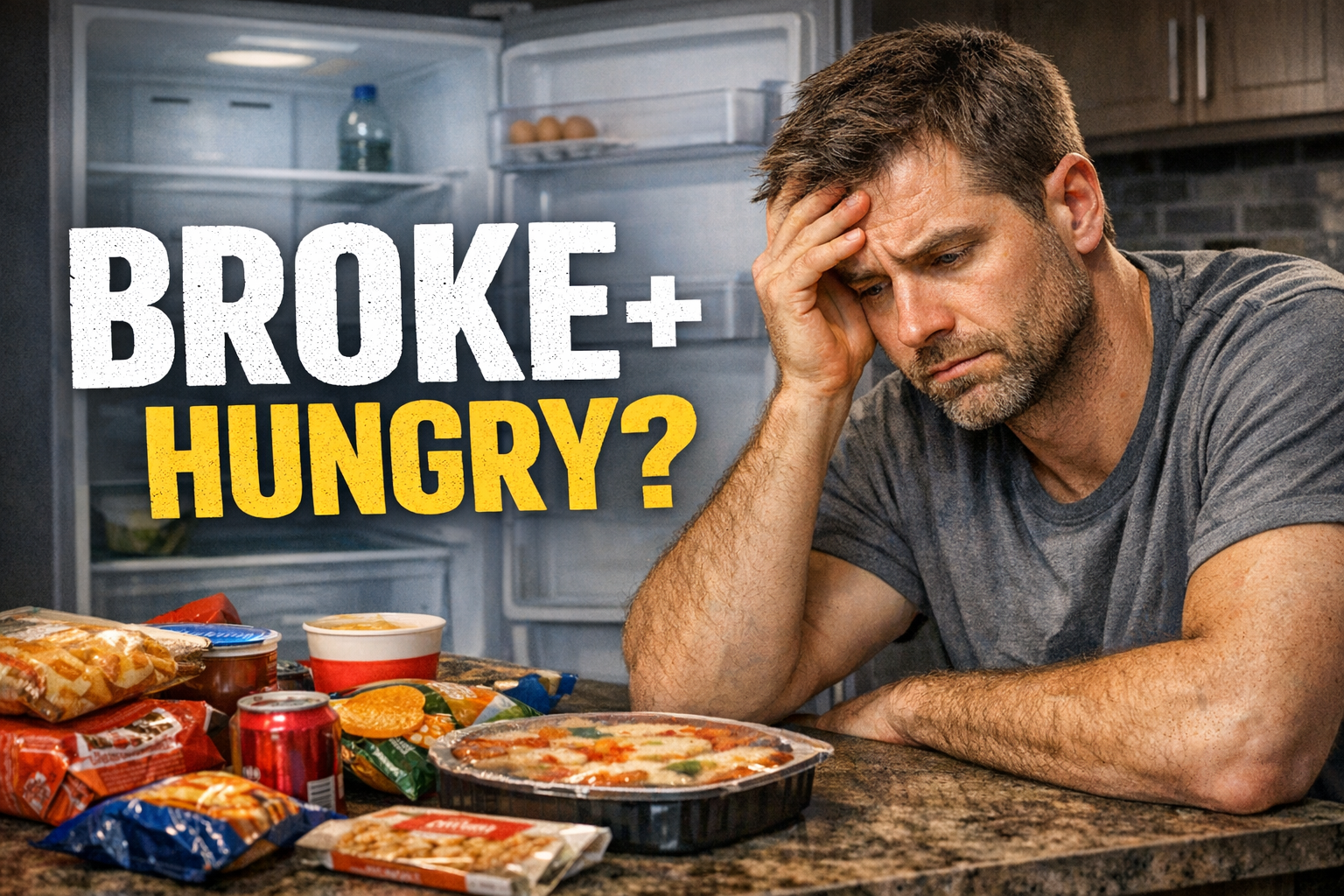
You are trying to keep lazy keto going, but the week before payday keeps blowing it up.
That usually starts when the fridge is half-empty, money is tight, and cheap convenience food starts making every decision for you.
Here is the reality check: the problem is not that keto suddenly stops working at the end of the month.
The problem is that your food system gets replaced by cheap convenience decisions that cost more than they look, fill you up less than you expect, and leave you hungry enough to keep spending and snacking.
Why lazy keto before payday gets messy fast
The week before payday exposes weak spots fast. You are not shopping for the best plan anymore. You are shopping for the fastest patch. That is why this phase gets ruled by snack food, drive-thru math, and low-carb products that feel cheaper in the moment but create a worse food day.
If your regular grocery system already slips, this is the exact moment it breaks. That is why posts like Lazy Keto Grocery Systems: Why a Full Cart Still Leaves You With No Real Plan and Lazy Keto Meal Rescue: Default Meals, Backup Foods, and Grocery Systems That Stop Random Carb Decisions matter so much: they turn random food into repeat meals before the week starts running you.
Start here:
Cause #1: You stop buying ingredients for meals and start buying “survival food”
This is where most people mess up. When cash feels tight, they stop buying meal parts and start buying items that seem cheap enough to get by. A bag of nuts, a few bars, some deli meat, a pack of cheese sticks, maybe a gas-station jerky, and a “keto” snack or two. None of that feels outrageous by itself. Together, it becomes expensive and weirdly unsatisfying.
Real life looks like this: breakfast is coffee, lunch is a handful of something, then by late afternoon you are starving because you never ate a real meal. So dinner turns into delivery, takeout, or a second round of convenience food. The day looked low carb, but it never felt stable.
The common mistake is thinking any low-carb item is automatically a good budget choice. It is not. If it does not create a meal, it usually creates another food decision later. That later decision is often the one that costs more and hits harder.
The fix is brutally simple: buy food in the order of meal power, not snack appeal. First get protein that can become two or three fast meals. Eggs. Ground meat. Rotisserie chicken. Canned fish if you use it. Even a simple ready option like Tillamook Zero Sugar Beef Jerky works better as backup protein than a pile of low-carb snack foods, but it should support meals, not replace your whole week.
If you need a deeper reset on cheap repeat meals, read Lazy Keto on a Budget: Cheap Meals, Grocery Weeks, and Backup Food That Actually Work and The Cheap Keto Foods That Keep Beginners Full Without Living on Snacks. Those are the kind of foods that stop the end-of-pay-cycle spiral before it starts.
Cause #2: Cheap convenience food gives you calories, but not enough fullness
Cheap convenience food does not fail because it has too many carbs every time. It fails because it does not solve hunger well. You can stay technically low carb and still spend the entire day snacky, distracted by food, and looking for the next thing.
Think about the usual pre-payday pattern. You grab a few low-carb wraps, a bag of nuts, maybe some cheese crisps, maybe some processed “protein” thing, and tell yourself you are covered. But those foods are easy to nibble, easy to overuse, and easy to build a day around without ever feeling done. That keeps hunger running in the background.
The mistake here is chasing cheapness per item instead of fullness per meal. A food that costs less at checkout can still be the expensive choice if it leads to extra snacks, another stop, or a giant dinner because you were underfed all day.
The fix is to ask one question before you buy anything: “Will this help me build a meal that actually ends hunger?” If the answer is no, it belongs lower on the list. This is the same issue behind Why Lazy Keto Gets Expensive Fast When You Keep Buying Convenience Food That Doesn’t Fill You Up. Convenience food gets expensive fast when it keeps you eating in shifts instead of eating real meals.
Cause #3: You keep trying to save the week with emergency purchases instead of a rescue plan
By the week before payday, a lot of people are doing emergency shopping, not grocery shopping. They are in a drugstore, a dollar store, a gas station, or making a tiny grocery stop with no structure. That usually means they buy what feels possible right now instead of what will carry the next four or five days.
That is how you end up with a cart full of fragments. A drink. A snack. A frozen thing. A few treats “just in case.” Not much of it works together. Then tomorrow starts with the same problem again.
The mistake is treating each day as a separate emergency. That feels practical, but it drains money and attention. You keep paying convenience prices because you never stop long enough to create a tiny rescue system.
The fix is to build a 4-day rescue plan, not a perfect meal-prep project. Pick three repeatable meals and buy only what supports them. Example: eggs and sausage for breakfast, a simple tuna or chicken bowl for lunch, and burger patties with a frozen vegetable for dinner. Boring beats broke-and-random every single time.
If you are always reaching the end of the week with random leftovers and no clear dinner, this is exactly where Lazy Keto Meal Rescue: Default Meals, Backup Foods, and Grocery Systems That Stop Random Carb Decisions helps. It is about getting back to default meals fast instead of improvising until the whole plan collapses.
Cause #4: You cut the wrong costs and make the hard days harder
People often slash the exact things that keep them steady. They skip protein because it feels pricey. They stop buying easy backup foods. They stop keeping basic hydration support around. Then they wonder why the last few days of the pay cycle feel like a grind.
Here is what that looks like in real life: you eat less earlier in the day to “stretch groceries,” feel proud for a few hours, then crash into late-afternoon hunger and start picking through whatever is available. Suddenly dinner is snack food plus a drive-thru stop. That was not saving money. That was delaying the bill.
The mistake is assuming every cut helps equally. It does not. Some cuts remove junk. Other cuts remove stability. When you cut the few things that make keto feel easy, your odds of making bad food decisions go way up.
The fix is to protect the basics first: protein, salt, easy drinks, and one or two backup foods that stop panic decisions. If plain water leaves you dragging and snacky, a budget-friendly electrolyte option like Ultima Replenisher Electrolyte Powder can help on rough days. Not because it is magic, but because dehydration and low sodium make tired budget weeks feel even harder.
Cause #5: You are trying to finish the month with motivation instead of defaults
Motivation is weakest when life is already annoying. That is exactly why the week before payday is dangerous. Money stress, decision fatigue, and a half-empty kitchen make you more likely to say yes to the fastest thing in front of you.
A lot of people keep saying they will “just be disciplined for a few days.” That sounds tough, but it is a terrible system. Discipline fades fast when lunch never happened, the fridge looks depressing, and takeout feels easier than figuring out one more weird meal.
The mistake is expecting a stressed brain to make premium food decisions in a low-resource week. That is not realistic. You need defaults so simple you can follow them when you are tired, busy, and annoyed.
The fix is to decide your boring fallback meals before the crisis hits. Not healthy fantasy meals. Real meals. The kind you can afford, repeat, and make without thinking. When you know the next meal already, convenience food stops running the whole show.
Common mistakes that make pre-payday keto more expensive
- Buying snack foods because they look cheaper than real meals.
- Trying to stretch the week by under-eating early, then overeating later.
- Making multiple tiny convenience stops instead of one boring rescue run.
- Calling random low-carb products “meal prep” when they are really just grazing fuel.
- Waiting until you are starving to decide what to eat.
None of those feel dramatic in the moment. But together, they are exactly why the end of the pay cycle can blow up lazy keto. The carbs are not always the first problem. The broken food structure is.
Related:
What to buy first when money is tight
- Protein that creates more than one meal.
- One cheap vegetable you will actually eat.
- Eggs if they fit your budget in your area.
- One backup food for emergencies, not five snack foods for “options.”
- Simple drinks that do not turn into dessert logic.
The goal is not to build a pretty grocery haul. The goal is to stop the chain reaction where every meal turns into a new problem. Cheap, repeatable, slightly boring food will usually beat a cart full of clever low-carb items.
Fix this first:
- Pick three repeat meals for the last 4-5 days of the pay cycle and shop only for those.
- Buy protein before snacks, and stop pretending snack foods are your meal plan.
- Do one rescue grocery run instead of several tiny convenience stops.
- Keep one low-effort backup option on hand so hunger does not turn into takeout logic.
- Use defaults, not motivation, to get through the rough week.
If this helped, here are more no-BS keto guides worth reading next:
- Lazy Keto on a Budget: Cheap Meals, Grocery Weeks, and Backup Food That Actually Work
- Lazy Keto Grocery Systems: Why a Full Cart Still Leaves You With No Real Plan
- Lazy Keto Meal Rescue: Default Meals, Backup Foods, and Grocery Systems That Stop Random Carb Decisions
Explore more Lazy Keto guides here: