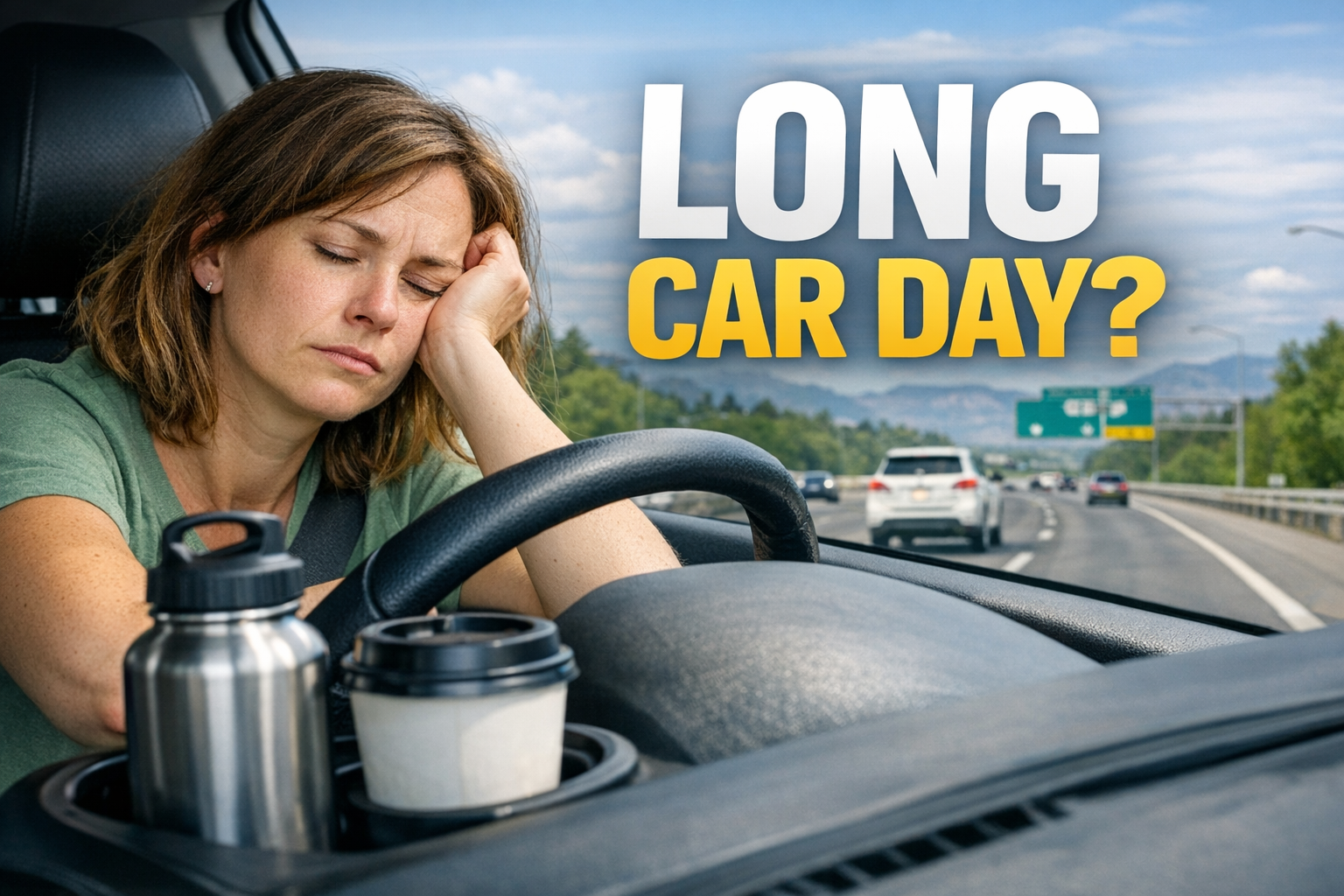
Long car days can make keto side effects on long car days hit way harder than expected.
You start with coffee. You grab some jerky. You tell yourself you will drink more water at the next stop. Then a few hours later you feel shaky, headachy, weirdly tired, bloated, or just flat-out off.
That is not random. It is usually a stack of small problems that builds all day inside a very normal travel routine.
I’ve seen this kind of day go bad fast: one oversized coffee, not enough real food, and suddenly the drive home feels ten times longer.
If keto feels fine at home but rough in the car, the issue is usually not ketosis itself. It is the way long driving days mess with your sodium, hydration, meal timing, caffeine, and body position all at once. That is why people can go from “I’m good” at 9 AM to headache, irritability, cravings, and total exhaustion by late afternoon.
Why keto side effects on long car days feel worse
At home, your routine protects you more than you think. You have your normal meals. You have easy access to water. You can salt food properly. You can stop for a real plate of food instead of grabbing whatever is quick.
In the car, all of that gets weaker. You delay meals because you do not want to stop. You drink less because you do not want more bathroom breaks. You lean on coffee to stay alert. You snack on dry, salty protein without enough fluids. Then you sit for hours and act surprised when you feel bad.
If this pattern keeps happening, it helps to look at the day in parts instead of blaming keto in general. Most of the time, the crash comes from a few repeat causes.
You started with caffeine, not actual support
This is one of the biggest mistakes on long car days. People leave early, grab coffee, maybe throw in a sugar-free energy drink, and call that their plan.
The problem is that caffeine can make you feel temporarily sharper while quietly making a weak setup worse. If you are already a little low on sodium, underfed, or behind on water, coffee does not fix that. It can make the shaky, headachy, heart-racey feeling show up faster.
A real-life version looks like this: you leave the house at 6:30, drink coffee on an empty stomach, skip breakfast because you are “not that hungry,” and then by 10:30 your hands feel weird, your head hurts, and your mood drops off a cliff.
The common mistake is assuming that because the drink is low carb, it cannot be part of the problem. But keto side effects are often less about carbs and more about whether your body has enough fluid, sodium, and actual food to handle the day. This is the same reason people struggle with coffee, electrolytes, and an empty stomach on keto.
The fix is simple: do not let caffeine be your foundation. Before or with that first coffee, get some water, get sodium in, and eat a real meal if you are facing a long drive. Even leftovers and salted eggs are better than pretending jerky and coffee count as a real start.
You under-drink all day because bathroom stops feel annoying
A lot of long car day symptoms are just dehydration plus electrolyte drift wearing a keto label.
People often know they should drink water, but then they keep putting it off because they do not want to stop again. So the whole plan becomes “I’ll drink more later.” Later keeps moving. By the time they finally notice thirst, the headache and wiped-out feeling are already there.
This gets worse on keto because low-carb eating can already change how your body handles water and sodium. If you fall behind for a few hours, you may feel it faster than you used to. That is why electrolyte balance matters on keto even when your carbs are low enough.
Here is what it looks like in real life: you sip coffee, maybe a diet soda, maybe a little water at lunch, and then wonder why you feel drained and foggy by mid-afternoon. Or you finally chug water late in the day but still feel lousy because sodium never kept up.
The common mistake is thinking hydration means random fluids whenever you remember. That is not the same as steady water plus enough sodium. If the day includes heat, AC, caffeine, salty packaged food, or several hours of sitting, the gap gets bigger. That is why long driving can act a lot like other keto electrolyte problem days.
The fix is to stop winging it. Bring a large water bottle you can track. Start drinking early, not after symptoms show up. And if long drives usually trigger headaches, weakness, or that hollow wiped-out feeling, bring a simple electrolyte option on purpose instead of hoping gas-station drinks will solve it.
Jerky and snack food are not the same thing as a real meal
Jerky can be useful. Meat sticks can be useful. But a long car day built on little bites of packaged protein is where people get fooled.
Dry snacks often feel practical because they travel well. The problem is they are easy to treat like meal replacements when they do not always give you enough total food, fluid, or staying power. So you keep nibbling, keep driving, and keep getting hungrier without admitting it.
A common car-day pattern looks like this: coffee in the morning, jerky at 10, nuts at noon, cheese crisps at 2, and then you hit late afternoon feeling weak, irritable, and ready to destroy the next drive-thru. On paper it looked “keto.” In real life it was a low-grade under-eating day.
This is similar to what happens when people realize they are hungry after a low-carb day. The carbs stayed low, but the day still failed because there was not enough real food to keep energy stable.
The mistake is confusing portable with sufficient. A few bites here and there can keep you busy, but they do not always keep you well-fueled. They also make it easier to ignore hunger until it turns into cravings, bad stops, or a full evening rebound.
The fix is to plan at least one real meal during the drive. That might mean bunless burgers, grilled chicken, deli meat and cheese with something salty, or food packed from home. Use jerky as backup, not as the whole structure. If you do want a backup snack, keep it clearly in that role instead of pretending it replaces lunch.
Sodium gets out of sync with water
This is where a lot of keto travel misery comes from. Some people drink more water but still feel awful. Others eat salty snack food and think that covers it. Neither one is always enough.
On keto, sodium and fluids work together. If water goes up without enough sodium, you may still feel weak, dizzy, or off. If sodium goes up from jerky, fast food, or packaged snacks but water stays low, you can end up thirsty, headachy, and dragged down in a different way.
A real-life example: you eat salty beef sticks and cheese, drink two coffees, barely touch water, sit in dry car air for hours, and then by evening your head pounds and your body feels heavy. Or you overcorrect with plain water at every stop and still feel washed out because the mineral side never caught up.
People usually mess this up by looking for one magic fix. They either pound water or they buy a salty snack and assume problem solved. But keto side effects often come from the mismatch, not just one missing thing. That is why symptoms like dizziness, weakness, and headaches keep showing up in posts about being dizzy on keto even when carbs are low.
The fix is steadier balance. Drink water through the day. Salt meals well. If you know long drives wreck you, pack an electrolyte mix such as LMNT Zero Sugar Electrolytes or another simple option from your normal routine so you are not trying to patch the day with random convenience-store choices.
Hours of sitting make you feel worse than you expect
Long drives are not just food and drink problems. Sitting still for hours can make fatigue, puffiness, stiffness, and that heavy unwell feeling hit harder too.
When you barely move, everything feels more sluggish. People sometimes interpret this as keto not working, but part of it is just the body responding badly to being parked in a seat all day with too little movement, too little water, and poor meal timing.
One real-life pattern: you stop for food, eat quickly, get right back in the car, and keep driving for three more hours. Your legs feel weird, your back tightens up, and the tiredness starts to feel deeper than plain sleepiness. Then you reach for more caffeine and keep the cycle going.
The common mistake is treating stops like fuel-only events. You gas up, maybe grab food, maybe use the bathroom, and then sit right back down. No short walk. No reset. No chance for your body to catch up.
The fix is not fancy. Build a two- to five-minute movement reset into longer stops. Walk a little. Stand up fully. Get your shoulders back. It sounds small, but it can reduce the “why do I suddenly feel terrible?” slide that piles on top of dehydration and under-eating. This matters even more if you already notice that your electrolyte routine only works at home.
Related:
Common mistakes that make long car days crash harder
Most people do not ruin the day with one giant mistake. They stack five small ones:
- Leaving with coffee but no real food
- Waiting too long to drink water
- Using jerky as a full meal plan
- Ignoring sodium balance until symptoms hit
- Trying to power through with more caffeine instead of fixing the actual problem
That is why the day often feels fine at first and awful later. The damage builds quietly.
If this keeps happening to you, the lesson is not “keto is too hard when I travel.” It is that your travel setup is weak. General travel problems are real too, and if this happens across flights, hotels, and schedule changes, you should also read why keto feels fine at home but falls apart when you travel.
Fix this first:
- Start the day with more than caffeine. Eat real food early and get water in before you are already behind.
- Track hydration on purpose. Bring a large bottle and drink across the day instead of waiting until you feel bad.
- Plan one real meal. Jerky is backup, not your entire structure.
- Match water with sodium. Salt meals and use a simple electrolyte plan if long drives usually trigger symptoms.
- Use stops to reset. Walk for a couple minutes instead of treating every stop like a race back to the car.
If you fix those five things, most long car day keto crashes become a lot more predictable and a lot more preventable.
🔎 If this helped, here are more no-BS keto guides worth reading next:
- Why Keto Feels Fine at Home but Falls Apart When You Travel
- Keto Electrolyte Problems: Why You Feel Fine One Day and Awful the Next
- Why Keto Side Effects Keep Hitting on Active Days When Your Electrolyte Routine Only Works at Home
Explore more Keto Problems & Side Effects guides here: