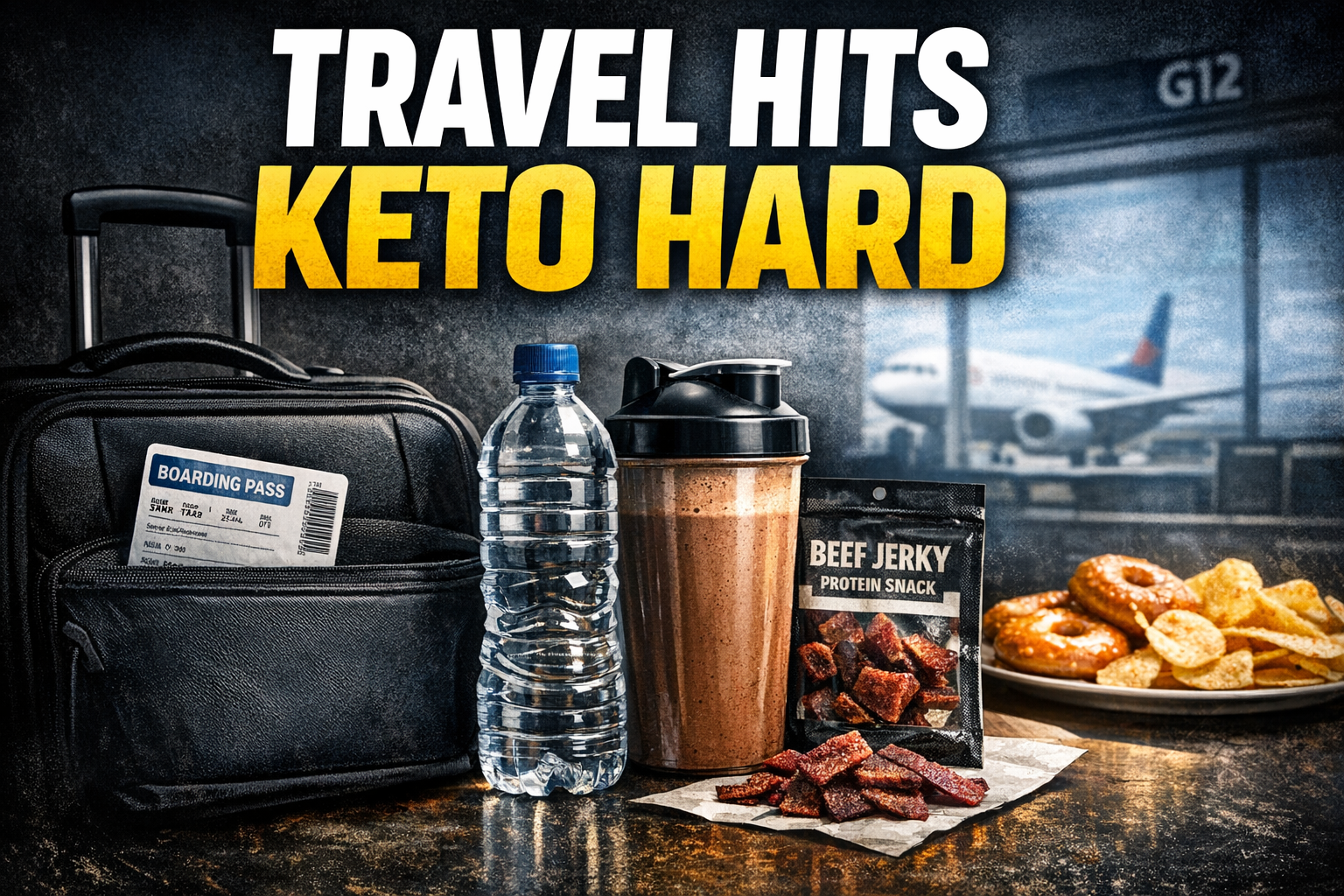
You can stay keto just fine at home, then lose the plot in one airport, one gas station, or one hotel breakfast line. If keto travel keeps going sideways, the problem usually is not travel itself. It is that your normal food structure disappears fast.
That is the reality check most people miss. Travel does not just change where you eat. It changes how tired you are, how often you decide on food, and how willing you are to settle for whatever is easy.
You have probably had that moment where you leave the house with good intentions, hit the road, then end up holding a mystery snack from a gas station and telling yourself vacation calories do not count until Monday.
Why keto travel feels easy in theory and messy in real life
At home, keto works because the basics are handled. You know what is in the fridge. You know where the good options are. You can recover from a rough meal with the next one.
Travel strips a lot of that away. Now the food is expensive, rushed, packaged, or built for convenience instead of stability. You are also more tired than usual, which makes every food decision worse.
That is why travel creates a very specific keto problem. You are not just fighting carbs. You are fighting fatigue, bad timing, weak options, and the little voice that says this trip is an exception.
Cause #1: You leave home without a travel food plan
This is where a lot of travel days go wrong before the trip even starts. People assume they will figure it out on the way. That sounds flexible, but it usually means your first food decision happens when you are already rushed and hungry.
In real life, this looks like getting to the airport early, skipping breakfast because you were busy packing, then wandering around looking for something “kind of keto.” Or you start a road trip with coffee and optimism, then hit your first stop starving.
The common mistake is thinking travel food planning has to be complicated. It does not. You do not need a suitcase full of meal prep. You need one simple plan for the first stretch of the trip.
The fix is to leave home with something real already handled. That might mean eating a proper protein-heavy meal before you leave. It might mean packing eggs, leftover chicken, deli roll-ups, or a simple container meal for the first leg. If you start travel already underfed, you are handing the trip over to convenience food.
If rushed food decisions are already a weak point, Keto Takeout Mistakes That Stall Weight Loss will sound familiar. Travel often creates the same bad decision pattern, just faster.
Cause #2: Travel gives you long food gaps, then pushes you toward the worst options
Airports, security lines, layovers, delayed flights, long drives, and weird check-in times all create big gaps between meals. If those gaps go too long, keto stops feeling clean and starts feeling like survival.
You tell yourself you will grab something later. Then later turns into two hours. Then the only options left are chips, pastries, trail mix loaded with dried fruit, sugary coffee drinks, or a protein bar that barely counts as food.
This is where people say travel makes keto impossible. It usually does not. But it does punish weak timing.
The mistake is waiting until you are very hungry to solve the problem. By then, you are not choosing calmly. You are choosing fast.
The fix is to carry one or two emergency backups that stop desperation from running the show. A pack of grass-fed beef sticks or a shelf-stable low-carb backup can keep a delay from turning into a carb spiral. If you know the day will run long, a ready-to-drink protein shake can bridge the gap until you reach a real meal. These are emergency tools, not the main plan.
This is not a vacation problem. It is a gap problem.
Cause #3: Hotel breakfasts and gas stations are built for easy carbs, not stable keto meals
Travel food environments are usually terrible at one thing keto needs most: simple, filling protein.
Hotel breakfast sounds helpful until you see what is actually there. Sweet yogurt, cereal, muffins, waffles, juice, fruit, and weak scrambled eggs that look tired before you even sit down. Gas stations are not much better. Most of the fast options are built around chips, candy, sandwiches, and sugary drinks.
In real life, this is where people start making weird compromise meals. Maybe you eat a few eggs, half a sausage, coffee, and then spend the next three hours picking at random snacks because breakfast never really landed. Or you buy “something small” at a gas station and pretend that counts.
The common mistake is trying to make these places work like a real kitchen. They will not. You need to think in simple wins, not perfect meals.
The fix is to choose the cleanest protein and move on. At a hotel, that might mean eggs, bacon, sausage, and coffee or water. At a gas station, it might mean jerky, cheese, nuts in a controlled amount, hard-boiled eggs if they have them, and plain water. You are not trying to build an Instagram breakfast. You are trying to stop the next bad decision.
When travel turns into constant restaurant or convenience meals, What to Order at Restaurants to Stay Keto and Keep Losing Weight helps because the same logic applies: pick the protein first, then clean up the rest.
Cause #4: Being tired makes you much easier to knock off track
Travel is physically easy to underestimate. Even when you are sitting most of the day, the disruption is real. Early alarms, long drives, airport noise, bad sleep, stress, and schedule changes all chip away at your judgment.
That matters because tired people make softer food decisions. Not evil ones. Just weaker ones.
In real life, it looks like this: by late afternoon, you are hungry, annoyed, and running on thin patience. Suddenly the fries that felt easy to ignore at home feel “worth it,” and the dessert at dinner starts sounding like part of the experience.
The mistake is treating travel slip-ups like pure carb temptation. A lot of the time, fatigue is the thing doing the damage.
The fix is to reduce decision load before you get tired. Decide your first meal. Decide your backup food. Decide your default drink. If you are driving, decide what kind of stop you are looking for before you are desperate. If energy crashes are already part of your keto mess, Lazy Keto Meals for People Who Are Too Busy to Cook is useful because travel also rewards simple repeatable food, not creativity.
Cause #5: Travel flips you into “vacation mode,” and that mindset spreads fast
This one hits harder than people want to admit. The trip is not just changing your food. It is changing your rules.
Once people start thinking, “I’ll just loosen up for this trip,” the line keeps moving. One airport breakfast becomes a snack at the gate. That becomes drinks at dinner. That becomes dessert because the whole day is already off. Then the trip becomes a multi-day slide.
This is why travel keto often falls apart in a way that feels bigger than one meal. The problem is not the first imperfect choice. It is the permission you gave it.
The common mistake is making the trip all-or-nothing. Either you are perfectly strict or you are fully off. That mindset is weak, and it creates sloppy rebounds.
The fix is to use a floor, not a fantasy. Your floor might be simple: keep the main meal protein-based, avoid obvious sugar, skip liquid carbs, and recover at the very next meal instead of tomorrow. That is how you stay in the game without pretending travel is normal life.
If weekends already wreck your momentum, Why Keto Falls Apart on the Weekend Even When You’re Strict All Week is worth reading because travel usually triggers the same “I’ll restart later” pattern.
What a better keto travel system looks like
You do not need perfect travel food. You need a system that keeps small problems from becoming a full drift.
Before you leave:
- Eat a real meal with solid protein if timing allows
- Pack one emergency backup food
- Bring water and plan your first food stop
During travel:
- Choose protein first at airports, restaurants, and hotel breakfasts
- Use packaged backup foods only when timing gets ugly
- Do not let one weak meal turn into a full-day excuse
When the environment is bad:
- Look for eggs, burger patties, grilled meat, salads with protein, jerky, cheese, or plain Greek yogurt if needed
- Skip sugary drinks and the fake reward foods that come with travel boredom
- Keep the next decision clean instead of trying to make the last one perfect
Related:
The biggest keto travel mistake
Thinking the trip is special enough to suspend every rule that made keto work at home.
Travel is different. That part is true. But the body does not care that you were in an airport or a hotel lobby. If you keep under-eating, grabbing junk, and drifting into “whatever” mode, keto will feel broken fast.
The better move is boring but effective: protein first, gaps handled, backup food ready, and no fake story about starting over next week.
Fix this first:
- Handle the first stretch of the trip before you leave home instead of hoping the airport or road stop will save you.
- Pack one or two emergency backup options so long gaps do not push you into convenience-food panic.
- At hotels, restaurants, and gas stations, choose the cleanest protein first and stop trying to make bad environments perfect.
- Lower decision fatigue by deciding your default drink, your backup food, and your recovery rule before you get tired.
- Do not let one weak travel meal become vacation-mode permission for the rest of the trip.
🔎 If this helped, here are more no-BS keto guides worth reading next:
- Why You’re Tired on Keto Even After the First Week
- Why Keto Works for a Week Then Gets Hard Fast
- Why You Feel Bloated on Keto Even When You’re Doing It ‘Right’
Explore more Keto Problems & Side Effects stories here: