Summer keto vacation rental trips sound easy on paper. You booked a house, there’s a kitchen, and you told yourself that would make keto simple.
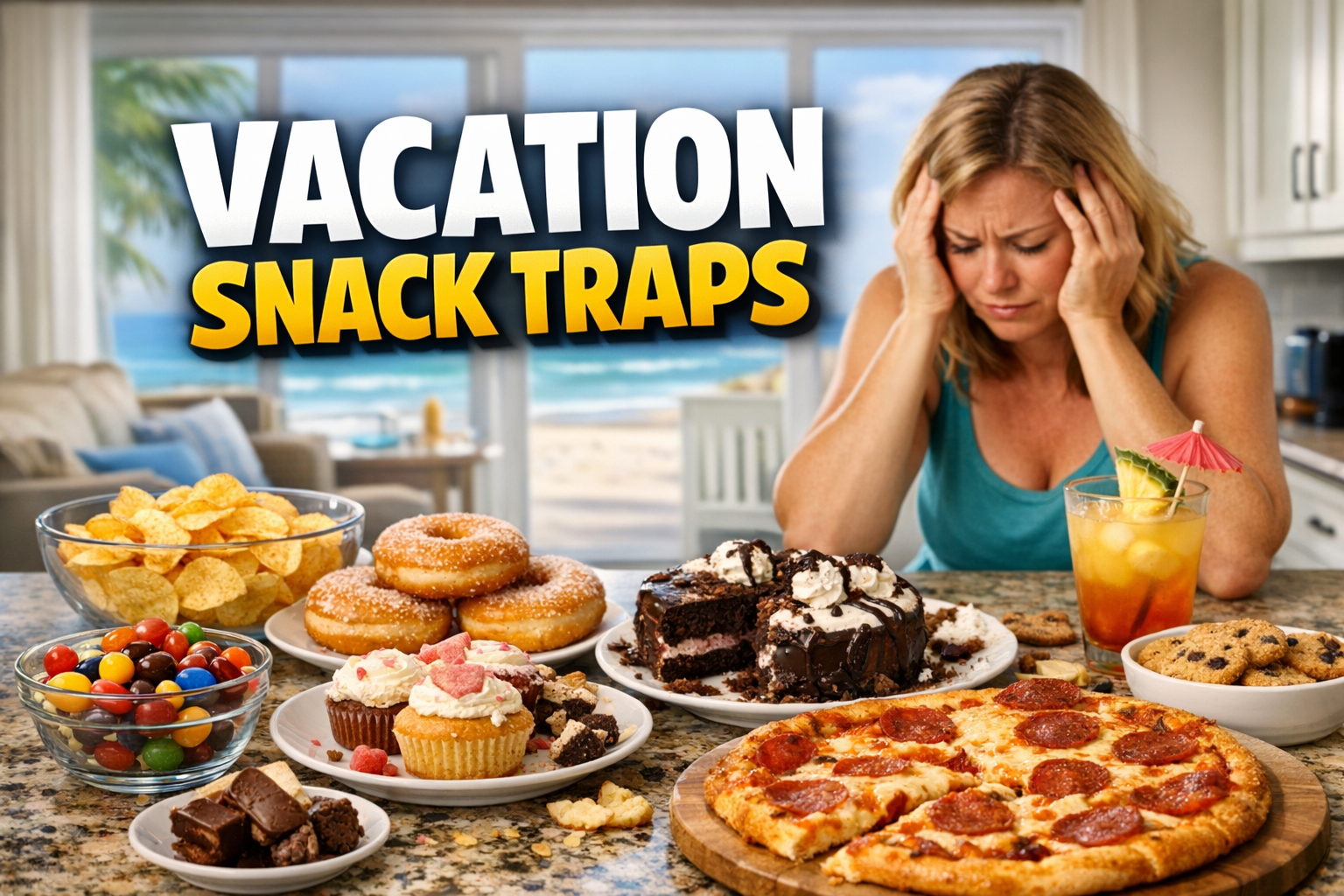
Then real life shows up. The counters fill with chips, ice cream, sandwich stuff, half-finished cookies, and leftovers that somehow keep calling your name every time you walk by.
I’ve seen this kind of trip wreck people fast because it looks more controlled than it really is. A beach house or cabin feels safer than a hotel, but the food chaos is usually bigger.
Here’s the truth: keto usually does not fall apart on vacation rental trips because you forgot the rules. It falls apart because the whole house runs on grazing, loose plans, and group food decisions.
Why keto vacation rental trips get messy so fast
At home, you have defaults. You know what breakfast is. You know where your backup food is. You know what dinner usually looks like.
In a packed vacation house, that structure disappears. People eat at weird times, kids leave snacks everywhere, dessert keeps hanging around, and nobody wants to stop the fun long enough to make a real meal.
That is why this setup gets people. It is not just about carbs. It is about friction, timing, and food constantly being in your face.
Start here:
The first big problem: the house turns into an all-day snack zone
This is where a lot of people get blindsided. They think the danger will be one big cheat meal, but the real problem is the steady stream of little bites.
You walk through the kitchen and grab a few crackers off a plate. Later you take a spoonful of leftover dessert. Then you pick at fruit, chips, or somebody’s “harmless” snack mix while waiting for dinner plans to come together.
It does not feel like a real decision because it happens in pieces. That is exactly why it adds up.
A common mistake is assuming you will just use willpower. That rarely works when food is visible all day and everyone around you is acting casual about it.
The fix is boring, but it works: create your own safe zone on day one. Pick one shelf in the fridge, one bag in the pantry, and one backup snack area that belongs to your food only. If your keto options are not obvious and easy to grab, the house food wins.
If you already know you do well when food is pre-decided, this is the same reason having a simple Airbnb grocery plan helps so much. The less thinking you do in a shared kitchen, the better.
The second problem: nobody has real meal structure
Vacation houses are full of fake meal plans. Somebody says brunch later. Then later becomes 1 PM. Dinner is supposed to happen after the beach, but then people shower, snack, open drinks, and start talking about takeout at 8:30.
That gap is where keto starts slipping.
When real meals get pushed back, you get hungrier than you think. By the time food finally shows up, you are not making calm choices anymore. You are grabbing whatever is fastest.
This often looks like cheese and deli meat holding you over, then a handful of chips because they are there, then a dessert bite because you already feel off-plan anyway.
The mistake is waiting for the group meal to save you. Group meals on vacation are usually late, random, or heavier than planned.
The better fix is to build one anchor meal and one backup mini-meal for yourself every day. That might mean eggs and sausage in the morning, plus a simple emergency plate later with leftovers, jerky, cheese, or a ready protein option before everyone gets too hungry.
If you need a portable backup, something simple like grass-fed beef sticks is more useful than pretending you will magically be fine until dinner.
The third problem: leftovers keep creating second and third eating rounds
This is one of the biggest vacation-rental traps and almost nobody talks about it clearly enough.
In a shared house, every meal creates more food friction. There is pizza on the counter. Half a pie in the fridge. A tray of brownies from last night. Burger buns, chips, pasta salad, and random dessert that nobody wants to throw away.
That means every time you open the fridge, you are not just seeing ingredients. You are seeing decisions from the last 24 hours still hanging around.
The real-life version is ugly but common: you ate a decent grilled dinner, but later you go into the kitchen for water and start nibbling leftover sides because they are open and easy. Then you wake up the next day feeling puffy, hungrier, and annoyed.
The mistake is treating leftovers like background noise. On these trips, leftovers are usually the main trigger.
The fix is to stop leaving your next choice up to whatever is sitting out. Put keto-safe leftovers in clear containers at eye level. Move problem foods out of your direct path if the group is fine with it. If not, at least make your own food easier to spot than the junk.
This is also why buying ingredients without turning them into actual meals does not help much. Raw good intentions lose to visible ready-to-eat leftovers every time.
The fourth problem: “we’ll figure food out later” always turns into convenience food
People love saying they will figure it out later on vacation. That sounds relaxed, but later usually means someone is starving, tired, sunburned, mildly dehydrated, and ready to order whatever shows up fastest.
That is how a trip with a kitchen still ends up feeling like a drive-thru week.
Maybe lunch never really happened because everybody was out. Maybe dinner prep feels annoying because the house is full, the kitchen is crowded, and nobody wants to clean. So now the group votes for pizza, nachos, sandwiches, or dessert-heavy takeout.
The common mistake is thinking one flexible day is no big deal. The problem is that this logic repeats every day of the trip.
The fix is to decide earlier than feels necessary. By late morning, know what dinner is. By mid-afternoon, know what happens if dinner gets delayed. If you do not create that backup decision before people get hungry, convenience food takes over.
This is the same pattern behind a lot of keto routine breakdowns. Food problems do not start when you eat the wrong thing. They start when you leave a hunger gap wide open.
The fifth problem: vacation mode makes every extra bite feel justified
This part is less about food and more about permission.
On a vacation rental trip, people tell themselves all kinds of stories: it is just this weekend, we walked a lot, I was mostly good, I already had a little dessert so who cares now, I will reset when I get home.
That vacation logic is powerful because it turns repeated off-plan choices into something that feels normal.
You see it when one beach snack becomes frozen drinks, then late-night sweets, then a sugary breakfast because the day already feels loose. By day three, you are not following keto. You are just reacting to whatever the house is doing.
The mistake is believing the trip needs to be perfect or totally off the rails. That all-or-nothing thinking is what makes one rough meal turn into three rough days.
The fix is to lower the drama and tighten the next choice. If lunch was sloppy, make dinner simple. If dessert happened, do not keep grazing after. If the group food is chaotic, make your next meal boring on purpose.
This is also why a basic backup snack like plain almonds can help more than people expect. Not because nuts are magical, but because they give you a cleaner option before house food starts making decisions for you.
Common mistakes that make vacation rentals harder than they need to be
A lot of people do the same handful of things on these trips:
- They buy groceries, but not real easy meals.
- They assume the house kitchen means structure will happen automatically.
- They wait too long to eat, then call the carb-heavy choice “the only option.”
- They keep problem leftovers right in front of them.
- They rely on motivation instead of a backup system.
If that sounds familiar, you are not broken. The setup is just doing what it does.
Vacation rentals create a weird mix of access and chaos. There is food everywhere, but almost none of it is organized around your plan. That is why this kind of trip can feel harder than staying home or even eating out.
Related:
What actually makes keto vacation rental trips easier
You do not need a perfect menu. You need less decision pressure.
That usually means:
- one clear breakfast default
- one midday backup food plan
- one simple dinner fallback if the group delays things
- your own visible stash of easy food
- a rule for leftovers so you do not keep picking at them
If shared-house trips tend to blow up your progress, the answer is not trying harder in the moment. It is removing as many in-the-moment decisions as possible.
You can also learn a lot from broader keto social eating mistakes. The same pressure shows up here, just stretched across several days instead of one event.
Fix this first:
- Choose tomorrow’s breakfast and one backup mini-meal before you go to bed tonight.
- Claim one obvious fridge and pantry zone for your own food so the shared-house junk is not your default.
- Decide what you will eat if dinner gets delayed, instead of waiting until you are starving.
- Move or contain leftovers that keep pulling you into random bites.
- After one off-plan choice, make the next meal simple and steady instead of turning it into a full vacation free-for-all.
🔎 If this helped, here are more no-BS keto guides worth reading next:
- Lazy Keto at an Airbnb: What to Buy First So You Stop Eating Random Junk
- Keto Social Eating Mistakes That Knock You Off Track at Restaurants, Parties, and Weekends
- Keto Routine Breakdowns: Why It Keeps Falling Apart at the Same Times Every Week
Explore more Keto That Actually Works guides here: