You leave for a camping trip thinking lazy keto camping trips should be easy. Bring a cooler. Pack some meat. Maybe grab cheese, jerky, and eggs. Done.
Then the trip starts, the meal timing gets weird, the cooler turns messy, someone else controls the fire, and by night two you are basically living on handfuls of snack food and random bites.
I’ve seen this happen a lot. The food looked “keto enough,” but nobody built a real plan for how those foods would turn into actual meals once camp got chaotic.
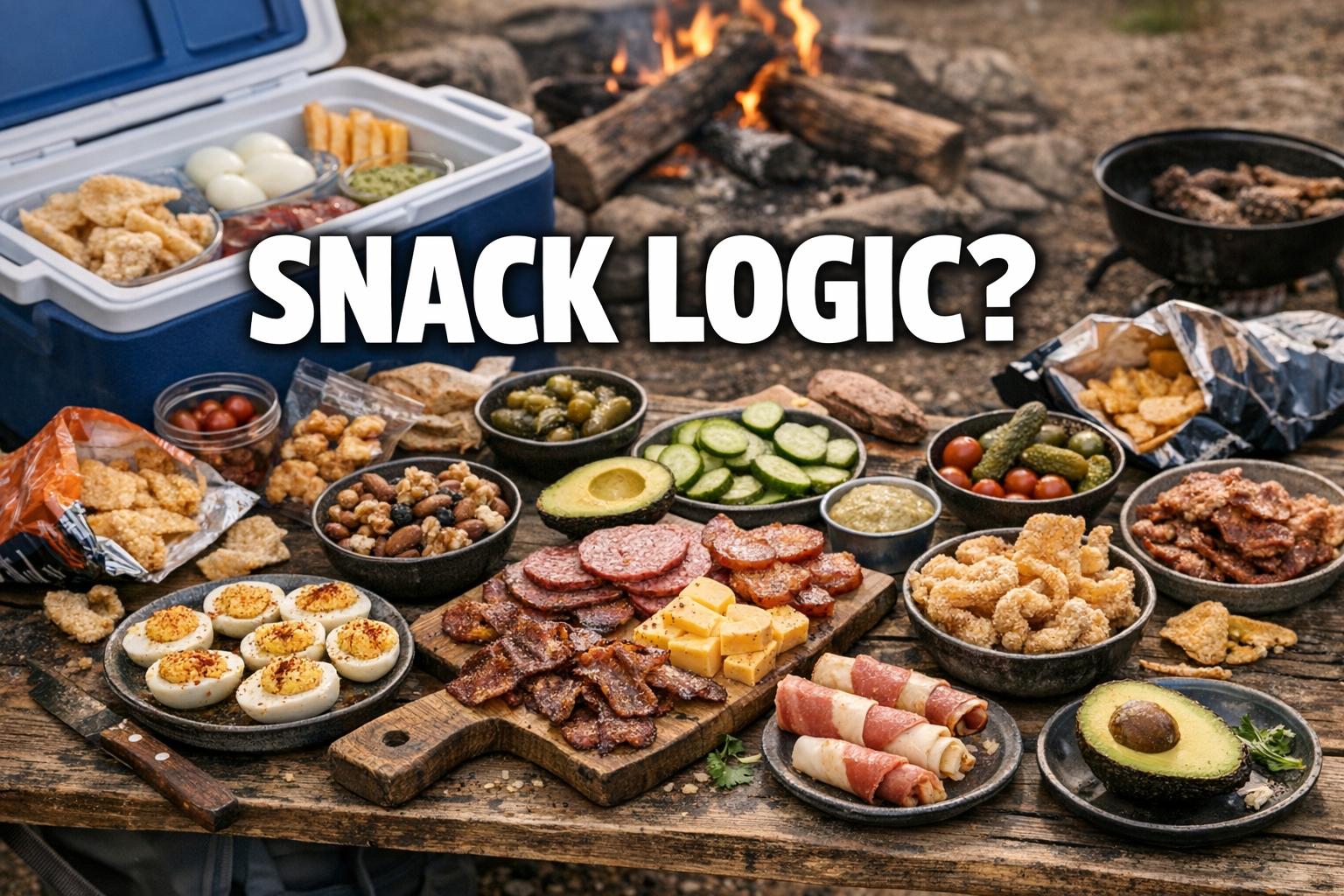
Here’s the truth: camping does not ruin keto by itself. What ruins it is when your normal structure disappears and everything turns into snack logic instead of meal logic.
Why lazy keto camping trips go sideways so fast
Camping changes almost every part of your normal eating setup. You do not have your kitchen. You do not have your usual grocery backup. You may not even have clear meal times.
That matters because lazy keto usually works best when your easiest choice is still a decent meal. On a camping trip, the easiest choice is often a few bites here, a handful there, then a bunless hot dog at 9 PM when you are already wiped out.
If your keto plan already tends to wobble when routine disappears, start with Lazy Keto That Actually Works. This camping version is the same problem in outdoor form.
Your cooler is full of ingredients, but not actual default meals
This is one of the biggest camping mistakes. People pack “good keto foods” but never decide what breakfast, lunch, and dinner will actually be.
So the cooler ends up full of shredded cheese, deli meat, sausages, condiments, eggs, and maybe some vegetables. None of that is bad. The problem is that it still requires decisions, timing, cleanup, and effort.
In real life, that looks like this: morning comes, somebody needs coffee, the stove setup takes longer than expected, and nobody wants to dirty a pan yet. You eat a few slices of cheese and some jerky. At lunch, you do the same thing. By dinner, you are starving and ready to eat whatever is fast.
The common mistake is assuming that keto ingredients automatically become keto meals. They do not. That same problem shows up at home too, which is why buying ingredients without default meals wrecks lazy keto for a lot of people.
The fix is simple: assign default camp meals before you leave. Not options. Defaults.
- Breakfast: scrambled eggs with sausage, or full-fat Greek yogurt if you have reliable cold storage and want zero cooking
- Lunch: burger patties with cheese and pickles, or deli meat roll-ups with nuts on the side
- Dinner: foil-pack meat and vegetables, taco bowls, or bunless burgers with a simple side
If you know what each meal is supposed to be, the cooler stops feeling like a random food box.
Campfire food turns into all-day grazing
Camping has a weird way of making food feel constant. Someone is roasting something. Someone brought chips. Somebody opens trail mix. The fire is going, so people keep poking at food even when nobody is sitting down for a real meal.
That environment is rough for keto because it blurs the line between eating and snacking. A few nuts here, a hot dog there, a couple of bites off someone else’s plate, and now you have eaten all day without ever getting properly full.
This is where people fool themselves. They say, “I didn’t even eat that much.” But they were picking at calorie-dense food for hours and still never got the solid protein-first meal that would have settled hunger.
That same pattern is a big reason snacks keep replacing real meals on lazy keto. Camping just makes it easier to hide.
The fix is to separate camp snacks from camp meals. If you are going to snack, make it deliberate and limited. Do not treat snack foods as the whole plan.
Set one real meal anchor for each part of the day. Even if dinner is simple, make it an actual plate with protein first. If your whole trip becomes jerky, cheese cubes, and random bunless meats, you are going to feel hungry, off, and way more tempted by carb food later.
The cooler gets disorganized, and the easiest food disappears first
On day one, the cooler looks organized. By day two, it looks like a wet junk drawer.
That matters more than people think. When easy grab-and-go foods get buried under ice, raw meat, condiments, and half-open bags, you stop reaching for them. Then the easiest available food becomes whatever is sitting out at camp or whatever someone can hand you fast.
A very practical fix here is setup, not willpower. Use small containers or zip bags to group foods by purpose: one breakfast section, one fast-lunch section, one dinner section, one emergency backup section. If you want an electrolyte option that is easy to throw into your bag before hikes, drives, or hot afternoons, a simple electrolyte powder can help keep your routine from falling apart when water alone is not cutting it.
The mistake is packing by grocery type instead of by use. That is how you end up with twelve decent foods and “nothing easy to eat.”
If you already know your plan gets sloppy when you leave home, build a stronger fallback system with a lazy keto backup plan. Camping needs the same mindset: what is the easiest decent choice when you are tired, dirty, and done making decisions?
You under-eat early, then camp hunger hits hard at night
This is another camping pattern that causes a lot of damage. Breakfast gets delayed. Lunch is weak. The day is active. You are walking, hauling gear, setting up, maybe swimming or hiking, and telling yourself you will eat later.
Later comes, and now you are exhausted. That is when camp-store junk, chips, buns, desserts, and “whatever is easiest” suddenly look a lot more reasonable.
People think the problem started at dinner. It usually started six hours earlier when they ate almost no real food.
In real life, this looks like coffee in the morning, a meat stick at noon, then huge hunger after sunset. By then, even keto-friendly dinner food may not feel like enough, so you keep grazing after dinner too.
If this pattern sounds familiar, it overlaps with the same hunger problem behind why you are still hungry on keto. Camping adds more movement, more distraction, and fewer defaults, so the crash shows up harder.
The fix is to respect the first half of the day. Eat a real breakfast or a real early lunch with enough protein and salt. Do not save all your eating for the firepit. Camping is not the time to test how little you can eat before things get dumb.
No routine means everyone starts eating on other people’s schedule
At home, your meals probably happen at roughly predictable times. Camping blows that up. Maybe breakfast depends on when people wake up. Maybe lunch disappears because everybody is out on the lake. Maybe dinner gets pushed back because the grill is slow or the fire is not ready.
That leaves you eating reactively instead of intentionally. You are not deciding based on hunger, energy, or what works for keto. You are deciding based on what the group is doing.
The mistake here is expecting camp life to magically create a good structure. It will not. Group trips are famous for late meals, vague plans, and endless snack windows.
The fix is to bring one personal structure rule into the trip. Something like:
- I eat a real protein meal within two hours of waking
- I keep one emergency meal in my bag or cooler section
- If dinner gets delayed, I eat my backup instead of pretending I am fine
That is the same principle behind lazy keto only working at home. If your system depends on perfect timing and your own kitchen, it is not much of a system yet.
Camping side effects get blamed on “bad keto” when the real issue is heat, salt, and weak meals
A lot of camping keto problems do not look like food problems at first. They look like headaches, crankiness, low energy, dizziness, nausea, or that weird “I feel off” feeling in the evening.
People often blame keto itself. But the real problem is usually a mix of heat, sweat, low sodium, too much plain water, and not enough actual food.
Camping makes this easy to miss because the day feels casual. You are outside. You are sipping water. You are eating little bits. You assume that means you are covered. Then the symptoms hit later.
If you deal with this a lot, read why long outdoor days on keto leave you headachy and hungry. The same trap shows up on camping trips all the time.
The fix is not to overcomplicate it. Salt your meals. Eat enough early. Do not rely on plain water plus tiny snacks. If it is hot, active, or both, plan for extra electrolytes before you feel awful.
Common camping mistakes that wreck lazy keto
- Bringing “keto food” without assigning real meals
- Treating jerky, cheese, and nuts like a full-day plan
- Letting the group delay meals without using your backup food
- Drinking lots of water but ignoring salt and electrolytes
- Keeping all the easy food buried in a chaotic cooler
- Acting like campfire bites do not count because they were small
None of those mistakes are dramatic. That is why they are dangerous. Camping keto usually falls apart through drift, not one giant bad decision.
What to do instead on your next camping trip
Keep the plan boring and obvious. That is what works.
- Pick 2 breakfasts, 2 lunches, and 2 dinners before you leave
- Pack one emergency backup meal that needs almost no effort
- Organize the cooler by meal use, not by ingredient type
- Build dinner around protein first, not around camp snacks
- Assume meal timing will drift and prepare for that in advance
If your trip includes driving, stops, or long days away from camp, it also helps to review road trip food that does not leave you starving two hours later and hotel-stay keto mistakes. Different setting, same core problem: when your environment changes, your food structure has to get simpler, not looser.
Fix this first:
- Decide your default camp meals before you pack a single cooler.
- Bring one backup meal for delayed dinners or long activity blocks.
- Front-load real food earlier in the day so night hunger does not run the show.
- Keep snacks in a supporting role instead of letting them replace meals.
- Plan for salt and electrolytes if the trip is hot, active, or both.
🔎 If this helped, here are more no-BS keto guides worth reading next:
- Lazy Keto at Airports When Delays, Gate Food, and “I’ll Eat Later” Blow Up the Whole Day
- Lazy Keto for Sports Tournaments and All-Day Family Events When You’re Out of the House for 8 Hours and Living Off Convenience Food
- Lazy Keto for Hotel Stays When Free Breakfasts and Takeout Make Every Day Feel Sloppy
Explore more Lazy Keto guides here: