
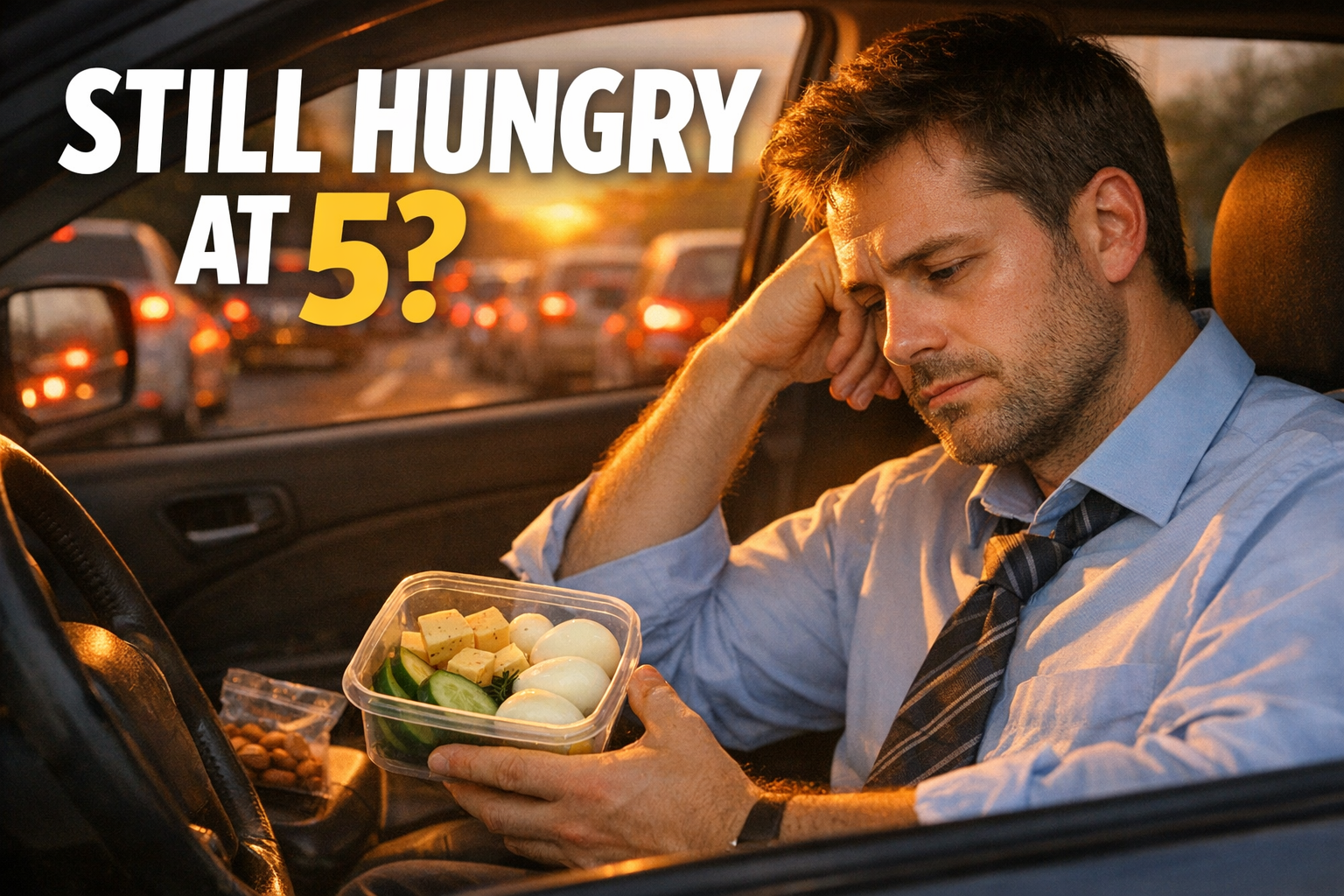
lazy keto commute days sound manageable at 8 AM. Then work runs late, traffic gets ugly, dinner is nowhere close, and by 5 PM you start making food decisions you already know are dumb.
You leave home feeling fine, maybe even confident. But the dangerous part of the day is not breakfast. It is that gap between leaving work and actually getting fed.
I’ve seen this happen in the most normal way possible: someone means to “just get home,” then sits in traffic hungry enough to start talking themselves into gas-station junk, random drive-thru food, or a snack pile that still does not solve dinner.
If lazy keto keeps falling apart on commute days, the problem usually is not carbs first. It is that your plan stops existing the second the workday ends.
Why lazy keto commute days go bad so fast
Commute days are different from travel days. You are not packing for a road trip. You are just trying to get through a normal workday, get home, and figure dinner out without doing something sloppy on the way.
That sounds simple, but it creates a perfect friction window. You are tired, hungry, distracted, and not home yet. That is exactly when convenience starts winning.
If your keto routine mostly works in your kitchen, you are already vulnerable here. That bigger pattern shows up in Lazy Keto for People Whose Plan Only Works at Home, but commute days deserve their own fix because the timing is so predictable.
Start here:
1. You leave work with no bridge between lunch and dinner
This is the biggest commute-day problem. A lot of people have a decent lunch, then assume they can coast until dinner. But if lunch was early, work ran long, or the drive home is rough, that gap gets too wide fast.
Real life looks like this: lunch happened at 12:15, you planned dinner around 6:30, then one late meeting and a slow commute turn that into 7:15 or later. Now your body does not care that dinner is technically “soon.” It cares that you are underfed right now.
The mistake is treating the commute like dead time that does not need food planning. But if that window keeps breaking your plan, it is part of your food system whether you like it or not.
The fix is to build a small bridge on purpose. That might mean a stronger lunch, a planned protein backup for the car, or a dinner plan that starts before you walk in the door. If you keep leaving the house without any safety net, this backup food guide covers the outside-the-house version in more detail.
2. Your lunch is too weak to survive a full commute day
A lot of commute problems start earlier than people think. The real mistake often happened at noon.
If lunch is light, low-salt, or built from random snack foods, you may feel fine for an hour or two. Then the late afternoon crash hits right when you are trying to finish work and get home.
This is why people end up stopping for “just something small” before dinner. The issue is not always poor willpower at 5 PM. Sometimes it is a lunch that never had enough protein, salt, or food volume to carry the rest of the day.
A common example is bringing yogurt, cheese, nuts, or a small salad and calling it good enough. Those foods can fit keto, but they do not always hold up through an office afternoon and a long drive home.
The fix is to stop building commute-day lunches for your best-case schedule. Build them for the annoying version of the day. If traffic, delays, or late exits happen a few times a week, your lunch needs to be strong enough to survive that reality.
3. You treat the gas station or drive-thru like the emergency plan
Commute days get messy because people wait too long, then let the road decide what happens next.
Now the options are whatever is near your route: gas-station snacks, a fast-food stop, or random packaged food that sounds keto enough because you are tired and just want relief. Sometimes you stay low carb. A lot of times you still end up unsatisfied and keep eating when you get home anyway.
That is what makes commute days different from a planned restaurant meal. The food choice is reactive and rushed.
The mistake is calling this a backup plan when it is really panic shopping. A real backup exists before the bad decision point.
The fix is to keep something in the car or bag that buys you time before you get desperate. If you do need to stop somewhere, make it a deliberate backup move instead of the first time you think about food all afternoon. If convenience-store decisions are a repeat issue, this gas-station lazy keto guide helps you avoid the usual mess.
4. Your commute backup is either too tiny or too snacky
People often know they need something for the drive, but they choose the wrong kind of backup.
A tiny snack may keep you technically low carb without actually helping. Then you get home still hungry and tear through dinner prep, leftovers, cheese, or nuts while trying to figure out what to eat. Now you did not prevent the problem. You just delayed it.
Other times the backup is too snacky and easy to overdo. That turns the commute into another grazing window.
The better move is something boring, portable, and protein-first. For example, Chomps grass-fed beef sticks work well as a commute backup because they are simple, shelf-stable, and easy to keep in the car or work bag. If you need a second shelf-stable option, Tillamook zero sugar beef jerky can also buy you time without turning the drive into a fake meal event.
The key is that commute backup food should stop the crash, not become a daily excuse to nibble all the way home.
5. Dinner still takes too long once you finally get home
This is the other half of the problem. Even if you survive the drive, what happens next?
If getting home still means staring into the fridge, defrosting meat, or trying to invent dinner while tired, the commute backup only solved half the issue. You are still one bad decision away from takeout, grazing, or eating whatever is fastest.
This is why commute days often feel cursed. The drive is not the only problem. It is the drive plus no fast landing plan when you walk in the door.
The mistake is thinking, “If I can just make it home, I’m good.” Home is not automatically safe if dinner is still vague.
The fix is to pair your commute backup with one default easy dinner. Leftover taco meat, rotisserie chicken, burger patties, eggs, or another fast option works much better than hoping you will suddenly feel motivated at 6:45. The same principle shows up in Why Keto Crashes on Busy Errand Days When You Keep Hoping You’ll Eat Later. Hoping later will be easier is usually how the whole day unravels.
What a better lazy keto commute system looks like
You do not need a full meal-prep fantasy to fix this. You need a repeatable after-work system.
- Lunch that actually holds you: more protein, enough salt, and enough total food for a real workday.
- One commute backup: shelf-stable, boring, protein-first, and easy to keep in the car or your bag.
- One dinner landing option: a fast default meal for nights when traffic or work drains your brain.
- One rule for emergency stops: if you need food on the way home, choose it early and deliberately instead of waiting until you feel feral.
If you want to make the car setup easier to repeat, a small insulated tote can help on days when you need a stronger backup than shelf-stable snacks. Just do not turn gear into the plan. The system matters more than the container.
For some people, a backup bar can help as a last-resort glove-box option, but it should stay the emergency layer, not your everyday dinner replacement. Something like Perfect Keto Bars fits better as a “this day got weird” tool than as your main solution.
Common commute-day mistakes that keep repeating
- Assuming lunch will hold longer than it actually does
- Leaving work with no plan for the drive home
- Keeping only tiny snacks that do not really fix hunger
- Using gas stations or drive-thru as the first food plan, not the backup plan
- Getting home with no fast dinner fallback
- Treating every ugly commute like a surprise when it happens three times a week
None of this means lazy keto cannot work for you. It usually means your plan covers home and maybe work, but not the stretch in between.
Fix this first:
- Make your next commute-day lunch stronger than usual instead of lighter.
- Put one protein-first backup in your car or work bag today.
- Pick one default dinner you can get on the table fast when the drive home is a mess.
- Stop waiting until you are starving in traffic to decide what happens next.
If lazy keto keeps falling apart by 5 PM, do not just blame the commute. Fix the gap the commute keeps exposing. Once that bridge exists, ordinary workdays stop turning into random food emergencies.
🔎 If this helped, here are more no-BS keto guides worth reading next:
- Why Lazy Keto Falls Apart When You Leave the House With No Backup Food in the Car or Bag
- Lazy Keto at Gas Stations and Convenience Stores When the Day Goes Off Plan
- Lazy Keto for People Whose Plan Only Works at Home
Explore more Lazy Keto guides here: