You can stay low carb on a road trip and still end up starving before the next stop.
That usually happens when your lazy keto road trip food looks convenient but doesn’t actually hold you. A cheese stick here, a handful of nuts there, maybe a “safe” bar from a gas station – and two hours later you’re irritated, hungry, and ready to grab whatever is easiest.
I’ve seen this pattern a lot: the cooler is technically packed, but it’s full of random snack food instead of real backup meals.
Here’s the truth. Road trip keto fails less because of carbs and more because of weak food structure. If the food you bring or buy doesn’t give you enough protein, enough salt, and enough actual meal-sized options, the drive turns into a long string of emergency snack decisions.
Why road trip keto falls apart so fast
At home, you have a kitchen, routines, and a few default meals. In the car, all of that disappears. You get long gaps between stops, weird timing, boredom eating, and a lot of “good enough” choices that don’t keep you full.
That’s why the best road trip setup is not about finding perfect keto food everywhere. It’s about making sure you always have one real option ready before hunger gets loud. If your travel days usually go off plan, this pairs well with Lazy Keto at Gas Stations and Convenience Stores When the Day Goes Off Plan and the broader travel fixes in Why Keto Feels Fine at Home but Falls Apart When You Travel.
Start here:
1. You packed snacks, not actual meals
This is the biggest mistake.
A lot of people pack “keto-friendly” things that are easy to toss in a bag: nuts, cheese crisps, jerky, bars, maybe a diet drink. None of that is automatically bad. The problem is that it often adds up to grazing, not a meal.
Real life looks like this: you leave at 8 AM, eat a couple of bites at 10, grab a few more at noon, and by 2 PM you feel weirdly unsatisfied. You have eaten plenty of little things, but nothing has actually settled your appetite. Then the next gas station starts looking like your rescue plan.
The common mistake is treating road food like a pile of legal snacks instead of building 2 or 3 real eating anchors. A road trip works better when you decide ahead of time what counts as breakfast, what counts as lunch, and what counts as backup.
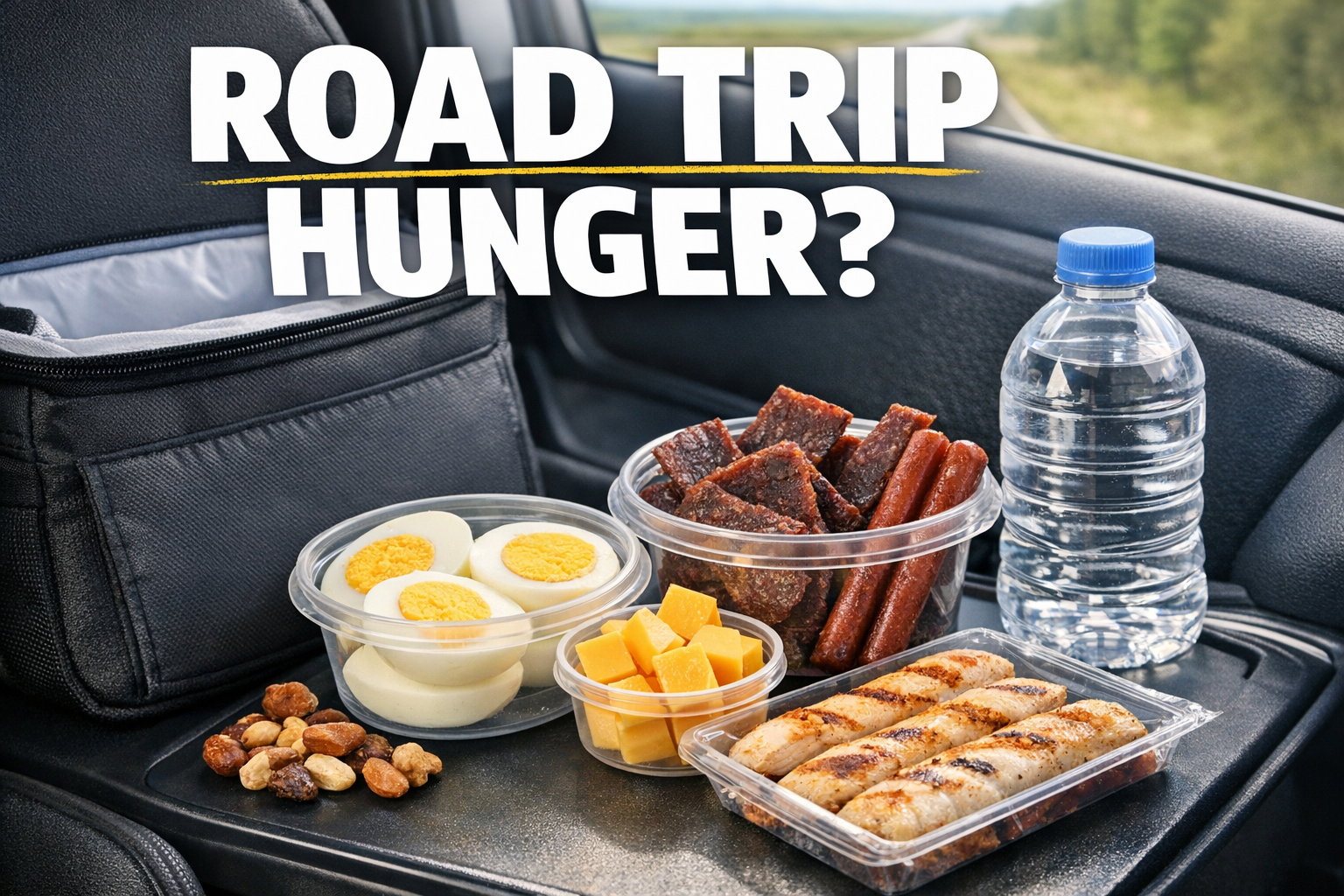
The fix is simple: pack at least one full meal before you pack extras. That could be deli meat roll-ups with cheese, hard-boiled eggs plus cooked chicken, burger patties in a container, or a simple bowl with meat, pickles, and a low-carb side. Once those are covered, then you add shelf-stable backup foods.
If you need a basic home setup that makes this easier before you leave, Lazy Keto Meal Systems: What to Keep at Home So You Stop Falling Back on Random Low-Carb Junk is a good place to tighten that up.
2. Your stop strategy is based on hope
People say they’ll “just find something on the way” like every exit is going to offer a solid keto meal. Sometimes you get lucky. A lot of the time you get a sad protein bar, overpriced nuts, or a bunless burger that barely touches your hunger.
That makes the whole day unstable. You keep delaying a proper meal, then you overbuy when you finally stop because you’re too hungry to think clearly.
A common example is stopping for gas and telling yourself you only need something small to hold you over. So you grab jerky and a diet soda. An hour later you want chips, candy, or a drive-thru meal because your “small fix” didn’t really fix anything.
The mistake is waiting until you are already hungry to figure out the next food move. On a long drive, that is too late.
The fix is to plan your stops by purpose. One stop is just gas and bathroom. One stop is a real meal. One stop is backup only. That sounds boring, but boring is exactly what keeps the day from unraveling. If a stop is backup only, buy enough to build a filling combo: jerky or meat sticks, cheese, eggs if available, olives or pickles, and water or an electrolyte drink. Don’t turn a full-meal problem into a one-item snack solution.
3. You keep choosing low-carb foods that have no staying power
This is where road trips get sneaky.
A food can be low carb and still be weak. Cheese crisps, a tiny packet of nuts, sugar-free candy, or a keto bar might fit the carb goal, but that doesn’t mean it will hold you for the next two or three hours in the car.
What this looks like in real life: you keep eating tidy little low-carb foods, but your appetite never calms down. By mid-drive you’re opening another bag, then another, and the whole day starts feeling like one long snack loop.
The mistake is thinking keto success on the road is mostly about carb avoidance. It’s not. Satiety matters just as much. If your food doesn’t satisfy you, you will keep hunting.
The fix is to choose road-trip foods with stronger staying power. Protein has to lead. That means things like cooked chicken, burger patties, deli turkey, boiled eggs, tuna packets if you can handle them, or a ready-to-drink protein shake when there’s no other solid option. Use crunchy foods as support, not the center of the meal.
If you want a shelf-stable backup that actually helps, grass-fed beef sticks are one of the better travel options because they travel well and add real protein. Just don’t pretend they are enough by themselves for an entire half-day in the car.
4. You ignore sodium and fluids, then mistake that crash for hunger
Long drives make this worse because people drink too little to avoid extra bathroom stops, then slam caffeine later to stay alert. That combo can make keto feel rough fast.
You start feeling flat, headachy, cranky, or snacky. A lot of people assume they need more food, but sometimes what they really need is more fluid and more sodium.
Here’s the common pattern: coffee in the morning, almost no water, a long stretch in the car, then a convenience stop where you feel off and want quick energy. That’s when it gets easy to start chasing random snacks that don’t solve the real problem.
The mistake is treating every dip in energy like a food emergency.
The fix is to keep hydration support boring and automatic. Bring water. Bring something salty. And if road days usually leave you feeling drained, an electrolyte powder can be a useful backup. It won’t replace a real meal, but it can stop the fake-hunger spiral that starts when sodium and fluids are off.
5. You wait too long between real meals because driving makes time weird
Road trips blur time. You tell yourself you’ll eat at the next stop, then the next stop turns into another hour and a half because traffic is moving, someone falls asleep, or you just want to make better time.
Then hunger goes from manageable to loud. And loud hunger usually leads to the worst choice, not the smartest one.
A lot of people do fine when they eat before they get too hungry. They fall apart when they try to stretch things too far just to keep driving.
The mistake is waiting for convenience instead of eating on schedule. Once you’re deep in the hunger hole, the road trip starts choosing for you.
The fix is to set a simple eating rule before you leave. For example: one real meal within the first few hours, one backup meal packed within reach, and no pretending that tiny bites count as lunch. If the day is long, bring enough food for the delay, not the ideal timeline.
What actually works best for lazy keto road trip food
The strongest road trip setup is simple:
- one packed meal with real protein
- one backup pack of shelf-stable protein foods
- one fluid plan so you don’t confuse a sodium crash with hunger
- one clear idea of what you’ll buy if the day goes off plan
That’s it. Not twenty snack options. Not a giant pile of “keto treats.” Just enough structure to keep you from getting desperate.
If dinner is usually the part that blows up after a long drive, it also helps to have a re-entry plan at home. Posts like Lazy Keto Dinners Built Around Rotisserie Chicken So You Stop Grabbing Random Carbs at 6 PM make that handoff easier.
Related:
Common road trip mistakes that make hunger worse
- bringing lots of crunchy snack food but very little protein
- counting bars and sweet low-carb treats as your main backup plan
- waiting until you are starving to stop
- treating jerky and nuts as a full meal when they are really support foods
- drinking coffee all day and almost no water
- thinking convenience-store food has to be perfect instead of just good enough and filling
Fix this first:
- Pack one real meal first. Before you add snacks, make sure you have at least one meal with solid protein that can actually hold you.
- Build one backup combo. Keep a simple emergency set with jerky or meat sticks, cheese, and a drink so one missed stop doesn’t wreck the day.
- Stop treating every low-carb snack like a meal. Use snack foods to support meals, not replace them for six hours.
- Set your stop plan before the drive starts. Decide which stop is for a real meal and which stop is only for backup, so hunger doesn’t make the decision later.
If this helped, here are more no-BS keto guides worth reading next:
- Lazy Keto at Gas Stations and Convenience Stores When the Day Goes Off Plan
- Lazy Keto Meal Systems: What to Keep at Home So You Stop Falling Back on Random Low-Carb Junk
- Lazy Keto That Actually Works: The Real-Life System for Busy People
Explore more Lazy Keto stories here: