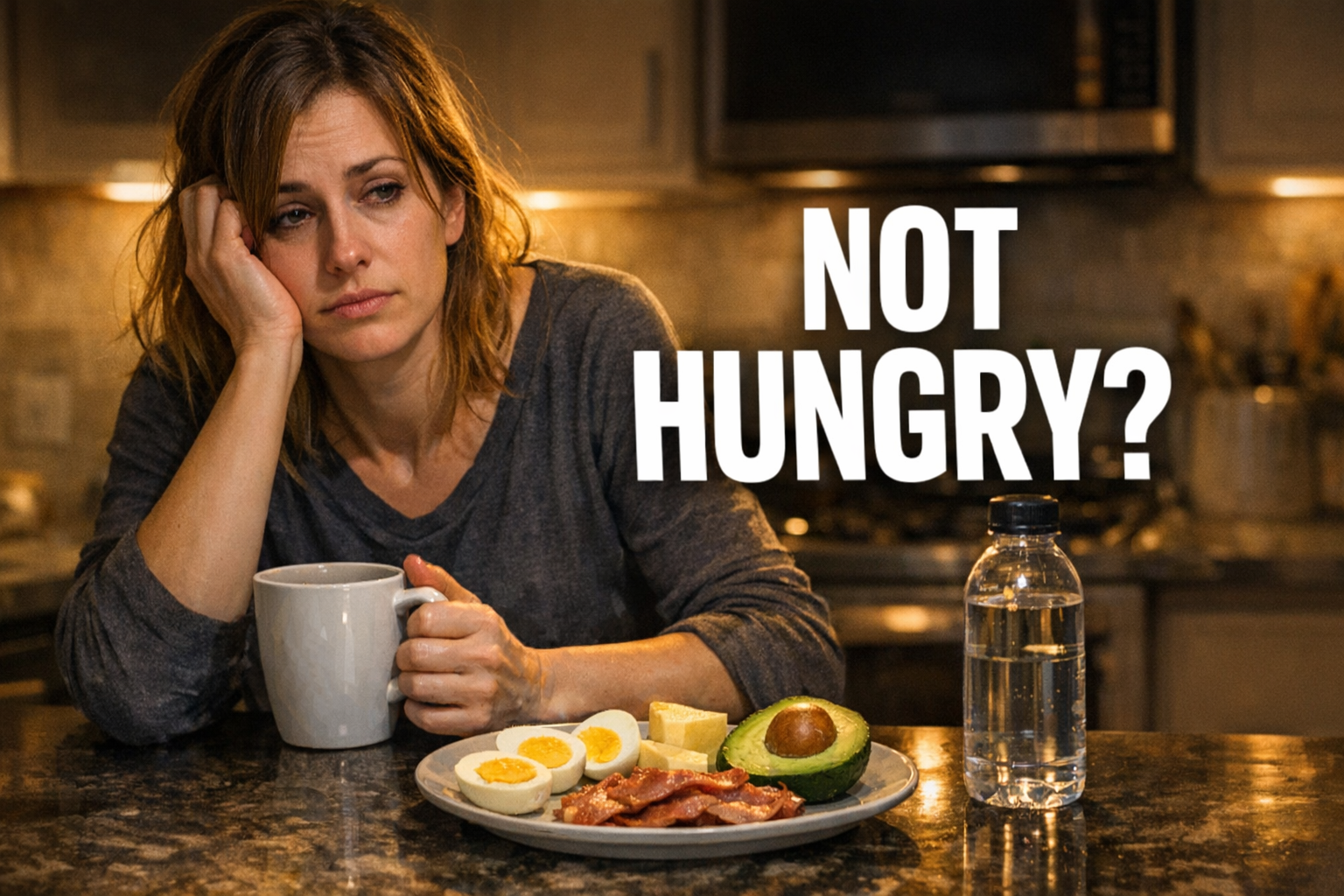
Not hungry all day on keto?
That can look healthy until the headache, cravings, and shaky crash hit at night.
That is the real problem behind
keto low appetite side effects.
Here’s the truth: low appetite is not always a win on keto. Sometimes it just means coffee replaced breakfast, sodium stayed too low, and you drifted through the day without enough real food.
It is the kind of day that feels “disciplined” at 11 AM and feels awful by 9 PM.
I’ve seen this pattern a lot. You sip coffee, stay busy, feel weirdly proud that you are not thinking about food, then suddenly you are shaky in the late afternoon and standing in the kitchen at night wondering why keto feels so rough.
Why keto low appetite side effects show up later
Keto can blunt appetite. That part is real.
But lower appetite is only helpful if your meals still cover the basics: enough protein, enough sodium, enough fluids, and decent meal timing.
When those pieces drop out, your body does not care that you “weren’t hungry.” It still notices that you under-ate, ran on caffeine, and let your electrolyte routine fall apart. That is why these days often end with headaches, dizziness, cravings, irritability, poor sleep, or a random late-night eating spiral.
If your side effects keep showing up on days that looked clean and disciplined, start with the basics from the
Keto Side Effects Guide: What Causes Headaches, Dizziness, Nausea, and More – and What to Fix First. Then use this article to spot the low-appetite pattern underneath it.
Start here:
Cause 1: Coffee replaced your first real meal
This is where most people mess up. They wake up without much hunger, drink coffee, maybe add cream or MCT oil, and call it good. A few hours later they still do not feel super hungry, so they keep going.
On paper, that can look like appetite control. In real life, it often means your first real protein and sodium never showed up when your day needed them most.
Here is what that day usually looks like: coffee at 7, maybe another one at 10, a light snack or nothing at noon, then a crash later when your body finally calls in the bill. Now you are tired, under-salted, and more likely to grab whatever sounds easy.
The mistake is assuming that low hunger means low need. It does not. Your body can stay quiet for a while and then hit back hard.
The fix is simple but not glamorous. Get a real first meal in earlier than you think you need it. That could be eggs and sausage, leftover chicken, Greek yogurt if it works for you, or any actual protein-forward meal that feels like food instead of a flavored drink. If your mornings are messy, the problem may be your whole
keto breakfast routine, not your willpower.
Cause 2: You under-ate protein, so the crash got delayed instead of prevented
A lot of “healthy” keto low-appetite days are just low-protein days in disguise. You might eat something technically low carb, but it is too small to hold you together. A cheese stick, a coffee with cream, a few nuts, or a half-hearted salad does not do much when the day gets long.
This is why the evening crash can feel confusing. You were not starving all day, so you assume hunger is not the issue.
But protein is one of the main things that helps meals actually finish the job. When it stays too low, you can feel oddly flat during the day and ravenous later.
One common real-life version is the person who says, “I had lunch.” Then lunch turns out to be a handful of deli meat, a few cucumber slices, and some coffee. That is not a real support beam for the rest of the day.
The mistake here is treating small, tidy food as if it is automatically effective food. Keto meals still need enough substance to keep you stable.
The fix is to build meals around protein first. If you are not sure what that should look like, read
Keto Meal Structure That Actually Keeps You Full. On days when your appetite is quiet, structure matters even more because your hunger cues are not doing much of the work for you.
Cause 3: You drank fluids but still let sodium slip too low
This is the fake-healthy version of dehydration. You carry water. You sip water. You may even feel like you are being extra responsible.
But if sodium does not keep up, you can still end the day with headaches, weakness, brain fog, or that drained feeling that makes dinner and nighttime much harder.
Keto low appetite side effects often ride along with this exact pattern because food is one of the places people naturally get sodium. When meals get smaller or later, sodium intake often drops without you noticing.
That is why someone can say, “I drank plenty of water today,” and still feel awful by dinner. Water alone does not fix an electrolyte mismatch.
A real-life example: you have coffee in the morning, a salad with light protein at lunch, water all day, maybe no salty food until dinner, and then a headache shows up around 5 PM. That is not random bad luck. That is a setup.
The mistake is waiting until you already feel rough to think about electrolytes. By then the day is already sliding.
The fix is to keep sodium and fluids working together earlier in the day. If you need a practical backup, a simple
electrolyte powder can help on low-appetite days when real food intake slips, but the main goal is still better meals and steadier sodium habits. If this part keeps hitting you, read
Keto Dehydration in Real Life for the full breakdown.
Cause 4: Your “good” day turns into a night crash
This is the emotional trap inside this whole pattern. During the day, low appetite makes you feel in control. By evening, your body wants everything back.
That is when people suddenly want salty snacks, dessert, random spoonfuls of leftovers, or a giant dinner that still does not feel satisfying. They think the nighttime hunger came out of nowhere. It usually did not. It built all day.
This is also why sleep can get messy. If you end up too hungry at night, too wired from caffeine, or too off-balance from low food and low sodium, your body is not in a great place to settle down.
The same day that looked “clean” can easily become the day you cannot wind down.
The mistake is judging the day too early. A keto day is not successful because you made it to lunch without hunger. It is successful if it keeps you stable through dinner, evening, and sleep.
The fix is to think farther ahead. Ask a better question at noon: “Will this setup still feel solid at 8 PM?” If the answer is no, adjust before the crash. That may mean eating a real meal earlier, salting food more intentionally, or stopping the all-coffee-no-food routine before it snowballs. If evenings keep falling apart, read
Why Keto Gets Harder at Night and
Keto Sleep Problems.
What this looks like in real life
These are the low-appetite days that fool people the most:
- You are busy, so coffee feels easier than breakfast.
- You eat “light” because you are trying to be good.
- You drink water but forget that lighter eating often means lower sodium too.
- You tell yourself you are just not hungry today, so there is nothing to fix.
- You hit late afternoon feeling off, then spend the night trying to recover.
That is not great keto control. That is delayed damage.
Related:
Common mistakes that keep this cycle going
Waiting for hunger to tell you what to do. On keto, appetite can be quieter. That does not mean you should stop using structure.
Thinking coffee with fat counts as a meal. It might keep hunger quiet for a little while, but it often does a bad job of keeping side effects away.
Calling tiny meals “healthy” when they are just incomplete. A small low-carb meal is not automatically a useful one.
Using water as your only hydration plan. If sodium keeps slipping, the problem can still show up later.
Trying to fix the whole mess at night. Once the crash is already happening, dinner has to do too much work.
How to stop “not hungry” from turning into side effects
Start by dropping the idea that every low-appetite day is a win. Some are. Some are just quiet problem days.
A better system is simple:
- Eat a real protein-first meal earlier than you think you need it.
- Do not let coffee become your main morning strategy.
- Keep sodium in the plan, especially on days when food volume drops.
- Check whether your lunch would actually hold up through dinner.
- Judge the day by the evening result, not by how little you ate before noon.
If you keep thinking, “I wasn’t even hungry, so why do I feel so bad later?” the answer is usually not mysterious. You were under-fueled in a way that stayed hidden until the day got longer.
That is why low-appetite days deserve more attention, not less.
Fix this first:
- Eat a real protein-based breakfast or early lunch instead of trying to run on coffee.
- Add sodium and fluids earlier in the day, not just when the headache or shakiness starts.
- Use better meal structure so small “healthy” meals stop turning into nighttime crashes.
- If evenings and sleep keep getting worse, troubleshoot with Keto Sleep Problems next.
🔎 If this helped, here are more no-BS keto guides worth reading next:
- Keto Side Effects Guide: What Causes Headaches, Dizziness, Nausea, and More – and What to Fix First
- Keto Dehydration in Real Life: The No-BS Guide to Electrolytes, Bad Sleep, Heat, Alcohol, Activity, and the Next-Day Hunger Mess
- Keto Sleep Problems: The No-BS Hub for Poor Sleep, Night Hunger, Caffeine Dependence, and the Next-Day Keto Fallout
Explore more Keto Problems & Side Effects guides here:
View all Keto Problems & Side Effects guides →
Post Views Today: 304