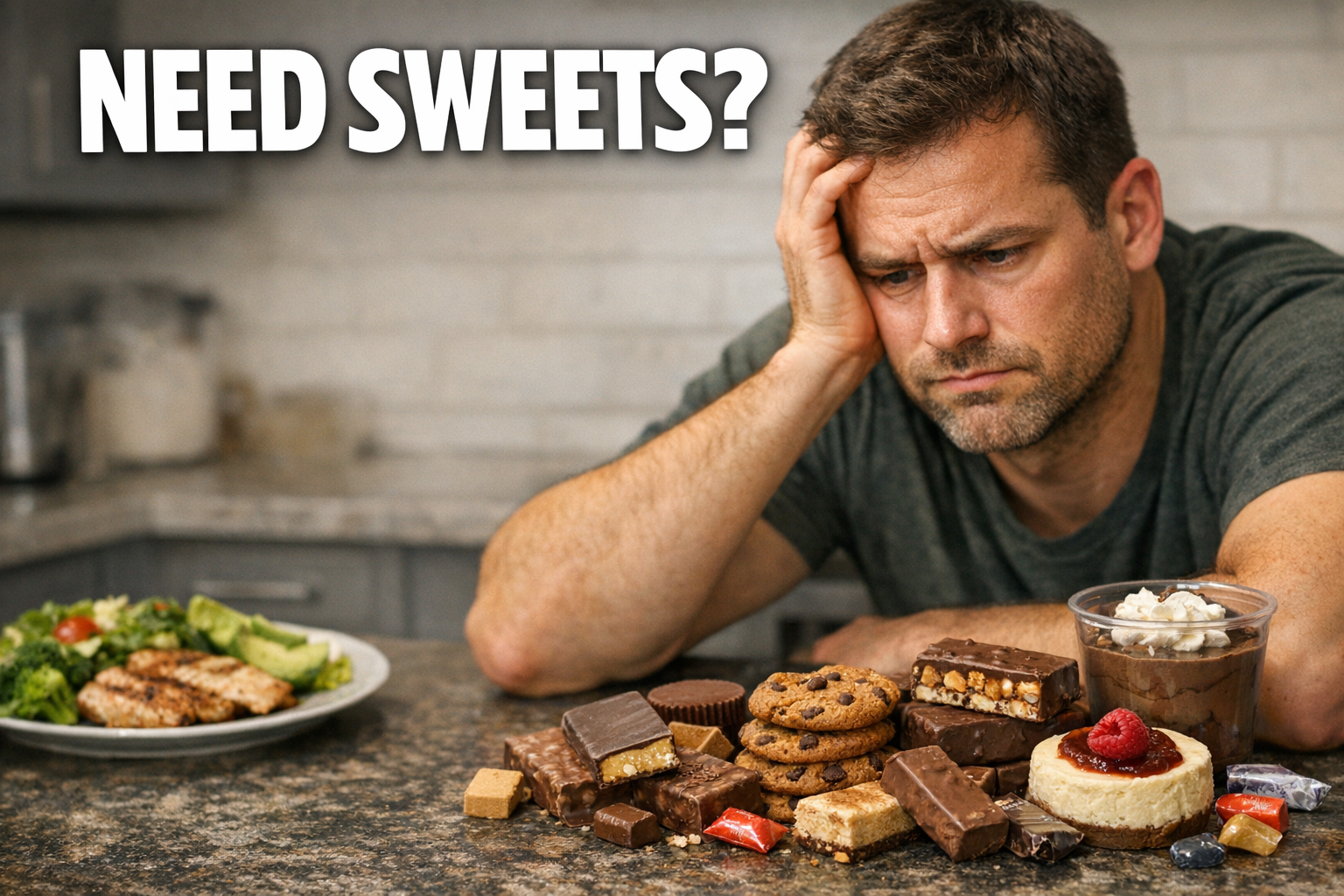
Why keto friendly convenience foods keep teaching you to expect dessert after every meal usually has nothing to do with willpower. It happens because a lot of so-called keto foods are still built to keep sweetness, snackiness, and reward eating running all day.
You cut carbs, buy the bars, shakes, yogurts, candies, and low-carb treats, and think you cleaned up your diet. But if every meal still ends with something sweet, your appetite never really learns how to stop asking for more.
A lot of people have had this exact moment: dinner was technically keto, but ten minutes later you’re in the pantry looking for “just one more thing” to close out the meal.
Here’s the truth. The problem is not only carbs. The problem is training your brain to expect a sweet finish every time you eat.
Why keto friendly convenience foods can keep the dessert habit alive
Many keto convenience foods are sold as fixes. They promise low net carbs, high fat, clean ingredients, or sugar-free sweetness. But a lot of them still work like dessert in disguise.
They keep the same pattern alive: eat meal, expect sweet taste, chase another hit, repeat tomorrow. If you want the broader cravings picture first, start with Keto Cravings Explained: Why They Happen and What Actually Stops Them.
This is why some people stay low carb on paper but still feel mentally tied to sweets all day. Their food choices changed, but the appetite pattern did not.
Start here:
Your meals never really end because sweet taste keeps reopening them
This is where most people miss the point. A meal is supposed to close the loop. You eat, you feel fed, and your brain moves on.
But when every lunch or dinner is followed by a keto cookie, sweet bar, flavored yogurt, or dessert-style shake, the meal does not really end. It stays mentally open.
Real life looks like this: you eat eggs and bacon, then finish with a sweetened keto coffee. Or you have a burger bowl, then grab a low-carb peanut butter cup because it “fits macros.” You are not exactly hungry, but the sweet ending keeps your appetite awake.
The common mistake is thinking that if the carbs are low, the habit does not matter. It does. Sweet taste after every meal teaches your brain to wait for a reward, not just food.
The fix is to stop making every meal lead into a sweet follow-up. Let some meals end with savory food and nothing else. If your dinner always needs dessert to feel complete, that is a signal that the routine is training you, not helping you.
Convenience foods make it easy to keep eating in “small harmless bites”
Packaged keto foods are built for easy reach. Tear, sip, unwrap, bite, move on. That sounds convenient, but it also makes it easy to keep eating without any real stop point.
A sweet keto yogurt after lunch turns into a bar during the afternoon, then a handful of chocolate chips after dinner, then a sugar-free treat at night. Each item looks small. Together they keep your appetite circling sweetness all day.
This is one reason people feel confused and say keto still feels mentally messy. They are not binging on obvious junk. They are just never fully stepping out of dessert mode.
The mistake is treating sweet convenience food as neutral because it is portioned, labeled keto, or not made with sugar. That label does not change what pattern it keeps alive.
The fix is to make convenience work in your favor, not against you. Keep more savory backups around than sweet ones. Things like beef jerky, cheese crisps, or pre-cooked protein make a much better emergency option than dessert-style products pretending to be health food. If you need an easy backup, something simple like high-protein snack sticks is usually more useful than another fake dessert.
“Sugar-free” still teaches your appetite to chase sweetness
This is the part people hate hearing, but it matters. If you keep giving your appetite sweet taste all day, your body may stay low carb while your brain still acts like it is waiting for treats.
That is why some people move from regular dessert to keto dessert and still feel stuck. The product changed. The expectation did not.
A common version looks like this: sweet coffee in the morning, flavored protein yogurt in the afternoon, keto chocolate at night, and maybe a bar in the car. None of it looks wild. But sweetness keeps showing up so often that plain food starts feeling less satisfying.
The mistake is assuming sweet cravings are only about blood sugar. Sometimes they are also about repetition. The more often you end meals with sweet taste, the more “normal” that pattern starts to feel.
The fix is not white-knuckling forever. It is lowering how often sweetness shows up. If this sounds familiar, “Sugar-Free” Keto Habits That Keep Your Sweet Tooth Running All Day is worth reading next, because it shows how low-carb sweet habits quietly become all-day habits.
Many keto convenience foods are weak meals pretending to be satisfying
A lot of keto packaged foods are not built like real meals. They are built like products. They are sweet, portable, heavily marketed, and easy to sell, but they often do a lousy job of truly finishing hunger.
So what happens? You eat the bar or shake, your brain gets dessert flavor, but your body still wants a real meal. Now you are unsatisfied in two ways at once.
You see this when someone drinks a sweet “keto” shake for lunch, feels okay for an hour, then starts thinking about snacks, dessert, or “something else” long before dinner. The sweet taste gave a reward signal, but the meal itself was flimsy.
The mistake is acting like convenience means complete. Most of the time, it does not.
The fix is to stop letting sweet convenience foods play the role of actual meals. Build meals around protein, salt, and something solid enough to shut hunger down. Use convenience when needed, but push it toward savory support. Even a plain electrolyte drink can be a better tool than another sweet product when the day feels off. A simple sugar-free electrolyte mix makes more sense as a support tool than chasing another sweet “keto treat” because you feel weird, flat, or snacky.
The label “keto friendly” makes people trust foods they should question more
This is one of the biggest traps. Once a food gets labeled keto friendly, people stop judging it by how it actually affects hunger, cravings, and eating behavior.
If a regular candy bar kept you thinking about sweets all afternoon, a keto candy bar can do the same thing even with lower carbs. If flavored low-carb yogurt makes you want dessert later, the label does not cancel that effect.
Real life example: someone replaces dessert with keto dessert every night and tells themselves they fixed the problem. But they still feel pulled toward sweet foods after dinner every single day. That is not a solved pattern. It is the same pattern in a different wrapper.
The common mistake is grading food by marketing instead of outcome. The real question is not “Is this keto friendly?” The real question is “Does this make my appetite easier to manage or harder?”
The fix is to judge foods by what happens after you eat them. Do you feel done, or do you want more sweet stuff? Do you feel calm, or do you start negotiating with yourself? If dessert still feels mandatory every night, read Why One Keto Dessert Every Night Can Keep Sweet Cravings Running All Week.
Related:
Related:
Related:
Common mistakes that keep this loop going
- Using sweet products after every meal: this keeps dessert expectation attached to normal eating.
- Calling packaged snacks “meals”: bars, shakes, and yogurts often do not fully satisfy hunger.
- Stocking mostly sweet keto options: if every backup food tastes like dessert, sweet eating stays normal.
- Trusting labels too much: keto friendly does not always mean craving friendly.
- Trying to outsmart cravings with more fake treats: sometimes the fix is less sweetness, not better sweetness.
Fix this first:
- Stop ending every meal with something sweet. Pick one meal a day to end cleanly with no dessert-style follow-up.
- Replace at least half your sweet backups with savory ones. Jerky, eggs, leftover meat, cheese crisps, and other simple foods do a better job of shutting the loop.
- Watch what happens after “keto friendly” foods. If they make you want more sweet food, treat that as useful feedback, not bad discipline.
- Build meals that actually finish hunger. More protein, more structure, fewer flimsy products pretending to be meals.
If keto still feels like one long negotiation with sweet food, the problem may not be carbs anymore. It may be that keto friendly convenience foods are keeping dessert expectation alive all day.
🔎 If this helped, here are more no-BS keto guides worth reading next:
- “Keto Treat” Foods That Quietly Keep Your Cravings Alive
- “Sugar-Free” Keto Habits That Keep Your Sweet Tooth Running All Day
- Why One Keto Dessert Every Night Can Keep Sweet Cravings Running All Week
Explore more Keto Lies & Myths guides here: