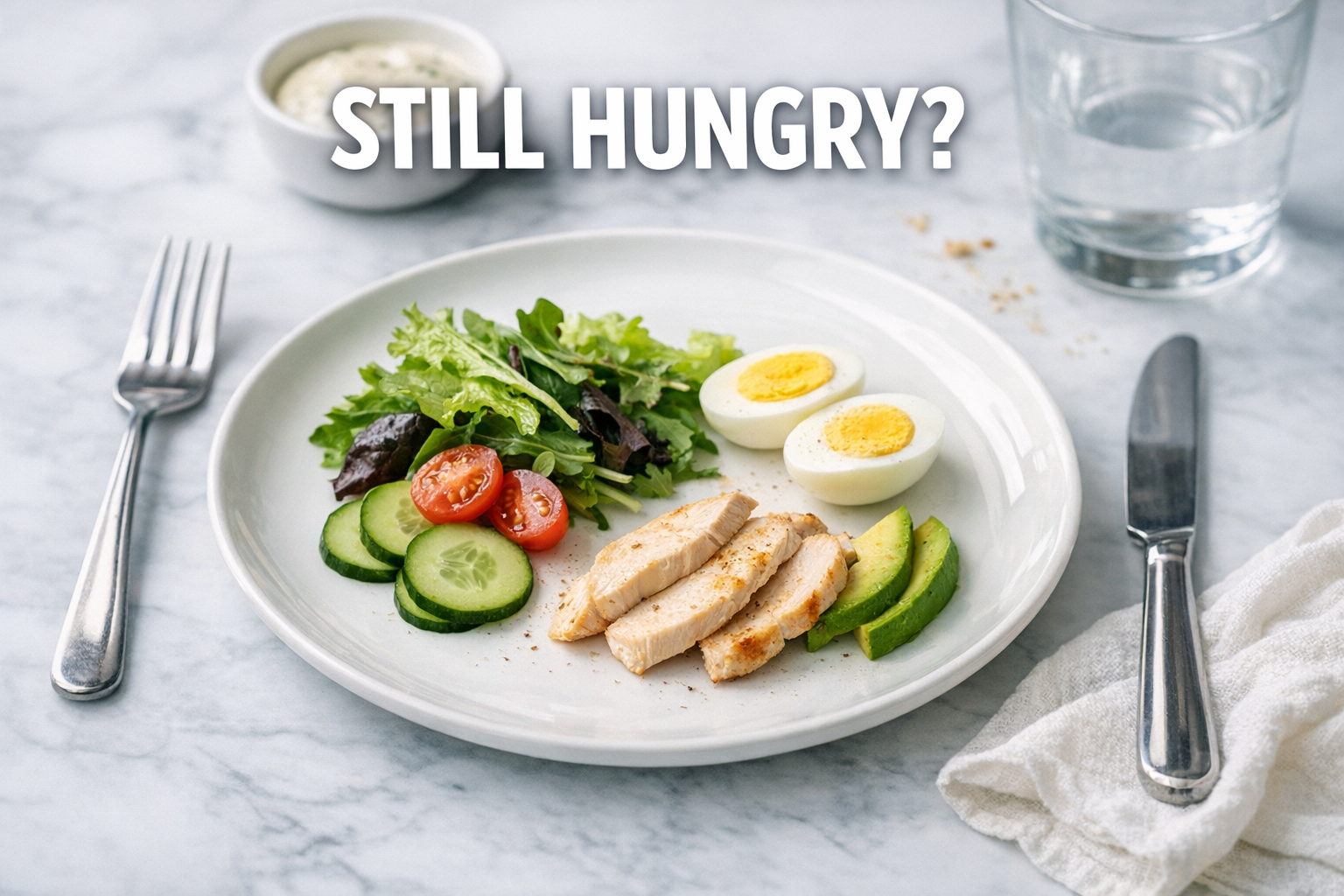
You can be eating low carb all day and still feel like keto is not working. That usually happens when your keto meals too small problem keeps getting mistaken for a carb problem.
Here’s the truth: a meal can be keto on paper and still be too weak to hold you. If your breakfast is coffee and two eggs, your lunch is a salad with a little fat, and dinner starts late, hunger is going to come back fast.
I’ve seen this pattern a lot: someone feels proud that every choice looked “clean,” then by late afternoon they’re standing in the kitchen staring at cheese, nuts, or leftovers like something has gone wrong. Usually nothing mysterious happened. The meals were just too small.
Why keto meals too small cause hunger to rebound
Keto works better when meals are satisfying enough to carry you to the next one. That means enough protein, enough actual food volume, and enough structure that you are not white-knuckling your way through the day.
If you keep building meals around “what sounds light” instead of “what will actually hold me,” hunger comes back fast. Then people blame cravings, weak willpower, or carbs they never even ate.
A lot of the time, the real issue is simpler: your meals are low carb, but they are not complete.
Start here:
Start here:
Your meal is technically keto, but it barely counts as a meal
This is one of the most common mistakes. People build a meal out of keto-friendly pieces that never add up to enough food.
What it looks like in real life: coffee with cream for breakfast, then a few eggs. Or a lunch that is basically lettuce, dressing, and cheese. Or a snack plate with deli meat, half an avocado, and a few nuts that feels more like a pause than an actual meal.
The common mistake is thinking low carb automatically means satisfying. It does not. If the meal is tiny, your body still notices that you barely ate.
The fix is to make the center of the meal obvious. Start with real protein first, then build around it. That could mean chicken thighs, burger patties, ground beef, tuna, salmon, cottage cheese, Greek yogurt, or a larger egg-and-meat breakfast instead of eggs alone.
If you’re constantly guessing at portions, a simple zero-carb protein shake can work as backup on days when a real meal is getting delayed, and a basic food scale can help you see when your “normal” portions are smaller than you thought. Used right, those are support tools, not magic fixes.
You’re eating fat-heavy meals that still do not have enough protein
This is where many keto days start looking good and feeling bad. The plate has butter, cheese, avocado, or dressing, so it feels rich. But rich is not always filling for long.
Protein is what gives a meal staying power. If your meal is built around fat with only a little protein, you may feel okay for an hour, then suddenly hungry again.
A real-life version of this is the salad with ranch, bacon bits, and cheese, but not much actual meat. Or bulletproof-style coffee in the morning followed by a light lunch. Or scrambled eggs with lots of butter, but not enough total food to get you through the afternoon.
The mistake is assuming more fat automatically solves hunger. For some people, it just makes a small meal more calorie-dense without making it more solid.
The fix is to build the meal around enough protein first. Then use fat to make it easier to enjoy and stick with. If you notice that you are hungry again two hours later, that is feedback. Your meal needs more substance, not more keto branding.
If hunger is a constant issue, read Why You’re Always Hungry on Keto (And What to Fix First). It helps you separate true hunger from all the other stuff people confuse with it.
You keep trying to “be good” by eating too lightly earlier in the day
A lot of people accidentally create their own hunger rebound by trying to stay too light for too long. They tell themselves they will eat more later, or that a small meal is enough because they are trying to lose weight.
Then later shows up, hunger is louder, and the whole day gets shaky.
This often looks like coffee in the morning, a too-small lunch, and then aggressive snacking or overeating at dinner. The person thinks keto stopped working. What really happened is they underfed the first half of the day.
The mistake here is treating hunger like something to outrun. That usually backfires. The longer you push off a real meal, the sloppier your decisions get.
The fix is to stop using tiny meals as a discipline test. If you know afternoons are rough, build a stronger first or second meal on purpose. More protein early in the day often helps more than trying to stay “light.”
That is also why articles like Why Keto Feels Harder When You’re Not Eating Enough Protein Early in the Day matter. The timing problem and the meal-size problem often show up together.
Your “meal” is really just grazing with better marketing
This one catches a lot of people. They are not eating obvious junk, but they are never really sitting down to enough food either.
Instead, the day turns into bites of cheese, a handful of nuts, some jerky, a spoonful of leftovers, and coffee to bridge the gaps. Everything is low carb. Nothing is actually satisfying enough to settle hunger.
The mistake is thinking frequent keto-friendly bites are the same as real meals. They are not. Grazing can keep hunger half-awake all day.
The fix is to make a clean distinction between meals and backup food. Meals should be built to satisfy. Backup food should stop a crash when life gets messy, not replace every real meal.
If you keep doing this at work or on busy days, a ready-to-drink protein shake can be a better emergency tool than random snack food, because at least it pushes you toward something more complete. But it still should not become your entire food system.
What people usually get wrong about this
This is where most people mess up:
- They judge meals by carbs only.
- They confuse light eating with effective eating.
- They let snacks replace meals.
- They blame cravings when the real problem is under-built meals.
- They keep repeating a breakfast or lunch that clearly does not hold them.
If keto keeps falling apart at the same point every day, the answer is usually in the pattern. That is why Why Keto Keeps Falling Apart at Specific Times of Day is worth reading next. It helps you spot where your routine is setting you up to fail.
Related:
How to build meals that actually hold you
You do not need a perfect macro spreadsheet. You need meals that are clearly strong enough to do their job.
A better test is simple:
- Does the meal include a clear protein anchor?
- Is it enough actual food that you are not hunting for snacks an hour later?
- Would this still feel like a real meal without the cheese, sauce, or fat extras?
If the answer is no, fix the base meal first.
Good examples are things like a burger patty bowl with eggs and a side of vegetables, a full chicken salad with enough chicken to matter, taco meat with eggs and avocado, or Greek yogurt with added protein instead of calling coffee breakfast.
The goal is not to eat huge meals for no reason. The goal is to stop building fake meals that keep pulling you back into hunger all day.
Fix this first:
- Pick the meal that fails you most often, usually breakfast or lunch, and add more real protein to that one first.
- Stop calling snacks, coffee, or a few keto-friendly items a full meal when they clearly are not enough.
- Use one week to notice when hunger comes back fast. That is your clue that the last meal was under-built.
- Keep one better backup option ready so a delayed meal does not turn into random snacking.
- Repeat the meals that hold you well instead of chasing lighter meals that look good but fall apart in real life.
🔎 If this helped, here are more no-BS keto guides worth reading next:
- Why You’re Always Hungry on Keto (And What to Fix First)
- Why Keto Keeps Falling Apart at Specific Times of Day
- Why Keto Feels Harder When You’re Not Eating Enough Protein Early in the Day
Explore more Keto That Actually Works guides here: