
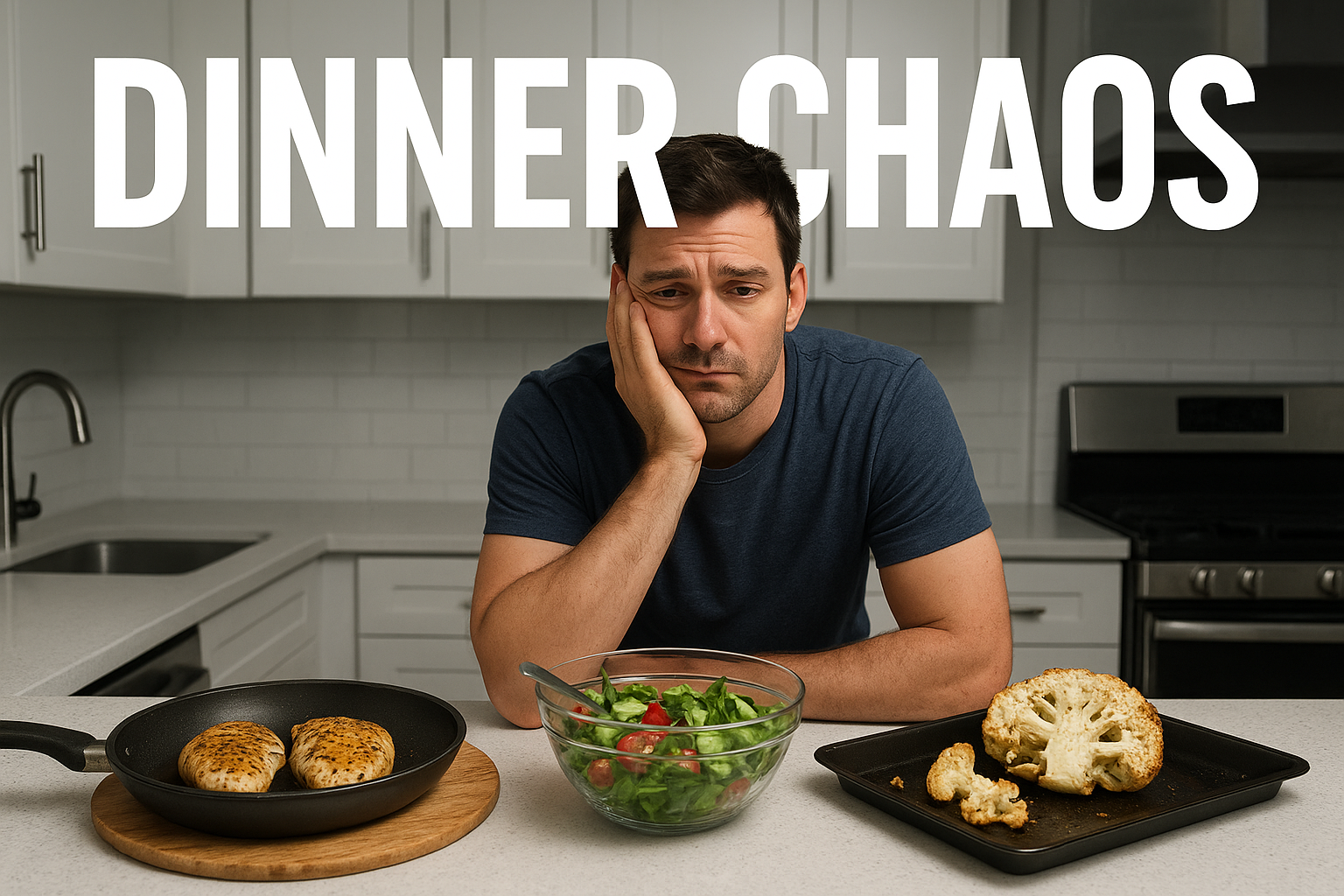
Keto unstable dinner routine is a real problem. If dinner looks completely different every night, keto starts feeling harder than it should.
That is not because you need more discipline. It is usually because your evenings run on improvising, not a system.
Most people know this feeling. One night it is eggs and bacon, the next night a bunless burger, then a snack plate, then takeout, then random cheese while you stare into the fridge.
Here’s the truth: keto still feels unstable when dinner changes completely every night because dinner is where hunger, fatigue, and decision overload all pile up at once.
Why a keto unstable dinner routine makes dinner feel harder than it should
Dinner is not just another meal. It is the meal most likely to happen when your energy is low and your patience is gone.
If breakfast and lunch are even a little weak, dinner becomes the point where the whole day gets judged. A random dinner routine usually leads to weak protein, overeating, snacking while cooking, or grabbing whatever feels easy.
That is why some people stay technically low carb but still feel like keto never really settles down. The carbs may be lower, but the system is still chaotic.
Start here:
1. Every night starts with a brand-new decision
This is where a lot of people mess up first. When dinner changes completely every night, you have to solve the same problem over and over: what are you eating, what needs to be cooked, what side goes with it, and is it enough to actually hold you?
That may not sound like a big deal at 10 AM. At 6 PM, it is a different story.
A real-life version looks like this: Monday is grilled chicken, Tuesday is taco bowls, Wednesday is eggs because nothing is ready, Thursday is “let’s just snack,” and Friday turns into takeout. None of those meals are automatically bad. The problem is the constant decision-making.
The common mistake is assuming variety keeps keto easier. For a lot of beginners, it does the opposite. Too much variety creates friction, and friction is where off-plan choices sneak in.
The fix is to stop treating dinner like a fresh creative project every night. Build a short repeatable dinner framework instead. You do not need seven perfect meals. You need three to five default dinners that you can rotate without thinking too hard.
If your whole day feels shaky when your routine shifts, read Why Keto Feels Unstable When Every Day Starts at a Different Time. That post covers the bigger routine problem. This one zooms in on dinner.
2. Random dinners usually mean random protein
People often think dinner chaos is about carbs. A lot of the time, it is really about protein.
When dinner changes every night, protein intake gets inconsistent fast. One night you eat a solid portion of chicken or beef. The next night you call olives, cheese, and two eggs a full meal. The night after that you pick at deli meat while waiting to decide what to cook.
That kind of eating can still look “keto” on paper. It just does not feel stable in real life.
The mistake is thinking low carb automatically means satisfying. It doesn’t. A low-carb dinner that is too small or too light often leads to dessert hunting, late-night snacking, or waking up hungry the next morning.
The fix is to make protein the part of dinner that never changes. Your protein anchor should be obvious before you think about the rest of the plate. That could be burger patties, rotisserie chicken, taco meat, salmon, chicken thighs, or steak. The side dishes can rotate. The protein anchor should stay predictable.
If keto keeps falling apart because meals are low carb but still not satisfying, read Why You’re Always Hungry on Keto (And What to Fix First). It connects directly to this problem.
3. Dinner randomness creates snack-before-dinner eating
This is one of the least obvious problems, but it matters a lot. When dinner is unclear, people start eating before the meal is even decided.
You grab a few nuts while checking the fridge. Then some cheese. Then maybe a spoonful of peanut butter or a few bites while cooking. By the time dinner is ready, you are no longer honestly hungry, but you are also not actually satisfied.
That messy middle makes keto feel out of control. You are eating, but it does not feel like a real meal. Then later you still want something else because dinner never felt complete.
The common mistake is blaming yourself for snacking when the real issue is that dinner had no clear structure. People snack less when the main meal is obvious and close.
The fix is to reduce the gap between “what are we having?” and “it’s ready.” That means choosing faster default dinners and deciding earlier in the day. If you already know tonight is one of your three normal dinner types, you are much less likely to graze your way through the evening.
This also connects with Why Keto Keeps Falling Apart at Specific Times of Day, because evening friction is usually not random. It follows a pattern.
4. You never learn what actually works for your evenings
When dinner changes constantly, it gets harder to spot patterns. You cannot tell which meals truly keep you full, which ones lead to cravings, or which nights need faster backup options.
For example, maybe every time dinner is just eggs and bacon, you end up hungry again at 9 PM. Maybe when dinner starts with a real portion of meat and a simple side, the night feels much easier. If dinner is always changing, those lessons stay blurry.
The mistake is thinking more options give you more control. Usually, more options make it harder to see what is working.
The fix is to repeat a few dinners on purpose and pay attention. Not forever. Just long enough to learn something useful. Which dinners keep you full for hours? Which ones are too small? Which ones are realistic on tired weekdays? A repeatable dinner routine gives you feedback. Random dinners give you confusion.
5. A chaotic dinner routine makes lazy fixes look normal
Once dinner feels unstable, “good enough” starts slipping. A snack plate becomes dinner. A protein bar becomes dinner. Coffee from earlier somehow still counts as part of dinner. Or you order something low carb but eat it in a panicked, starving state because the night got away from you.
That is the part people miss. Dinner chaos does not just change what you eat. It changes your standards.
A real-life example is someone who keeps telling themselves they are flexible. But flexible at dinner often means underfed on Monday, overeating on Tuesday, and grabbing convenience food on Wednesday. That does not feel simple. It feels sloppy.
The common mistake is confusing spontaneity with freedom. If keto only works when the day goes smoothly, it is not a strong system yet.
The fix is to set a lower-effort standard for weeknights. Maybe dinner rotates through taco bowls, burger patties with a bagged salad, rotisserie chicken plates, sausage with vegetables, and leftover protein bowls. Boring? Maybe a little. Stable? Much more.
If your evenings already tend to unravel, you may also want to read Why Keto Feels Easy All Day Then Falls Apart at Dinner. That piece covers the evening breakdown from another angle.
Common mistakes that keep dinner unstable
- Trying to make every dinner different. Variety sounds fun, but too much of it creates decision fatigue.
- Letting protein be optional. If the main part of the meal is unclear, the meal often ends up too small.
- Waiting until you are starving to decide. Hunger makes every dinner choice worse.
- Calling snacks a meal. A few low-carb bites rarely work as a real dinner.
- Having no repeatable fallback. Every stable routine needs boring backup meals.
Related:
What a stable keto dinner routine actually looks like
A stable routine does not mean eating the exact same plate forever. It means the structure stays familiar even when the details change.
For most people, that means:
- pick a protein anchor first
- use a short list of reliable sides
- keep 3 to 5 default dinners in rotation
- decide before peak hunger hits
- keep one backup dinner for rough nights
That could look like taco bowls on busy nights, burger patties when you need something fast, rotisserie chicken plates when cooking feels annoying, and leftover bowls when you need zero thought. The exact meals matter less than the repeatable system behind them.
Fix this first:
- Pick 3 to 5 default keto dinners you can repeat without much thought.
- Make protein the one non-negotiable part of dinner every night.
- Decide dinner earlier, before you hit the hungry-and-tired phase.
- Stop calling random low-carb snacks a full evening meal.
- Track which default dinners actually keep you full and steady for the rest of the night.
If this helped, here are more no-BS keto guides worth reading next:
- Why Keto Keeps Falling Apart at Specific Times of Day
- Why Keto Feels Unstable When Every Day Starts at a Different Time
- Why Keto Feels Easy All Day Then Falls Apart at Dinner
Explore more Keto That Actually Works guides here: