
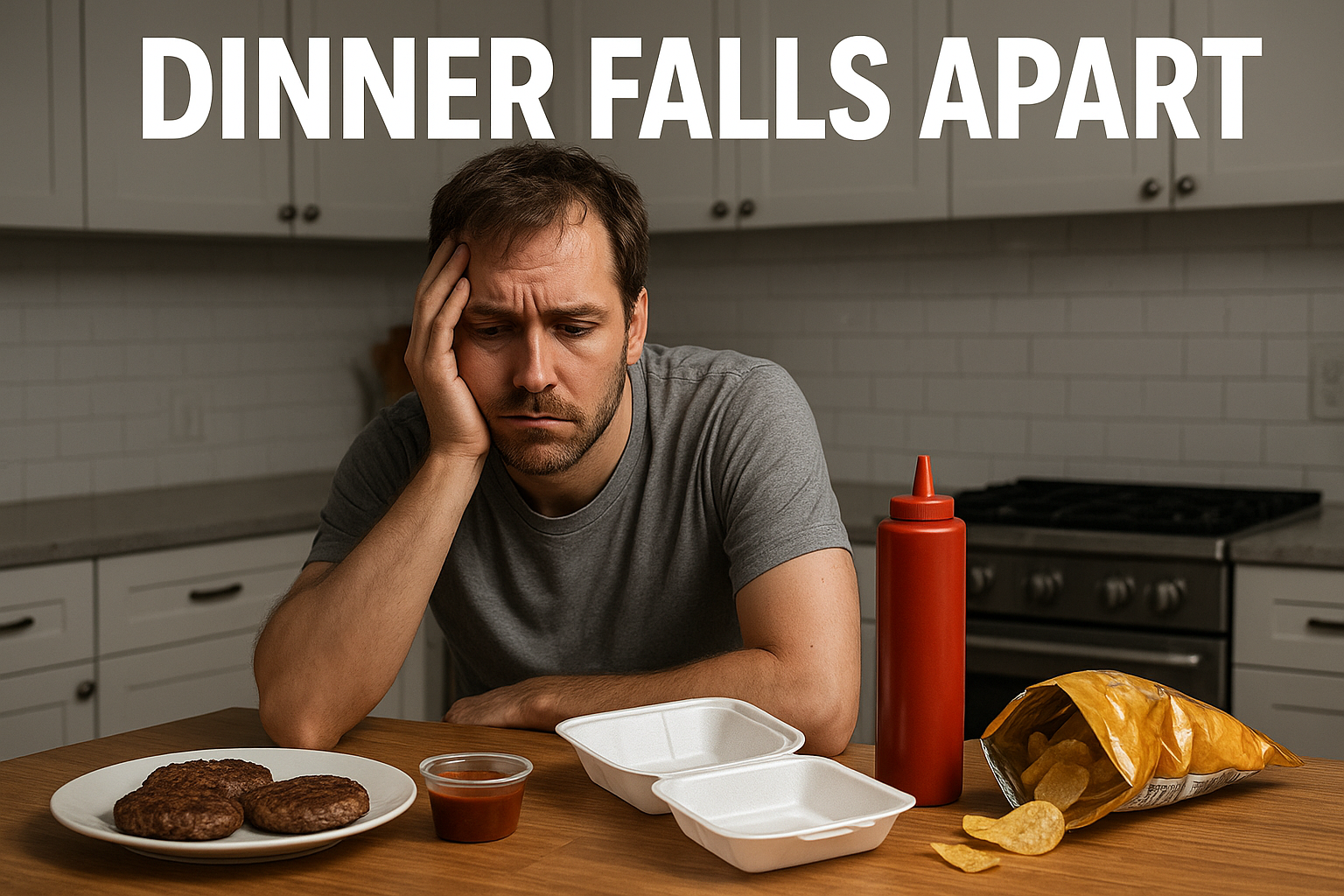
Keto feels easy all day. Then dinner shows up, and suddenly keto falls apart at dinner.
That is usually not a willpower problem. It is a setup problem that finally catches up with you.
If you have ever made it to 6 PM feeling proud, then ended up eating everything in sight, you know how fast the day can flip.
Most people do not blow keto at dinner because they are weak. They do it because the whole day was quietly pushing them there.
Why keto falls apart at dinner
Dinner is where hunger, stress, convenience, and decision fatigue all meet. If breakfast and lunch were weak, dinner becomes the moment your body tries to make up the gap.
That is why someone can look disciplined all day, then lose control at night. The problem often started hours earlier.
Here is what usually goes wrong.
Start here:
1. Your daytime meals are too small to hold you
This is one of the biggest reasons keto falls apart at dinner.
A lot of people eat light all day because they think that means they are doing better. Coffee for breakfast. A quick snack plate for lunch. Maybe some eggs, cheese, or deli meat. It feels controlled, but it often is not enough food.
By dinner, the bill comes due. Your body is not impressed by how “good” you were. It just knows you are short on protein, short on volume, or both.
Real life example: lunch is a string cheese, a few almonds, and sparkling water. At 7 PM, you are standing over the stove eating while you cook because dinner cannot happen fast enough.
The common mistake is thinking low carb should automatically mean low hunger. Sometimes it does. But weak meals still create rebound hunger later.
The fix is simple. Make daytime meals feel like real meals. Build them around protein first. Add enough food so you are not limping into the evening. If your daytime hunger is already messy, read Why You’re Always Hungry on Keto because dinner problems often start there.
2. You use snacks to patch the day instead of meals
Snacking can keep dinner chaos going.
People often think they are preventing hunger when they grab nuts, cheese crisps, or a low-carb bar in the afternoon. What they are really doing is stretching the day with small, unsatisfying bites that never fully settle appetite.
That creates a weird pattern. You are not starving enough to stop and make a real meal, but you are not satisfied either. Then dinner hits, and your hunger is louder than it looks on paper.
Real life example: you grab a handful of nuts at 2 PM, a cheese snack at 4 PM, and maybe another bite while making dinner. None of it feels like much. But none of it gave you structure either.
The common mistake is treating snack foods like a food plan. Low carb does not mean useful. A food can fit keto and still do a bad job keeping you full.
The fix is to stop asking snacks to do a meal’s job. If you need a bridge, make it protein-heavy and intentional. Better yet, tighten your lunch so you do not need three rescue snacks before dinner.
3. Decision fatigue hits when your day is already full
Dinner is when a lot of good intentions crash into real life.
You spent all day working, driving, answering messages, handling kids, or just dealing with normal adult noise. By the time dinner comes, your brain wants easy. That is when takeout, random grazing, and “close enough” choices start looking reasonable.
Keto is harder at night when every dinner decision still has to be made from scratch. If there is no plan, stress usually picks for you.
Real life example: you meant to cook chicken and vegetables. But now it is late, you are tired, and everyone wants food fast. So dinner becomes a drive-thru burger, a sauce-heavy bowl, or constant bites while deciding what to order.
The common mistake is blaming the food choice when the real issue was friction. If the right dinner takes too much thought, it will lose more often than people admit.
The fix is to lower the thinking. Keep repeatable dinners ready: taco bowls without the rice, burger patties with salad, rotisserie chicken with vegetables, eggs and sausage, or leftover meat with a quick side. The less your dinner plan depends on motivation, the more stable keto gets.
4. Convenience foods make dinner look keto when it is not helping much
This is where many people get fooled.
A bunless burger can still turn into a calorie bomb. A salad can still come loaded with sweet dressing, crunchy toppings, and not enough protein. A “keto” frozen meal can still leave you hunting for food an hour later.
The problem is not only hidden carbs. It is also low satisfaction. If dinner looks compliant but does not feel complete, you end up eating again.
Real life example: dinner is a bunless burger with a side salad. Sounds fine. But the burger is small, the salad is mostly lettuce, and the dressing is sweet. An hour later, you are back in the kitchen because dinner never really landed.
The common mistake is assuming a keto label or a carb swap solves everything. It does not. Keto still works best when meals are built around enough protein, decent volume, and foods that actually hold you.
The fix is to look at dinner like a full meal, not a carb deletion trick. Ask: is there enough protein here? Is there enough food here? Is this going to keep me out of the pantry later? If the answer is no, the meal needs work. This is also part of why people get stuck in the patterns covered in Keto Mistakes That Stop Weight Loss.
5. You save too much of your eating for night
Some people do not just overeat at dinner. They backload the whole day into dinner.
Maybe you skip breakfast because you were busy. Maybe lunch was rushed. Maybe you were trying to be extra strict. By evening, dinner is not just dinner anymore. It is recovery.
That makes portions bigger, cravings louder, and stopping much harder. It also makes dessert, extra snacks, and second helpings feel almost automatic.
Real life example: all day you had coffee, maybe a small lunch, and a few bites here and there. Then dinner becomes a huge plate, seconds, something sweet, and late-night snacking while watching TV.
The common mistake is calling this a dinner problem only. It is really a whole-day pattern problem.
The fix is not to make dinner tiny. The fix is to stop arriving at dinner depleted. Spread your intake better through the day. If weight loss is stalling too, this same night-heavy pattern often shows up in Why You’re Not Losing Weight on Keto.
Related:
Common mistakes that make dinner harder
Here is where people usually make this worse.
First, they treat “not eating much” all day like a win. That often turns dinner into a rebound meal.
Second, they rely on snack foods because they are easy. That keeps hunger half-awake all afternoon.
Third, they wait until they are exhausted to decide what dinner should be. That is when convenience starts beating good judgment.
Fourth, they build dinner around carb removal instead of real meal structure. Taking away the bun is not enough if the plate is still weak.
Fifth, they keep grabbing little bites while cooking. Those bites count, but they do not create satisfaction. They just blur the meal and make it easier to overeat.
Fix this first:
- Eat a real protein-based lunch tomorrow instead of trying to coast into dinner.
- Cut the random afternoon grazing and use one planned meal or one intentional bridge instead.
- Pick three easy keto dinners you can repeat without thinking.
- Make dinner large enough to feel complete, especially on protein and meal volume.
- Notice whether dinner is the problem, or whether the whole day set dinner up to fail.
If keto keeps going off the rails at night, stop blaming the hour. Dinner usually exposes the mistakes that started much earlier.
Fix the setup, and dinner gets easier fast.
🔎 If this helped, here are more no-BS keto guides worth reading next:
- Why You’re Always Hungry on Keto (And What to Fix First)
- Keto Mistakes That Stop Weight Loss
- Why You’re Not Losing Weight on Keto (And How to Fix It)
Explore more Keto That Actually Works stories here: